The Lagos State Government has called on residents to prevent malaria by eliminating mosquito breeding sites, test before treatment and trust the health system, noting that collaboration between community, government and the private sector will ensure malaria is no longer a major public health problem in the State.
Governor Babajide Sanwo -Olu who made the call while presenting his Keynote address during the Mid-Term Review of the Pathway to Malaria Pre-Elimination promised to drive malaria prevalence below one percent and set the state on the path to full elimination.
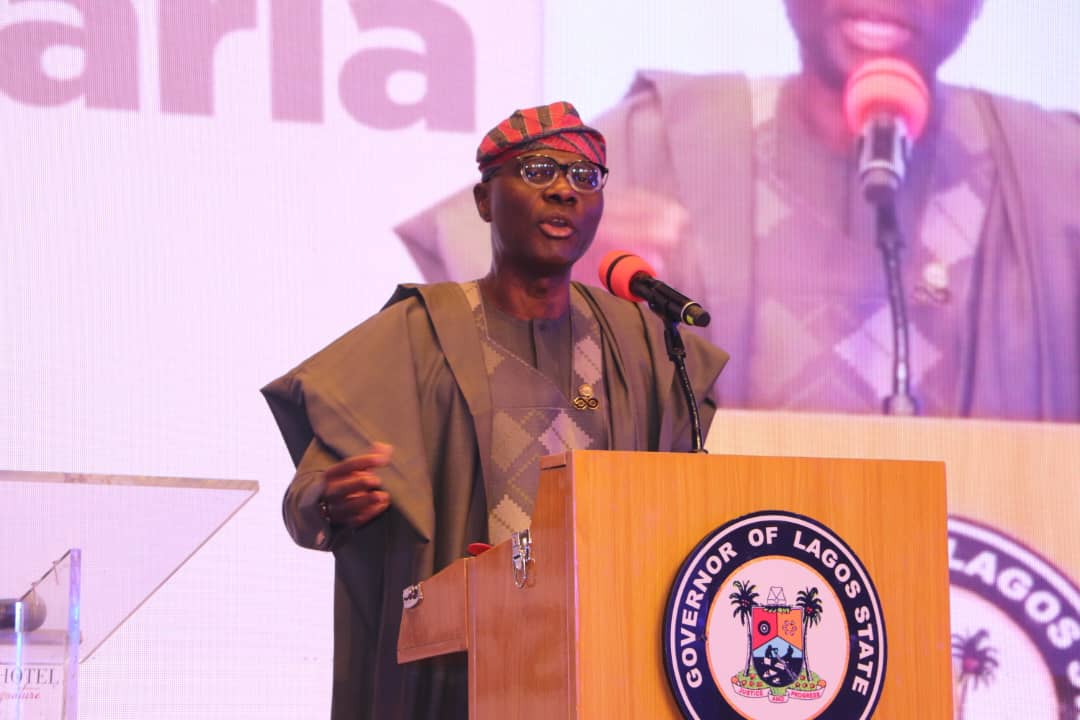
He declared that, “Lagos had reached a decisive phase to shift from high malaria burden to pre-elimination status and stressed the importance of accountability, data transparency as well as community ownership in the ongoing campaign”.
According to the Governor, “when the initiative kicked off on March this year, the vision to transform hope into measurable results and shift Lagos from a high-burden malaria zone to one on the brink of elimination was the target hence the reason for the review which is critical to checking the journey to a malaria-free Lagos”.
He added that continuous training, supervision, and alignment with the ILERA EKO health insurance platform were central to sustaining progress.
Mr Sanwo-Olu insisted that Lagosians must have access to rapid testing and the right treatment, when and where necessary, stressing that scaling up interventions will not be allowed to compromise quality, noting that, “Lagos must remain a shining example of effective malaria control in Nigeria and West Africa” he stated.
The Coordinating Minister of Health and Social Welfare, Prof. Muhammad Ali Pate, praised Lagos State for pioneering malaria pre-elimination strategies that are already yielding tangible results.
“He described the digital integration of community pharmacies and medicine vendors into malaria service delivery as a game-changer in bridging gaps in the country ‘s primary healthcare ecosystem”.
He lauded the deployment of technology to enhance real-time reporting and analysis, which he said was vital to identifying service delivery gaps, tracking progress, and informing policy adjustments in Nigeria’s broader malaria elimination campaign.
Lagos State Commissioner for Health, Prof. Akin Abayomi, who explained in details the scientific account of the state’s malaria data trajectory explained that only about 5.6 percent of fever cases tested in informal healthcare outlets turned out to be malaria, a dramatic decline from historic figures.
The Commissioner noted that the new reality meant that most fevers in Lagos are now malaria-negative fevers requiring accurate diagnosis and alternative treatments stressing that adherence to the test-before-treatment protocol is necessary to prevent misdiagnosis, drug misuse, and delayed recovery among patients.
He warned that continued reliance on presumptive treatment of fever as malaria posed risks, reiterating that Lagos must embrace a new culture of evidence-based diagnosis and case management.
Abayomi also projected that with sustained political will and community cooperation, Lagos could transit into a malaria-free state within a few years.
Dr. Onoriode Ezire, Senior Health Specialist with the World Bank, in his presentation, highlighted that Lagos has made remarkable progress in reducing malaria prevalence, moving from about 15 percent in 2010 to just over 3 percent by 2022.
He described Lagos as now being at the “pre-malaria elimination stage,” but warned that sustaining the progress will require a strong focus on intensified surveillance systems.
He advised that every single case must be reported, investigated, and documented swiftly, stressing the need for zero reporting, where health facilities provide updates even when no cases are detected, to ensure no data gaps.
WHO Team Lead for Health Promotion, Disease Prevention, and Control, Dr. Maya Ngon, described Lagos as a model of strong leadership, innovation, and partnership in malaria control.
“The integration of private providers into a digital surveillance system is a major step forward in strengthening Nigeria’s health system”.
Dr. Ngon assured that WHO would continue to provide technical guidance, global best practices, and strategic options tailored to Lagos.”
I urge you all to convert innovations into measurable outcomes that will save lives while reaffirming the organization’s commitment to work with Lagos “until the vision of malaria elimination is achieved.” Ngon appealed
Dr. Ezire further outlined strategies for the state’s malaria response beyond 2026, emphasizing data-driven interventions and vector control measures targeted at hotspots.
He recommended scaling up new tools such as malaria vaccines, strengthening diagnostic services, and introducing proactive case detection methods in high-risk communities.
“Lagos could leverage the ongoing World Bank-supported IMPACT Project, which is expected to run until December 2026, to build capacity, strengthen surveillance systems, and advocate for stronger political and financial commitments towards malaria elimination” Ezire advised.
Pharm. Ibrahim Yakasi, Chairman of Maisha Meds Nigeria, described the achievements in Lagos as “remarkable” and commended the state for its resilience and leadership in the fight against malaria.
He stressed that the reduction in malaria burden was not just the work of government alone but also the collective effort of communities, healthcare professionals, pharmacists, and doctors.
According to him, “Maisha Meds’ commitment to technology-driven innovations, including digital tools and machine-enabled interventions, has been critical to strengthening malaria control and positioning Lagos on the path to elimination”.
Yakasi reaffirmed Maisha Meds’ support for Lagos State in achieving its malaria elimination goals, noting that sustained collaboration, innovation, and community engagement, “Our prayer is for Lagos to remain the model for a malaria-free society in Nigeria and Africa,” he declared.
The Permanent Secretary, Lagos State Ministry of Health, Dr. Olusegun Ogboye, noted that while progress has been made, challenges remain in balancing provider and patient behaviors in malaria case management.
He explained that healthcare providers often face overwhelming patient volumes, making it difficult to strictly adhere to diagnostic protocols and warned that healthcare workers must be adequately trained in the use of Rapid Diagnostic Tests (RDTs) and microscopy, while provided with job aids and treatment algorithms that guide clinical decisions.
Dr. Ogboye also called for continuous public education to help patients understand why malaria drugs cannot be prescribed without proper testing.
“There is the need for regular clinical audits and prescription reviews to strengthen accountability in malaria case management”. he urged