In an effort to ensure that no child is left behind in the government plans and actions, United Nations Children’s Fund, UNICEF and development partners have organized a one-day Multi-Sectoral Stakeholder Dialogue on Birth Registration.
Speaking at the event at Ikeja, Lagos, Chief of UNICEF Lagos Field Office, Celine Lafoucriere, said birth registration is the first line of protection for every child, noting that without it, children are invisible to the government and cannot access healthcare, education, or social services.
Lafoucriere who commended Lagos State for being at the forefront of birth registration in Nigeria with 94% of children under five already registered, said it reflects the commitment of the State and its Partners.
She said for birth registration to be effective, “the Ministry of Health must integrate it into immunization and maternal health services, education authorities ensure it is requirement for school enrollment” – noting that UNICEF is targeting 545,000 under -one children in Lagos state
” In addition, “Traditional and community leaders must champion registration as a civic responsibility, the media should amplify messages that resonate across the diverse communities and civil society holds all the groups accountable”. Lafoucriere charged
Earlier in her remark, the Federal Commissioner, National Population Commission, NPC, Lagos, Mrs Olayinka Oladunjoye, called on community leaders, religious groups, and local councils to intensify mobilisation efforts for accurate birth registration, which according to her helps government plan for schools, healthcare facilities, and infrastructure.
She urged parents and guardians to ensure that all children are duly registered and collect their certificates as if there is no registration, there is no identity and without identity, no planning.
Speaking on “Identity Bottlenecks and Opportunities in Lagos,” Welfare Officer, Child Protection Network, CPN, Mrs Olajumoke Otitoloju, said despite Lagos’ progress, several barriers still hinder universal registration, particularly among rural and low-income families.
Mrs Otitoloju, called for the establishment of birth registration unit in State Universal Basic Education Board, SUBEB, attached to every school where each child registers instead of being chased away.
“The bottleneck in child registration that is not making it work, not enough camping and awareness to parents and caregivers which affects the rural communities not registering their children, calling on all government MDAs to synegize in order to get correct data with which government can work with”. Otitoloju averred.
Also speaking, State Coordinator, National Orientation Agency, NOA, Mr. Mustafa Adedeji Tukur, said by aligning national priorities with continental and global frameworks and committing to participatory governance, digital innovation and robust investment, Nigeria pledges to ensure that every life is counted and every child is affected.
Mr. Tukur said that a child that don’t have registration as is in other countries of the world, such child is not identified as a citizen.
The dialogue, themed “Every Child Counts: Accelerating Birth Registration in Lagos State,” brought together officials from the Ministries of Health, Education, Youth and Social Development, ALGON, traditional and religious leaders, civil society, and the media.
Participants resolved to co-create a Lagos State Birth Registration Action Plan to strengthen awareness, integrate registration into healthcare and education systems, and achieve measurable results by year-end.
They also promised to take the message of birth registration to their Subjects, communities and town meetings with the view to letting them know what their children and wards stands to lose if they are not recognized through birth registration.
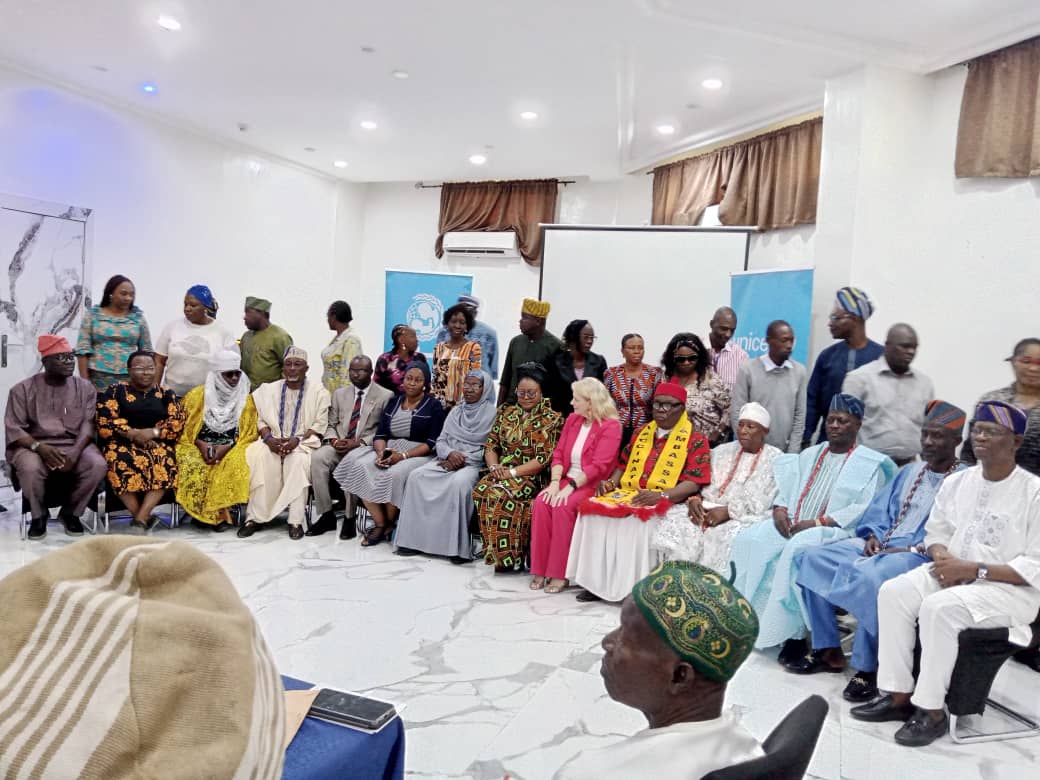
Present on the occasion were traditional leaders, community leaders, development partners, Local government officials from MDAs and representatives from the education sector as well as those of the religious organizations.
Reporting by Julie Ekong