African leaders, justice officials, and faith-based organizations have called for united continental action to end human trafficking, ritual abuse, and human sacrifice across Africa.
The call was made at the maiden African Colloquium Against Human Trafficking, jointly organized by the Lagos State Ministry of Justice and Pepperdine University, USA, held in Lagos.
Declaring the three-day event open, Governor Babajide Sanwo-Olu, represented by the Secretary to the State Government, Abimbola Hundeyin, described human trafficking and ritual abuse as heinous crimes against humanity.
She emphasized the need for collective efforts among governments, communities, and faith-based institutions to dispel myths linking success to taking human life.
The Solicitor-General and Permanent Secretary, Mr. Hameed Oyenuga, said the colloquium marked a shift from conversation to coordinated action, stressing that no single country can tackle trafficking and ritual crimes alone.
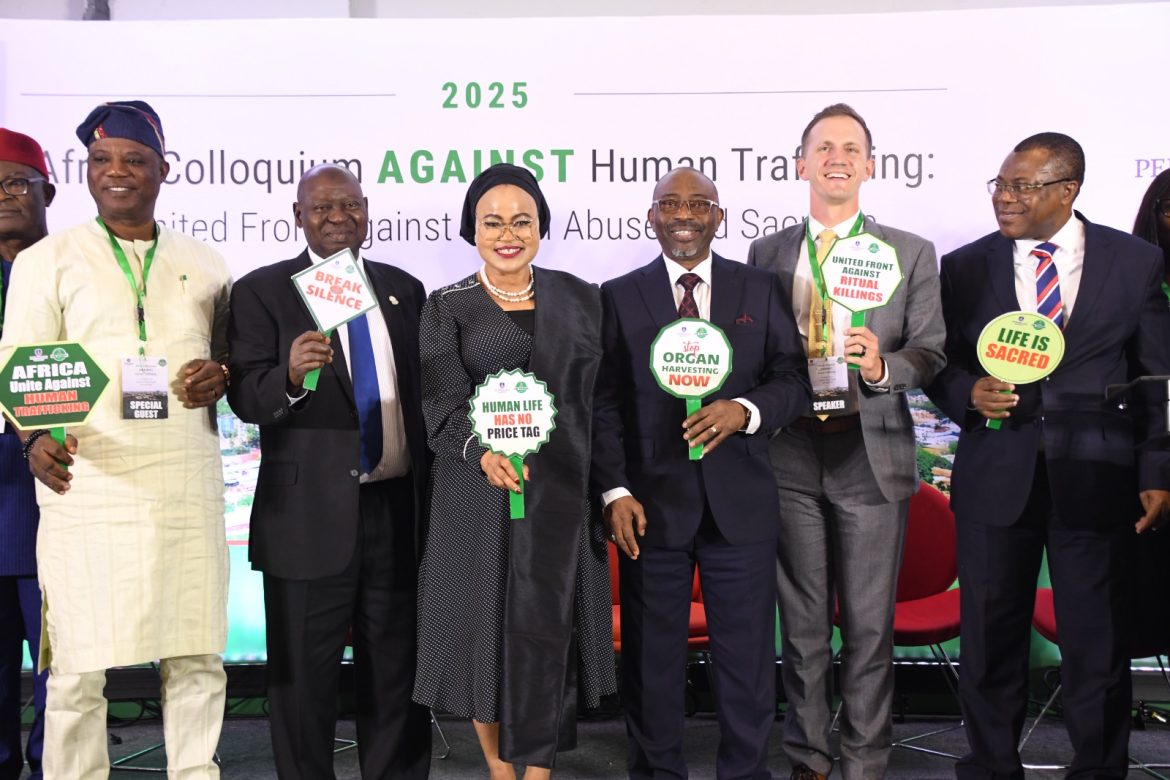
ritual killings
Delivering the keynote address, Lagos State Attorney General and Commissioner for Justice, Mr. Lawal Pedro (SAN), said silence had allowed ritual killings and trafficking to thrive.
He revealed that between 2022 and 2024, Lagos rescued over 4,700 victims, expanded shelters, and passed the Lagos State Organ Harvesting Prohibition Law (2024) criminalizing the sale of human organs.
Pedro, who chairs the Lagos State Task Force Against Human Trafficking, urged African nations to strengthen regional cooperation, warning that traffickers already operate across borders.
Africa-specific solutions
The Director of the Sudreau Global Justice Institute, Pepperdine University, Prof. Cameron McCollum, said the partnership with Lagos aims to develop practical, Africa-specific solutions that countries can adopt immediately.
Representing the NAPTIP Director-General, Mr. Josiah Emerele explained that ritual trafficking often uses spiritual coercion rather than physical force, emphasizing the need for culturally sensitive interventions.
The Chief Judge of Lagos State, Justice Kazeem Alogba, described ritual abuse as a form of modern slavery and called for more community participation and specialized training for investigators.
Representing the Attorney General of the Federation, Mrs. Ezene Nwokolo, underscored the need for cross-border collaboration, noting that traffickers exploit poverty and traditional beliefs to control victims.
Participants at the colloquium agreed to strengthen legislation, enhance survivor-centered justice, and integrate faith and community leaders into anti-trafficking efforts.
The event, the first of its kind in Africa, is expected to produce a continental roadmap outlining legal and policy frameworks to combat human trafficking and ritual abuse across the continent.
Reporting by Wahab Akinlade