On a humid Tuesday afternoon in Ikeja, the parade ground of the Federal Operations Unit (FOU) Zone ‘A’ of the Nigeria Customs Service told a powerful story.
Stacked bags of foreign parboiled rice, bales of used clothing, jerrycans of vegetable oil and rows of seized vehicles formed a silent backdrop as Comptroller Gambo Aliyu addressed journalists.
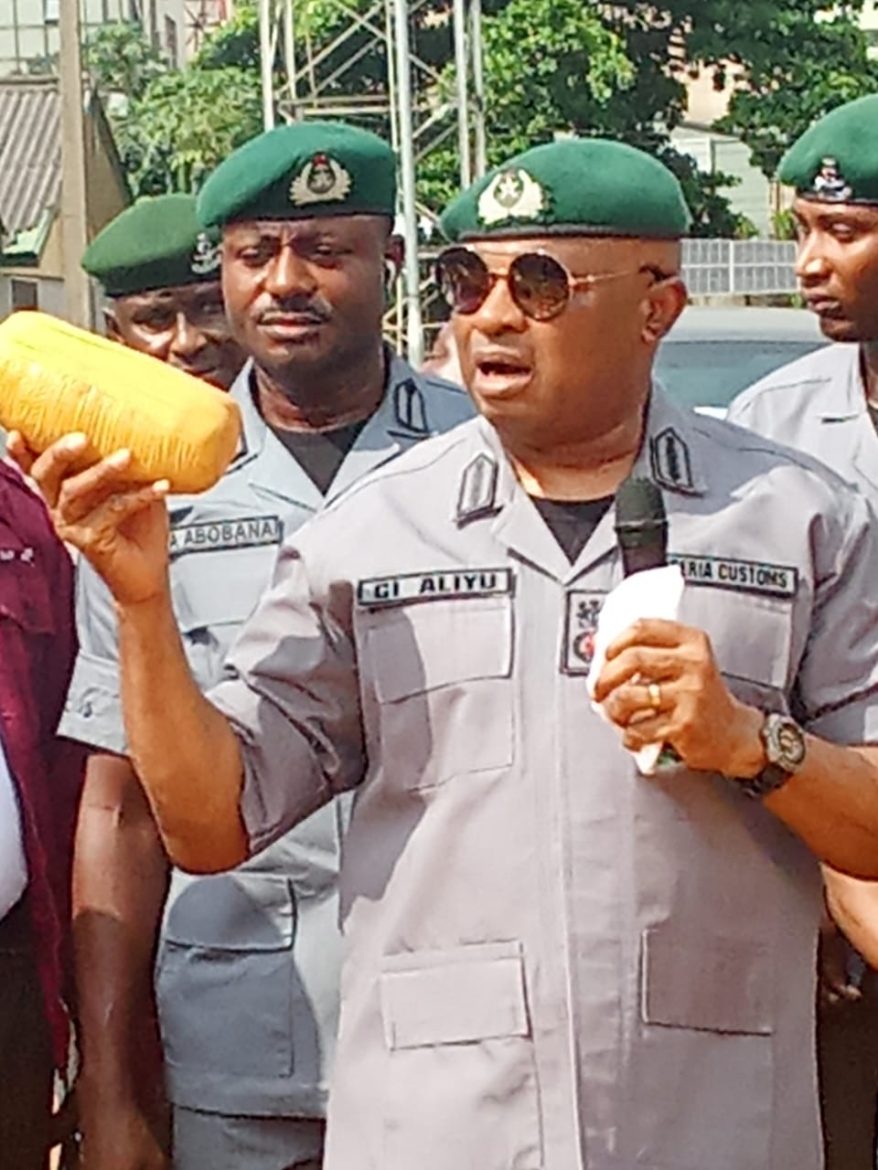
But the most unsettling exhibit lay discreetly secured: 1,431 kilogrammes of synthetic cannabis, infamously known on the streets as “Ghanaian Loud.”
Together, the seizures—worth a staggering ₦3.32 billion in duty paid value—were more than just statistics.
They represented dangers averted, futures protected and communities spared from harm.
If the “Ghanaian Loud” had slipped through, the damages it would cause is unimaginable.
Synthetic cannabis has become a fast-rising threat across West Africa, particularly among young people.
Had the intercepted 3,029 parcels entered the Nigerian market, the impact would have been severe.
Beyond the immediate health risks—psychosis, addiction, cognitive impairment and violent behavioral tendencies—such drugs fuel a wider ecosystem of crime.
Security experts have long warned that narcotics act as chemical courage for criminals, emboldening bandits, cult groups and insurgents.
In densely populated urban centres like Lagos, widespread circulation of such potent substances could have worsened insecurity, strained families, increased school dropouts and deepened mental health crises.
By cutting off the supply chain, Customs officers did not just seize drugs—they likely saved thousands of lives from long-term damage.
The Hidden Dangers in Second-Hand ClothesAmong the seizures were 915 bales of used clothing, commonly referred to as “okrika,” or “Bend down boutique.”
While cheap second-hand clothes are popular among low-income Nigerians, smuggled and unregulated imports pose serious risks.
Such clothes often bypass proper fumigation and health checks, potentially carrying bacteria, fungi and parasites that can trigger skin infections, respiratory problems and other communicable diseases.
There is also an economic angle.
The flood of smuggled used clothing undermines local textile industries, leading to job losses and weakening Nigeria’s manufacturing base.
What looks like a bargain at the roadside can quietly erode both public health and national productivity.
Equally alarming was the interception of 3,362 jerrycans of foreign vegetable oil not certified by the National Agency for Food and Drug Administration and Control (NAFDAC).
Imported edible oils that evade regulatory scrutiny may be contaminated with harmful substances, improperly refined, or stored under unsafe conditions.
Consuming such products over time can increase the risk of organ damage, cardiovascular disease and food poisoning, particularly among children.
In stopping these imports, Customs officers protected Nigerian households from dangers that often go unnoticed until it is too late.
Comptroller Aliyu revealed that the command recorded 144 interceptions following a strategic overhaul that emphasized intelligence-led operations and unpredictable patrols.
Yet the success came at a painful cost: the loss of an officer in the line of duty.
It was a sobering reminder that behind every seizure are men and women who risk their lives daily to protect the nation.
Saluting Gallantry and Vigilance from rescuing live pangolins destined for illegal trade, to intercepting hazardous refrigerator compressors that threaten the environment, the FOU Zone ‘A’ demonstrated a broad commitment to safeguarding Nigeria’s economy, health and ecological future.
The recovery of ₦36.89 million through demand notices further underscores a resolve not only to stop smugglers but also to enforce compliance and accountability.
In an era where smuggling networks grow more sophisticated, the gallant efforts of the Nigeria Customs Service stand as a bulwark against economic sabotage and social decay.
The seizures in Lagos were not just about goods on display; they were about lives protected, crimes prevented and a nation defended—quietly, courageously, and at great personal risk.
Written by By Fabian Anawo