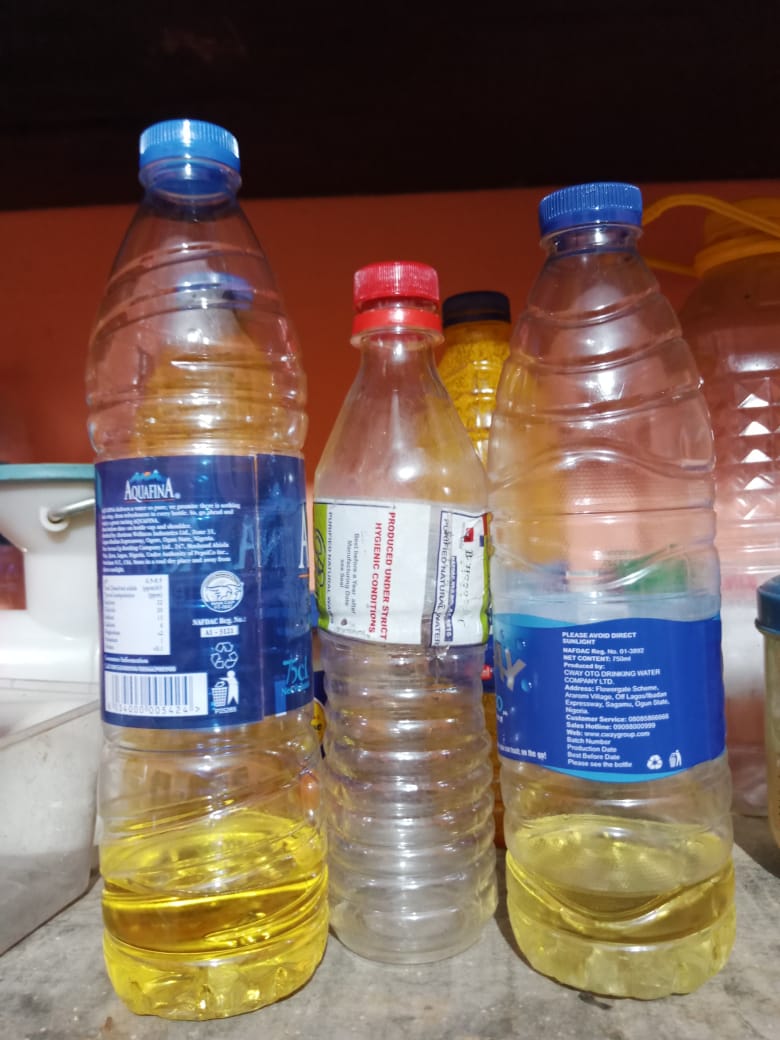
In the maze of traditional markets across Nigeria’s commercial capital, rows of reused plastic bottles glisten with a golden liquid many families simply call “oil.”
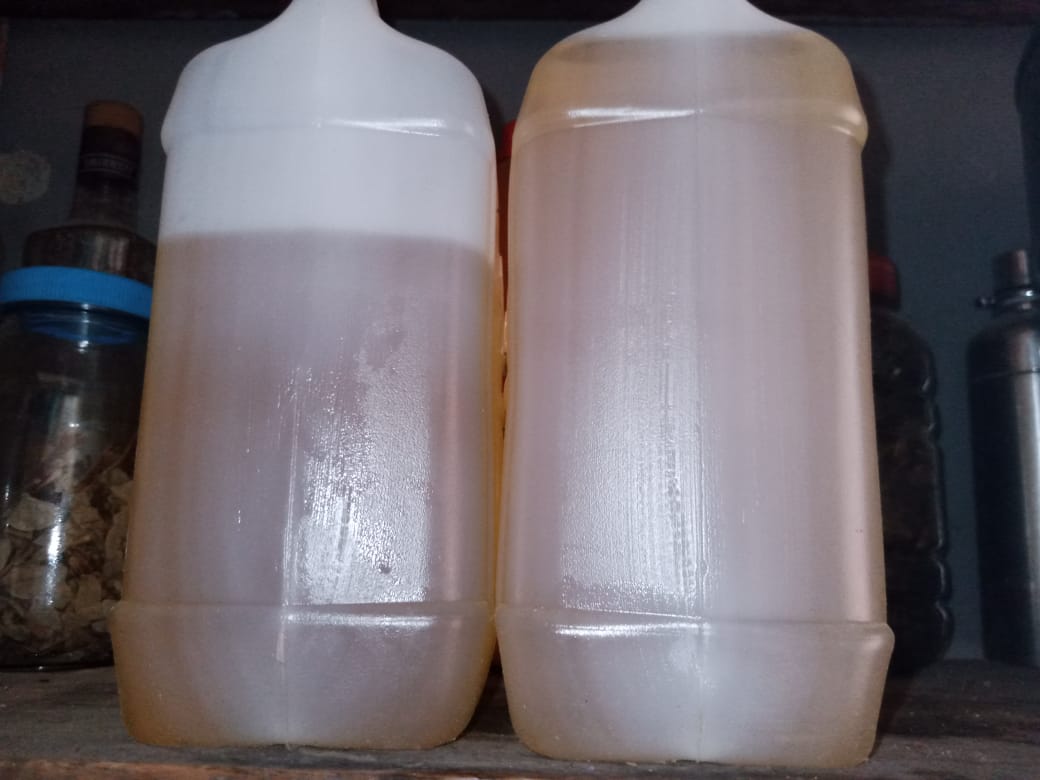
They sit on wooden stalls and kiosk counters, poured into old soft drink bottles or tied in small transparent nylons for takeaway.
There are no labels, no expiry dates and no traceable manufacturer addresses, only a price that struggling consumers can afford.
An investigation by Radio Nigeria found that sachets of unbranded bulk edible oil sell for between ₦250 and ₦600 depending on size.
By contrast, branded bottled oils retail for between ₦3,800 and ₦35,500, placing them beyond the reach of many households grappling with rising food prices.
At Mile 12 Market along Ketu-Ikorodu Road in Lagos, Kolapo Durodola, a wholesaler who says he has traded in cooking oil for 18 years, points to large, unmarked jerry cans stacked behind his stall.
A 50-litre keg of what he calls a “King’s product” sells for ₦45,000, while a locally referred unbranded variant known as “Bora” goes for ₦38,000.
“Even when it is scarce, I still get supply,” Durodola said, adding that some producers have shifted focus to unbranded bulk oil because “Nigerians prefer it, it is cheap.”
Across Lagos markets, the supply chain is largely informal.
Oils imported in bulk arrive in large containers and are repackaged in open stalls into recycled bottles, some previously used for soft drinks or alcoholic beverages, before being sold in smaller quantities.
For many buyers, price outweighs provenance.
“Buying expensive oil all the time? The quotation will be too high and I’m likely to lose my clients,” said a caterer who gave her name as Mama Tee.
“My sister, there is really no difference.
Oil is oil. “Chucks, a roadside akara seller, echoed the sentiment.
“If I use expensive oil, the price of akara cannot be the same and my sales will drop,” he said.
According to available consumption data cited by public health advocates, about 67% of Nigerians consume unbranded bulk edible oils, largely because of the wide price gap with branded alternatives.
But health experts warn that the cost savings may carry hidden dangers.
Dr. Tuyi Igbariola, a public health physician, said the absence of labelling and regulatory oversight leaves consumers unable to determine whether the oil has been adulterated, poorly stored or contaminated during repackaging.
“Without proper quality control, consumers cannot ascertain whether the oil has been stored under unhygienic conditions or contaminated while being repackaged,” he said.
Dr. Chuks Ifeanyi, a Lagos-based public health doctor, described the trend as “a silent crisis.”
People are consuming products they know nothing about, no manufacturing date, no approval number, no ingredient list,” he said.
“The risk of contamination is high, especially when oils are stored in unsuitable containers exposed to heat and sunlight.”
Recycled bottles, sometimes sourced from waste dumps, may harbour microbes or chemical residues, experts say.

Sunday Okoronkwo, executive secretary of CS-SUNN Nigeria, a nutrition-focused organisation, said informal repackaging processes carried out in open markets compromise hygiene standards.
“The effect may not be immediate,” said food safety and nutrition advocate Dr. Abimbola Ajayi.
“But continuous consumption of substandard oil can contribute to chronic health conditions.”
Calls are growing for stronger consumer awareness and tighter enforcement by relevant regulatory agencies.
Some advocates urge authorities to curb imports of unregulated bulk oil and implement pricing and quality control mechanisms to protect consumers.
For now, however, the arithmetic remains stark.
For many families and food vendors navigating Nigeria’s economic headwinds, the choice is less about brand and more about survival.
Cheap today — perhaps costly tomorrow.