The Lagos State Ministry of Health has reinforced its commitment to ending tuberculosis with a large-scale awareness campaign and stakeholder engagement to mark the 2026 World Tuberculosis Day 2026.
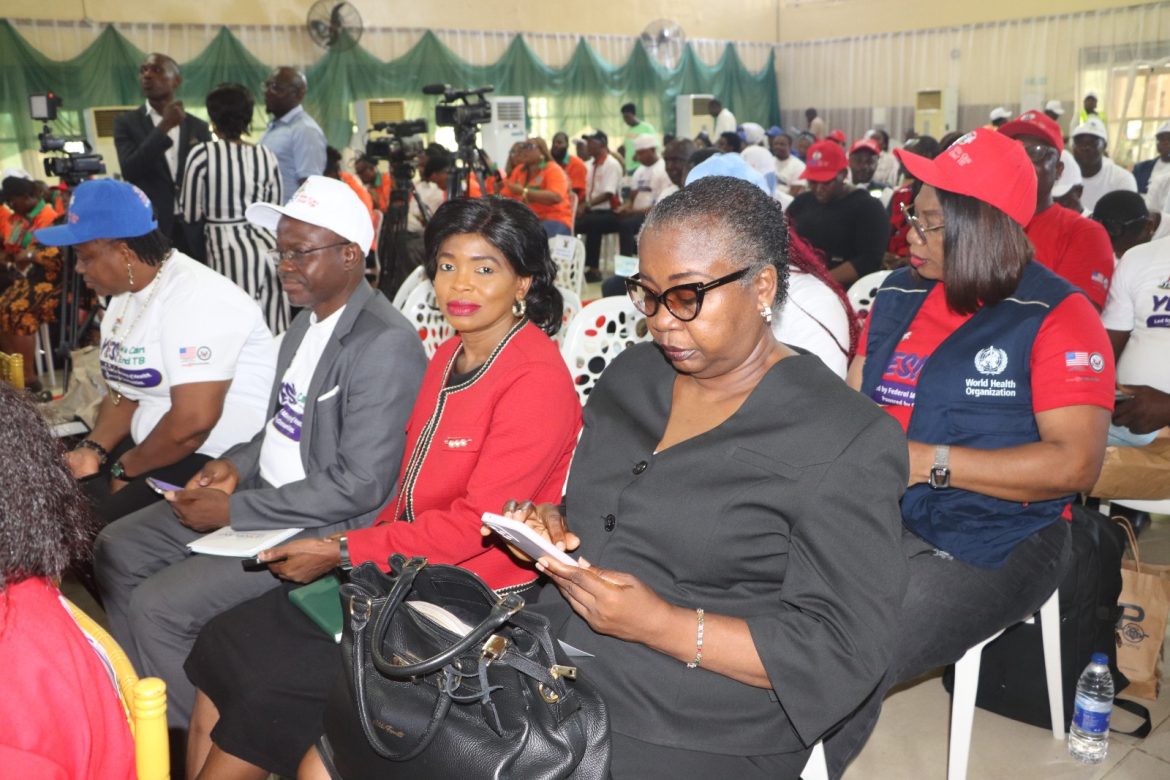
The event, held in Ikeja, featured a mass awareness walk and a high-level symposium, bringing together policymakers, healthcare professionals, development partners, students, and community advocates to promote prevention, early detection, and treatment adherence.
Leading the campaign, the First Lady of Lagos State, Claudiana Ibijoke Sanwo-Olu, called for innovative and community-driven approaches to close the gap in tuberculosis detection.
She noted that despite TB being preventable and curable, thousands of cases remain undiagnosed across the state.
Dr. Sanwo-Olu revealed that of an estimated 30,000 TB cases in Lagos, only about 16,000 have been identified, leaving a significant number capable of spreading the disease within communities.
She urged grassroots health workers to intensify awareness efforts and described them as critical “foot soldiers” in the fight against TB.

According to her, TB treatment lasts between four to six months, warning that incomplete treatment could lead to drug-resistant strains requiring prolonged care.
On funding, the First Lady emphasized the need for sustainable financing beyond donor support, recommending innovative solutions such as trust funds and integrating TB care into health insurance schemes.
Earlier, the Lagos State Commissioner for Health, Akin Abayomi, described tuberculosis as a major public health concern due to its airborne transmission and the state’s dense population.
He listed symptoms including persistent cough, fever, weight loss, and night sweats, urging residents to seek prompt medical attention.
Prof. Abayomi disclosed that Lagos records about 24,000 TB cases annually, with only around 16,000 detected, leaving many undiagnosed and contributing to continued transmission.
He also warned against drug-resistant TB caused by incomplete treatment and called for an end to stigma surrounding the disease.
The Special Adviser to the Governor on Health, Kemi Ogunyemi, described the event as both symbolic and strategic, noting progress made through improved surveillance and expanded diagnostic capacity.
She stressed the need to address underlying social factors such as poverty and overcrowding.Also speaking, the National Professional Officer at the World Health Organization, Vivian Ibiezoko, commended Lagos State’s efforts in expanding access to TB services but called for increased funding, improved diagnostics, and stronger healthcare systems.
Other partners, including the Stop TB Partnership, the Institute of Human Virology Nigeria, and the Damien Foundation Germany, reaffirmed their commitment to supporting the state through collaboration aimed at improving case detection and treatment outcomes.
The event concluded with stakeholders renewing their pledge to eliminate tuberculosis, in line with the 2026 theme: “Yes! We Can End TB: Led by countries, Powered by people.”