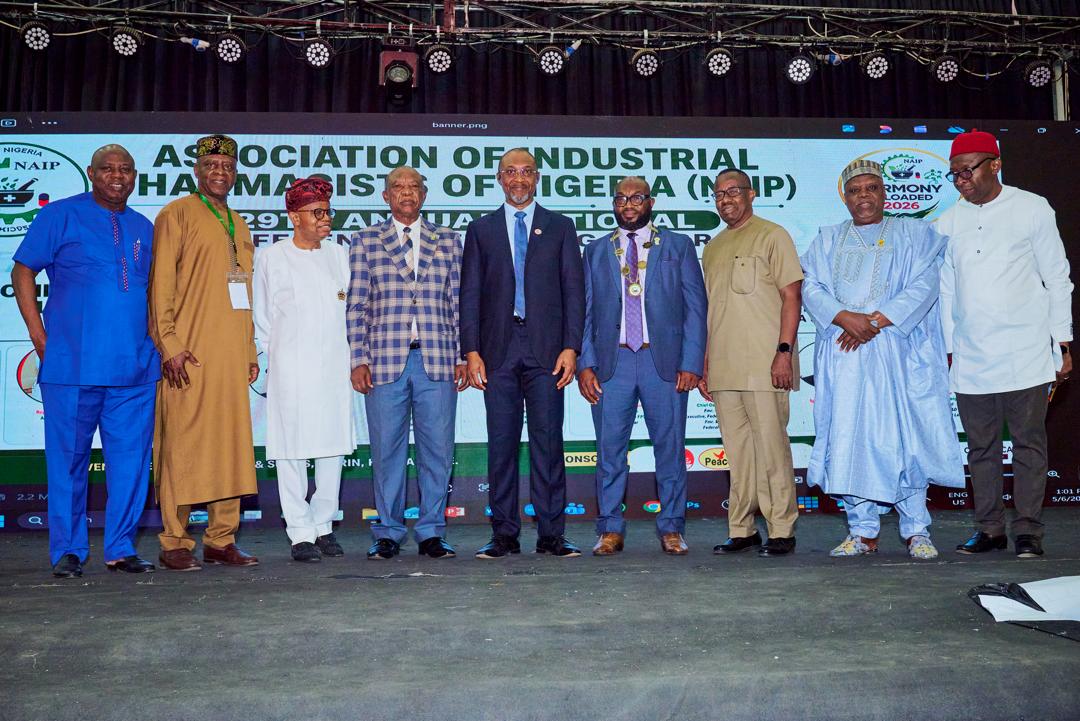
Former Minister of Aviation and Chancellor of the Athena Centre for Policy and Leadership, Osita Chidoka, has challenged Nigerian pharmaceutical manufacturers to abandon what he described as a culture of excuses and adopt global quality standards capable of positioning the country as a major player in Africa’s healthcare and pharmaceutical industry.
Chidoka made the call at the 29th Annual National Conference and Training of the Association of Industrial Pharmacists of Nigeria (NAIP) held in Ilorin, Kwara State, where stakeholders across the pharmaceutical value chain gathered to discuss the future of local drug manufacturing and healthcare security.
Speaking during his keynote address, Chidoka warned that Nigeria’s overdependence on imported pharmaceutical ingredients and finished products continues to weaken the country’s healthcare system and expose citizens to rising medical costs.
According to him, the pharmaceutical industry must move beyond what he termed an “alibi culture” and embrace accountability, innovation, and long-term strategic planning if it hopes to compete globally.
He noted that the cost of essential healthcare products has become increasingly unaffordable for ordinary Nigerians, citing examples of common medical supplements and over-the-counter drugs whose prices now consume a significant portion of workers’ monthly earnings.
Chidoka explained that while similar products may cost far less in countries like the United States and South Africa relative to income levels, many Nigerians struggle to afford the same items because of weak purchasing power and the country’s heavy reliance on imported Active Pharmaceutical Ingredients (APIs).
The former minister stressed that Nigeria’s pharmaceutical sector must undergo both operational and psychological transformation by taking full responsibility for product quality and industrial growth regardless of prevailing economic challenges.

“The future will reward those willing to adapt, innovate, and build for global relevance,” he said.
Chidoka further argued that regulatory compliance should not be treated merely as an obligation but as an opportunity to strengthen manufacturing systems, improve quality assurance, and boost international confidence in Nigerian-made medicines.
He urged manufacturers to look beyond local regulatory benchmarks and begin aligning their operations with standards set by global institutions such as the World Health Organization and the United States Food and Drug Administration.
“The regulator’s weakness is not your permission to be weak,” he declared, insisting that manufacturers must build systems capable of competing internationally.
The keynote speaker also called on pharmaceutical companies to embrace data-driven management systems, innovation, continuous improvement, and self-regulation in order to achieve sustainable growth and regional competitiveness under the African Continental Free Trade Area framework.
Supporting the call for reforms, NAIP National Chairman, Bankole Ezebuilo, emphasized the need for manufacturers to build a culture of excellence that goes beyond regulatory compliance.
Ezebuilo encouraged pharmaceutical firms to adopt modern performance evaluation tools, including Key Performance Indicators, benchmarking systems, balanced scorecards, and continuous feedback mechanisms to improve efficiency and product quality.
The conference attracted top pharmaceutical industry leaders, regulators, policymakers, and healthcare professionals from across the country, including past and present leaders of the Pharmaceutical Society of Nigeria, representatives of the Pharmacists Council of Nigeria, and officials of the Kwara State Government.
International pharmaceutical executive, Dr. Henrietta N. Ukwu, who travelled from the United States to participate in the conference, also delivered presentations focused on global best practices and industry transformation.
Chidoka concluded by urging stakeholders to view quality and innovation as strategic investments rather than regulatory burdens, warning that Nigeria’s ambition to become a pharmaceutical manufacturing hub in Africa would remain difficult to achieve without strong institutional reforms and sustained commitment to excellence.
Reporting By Niran Odufayo