In its determination to make women self reliant and financial independent, WaterAid Nigeria has organised a Business Development Training for sixty-five female area local mechanics, LAMs, in Ikorodu area of Lagos State as part of efforts to strengthen women’s economic empowerment and improve livelihoods within communities.
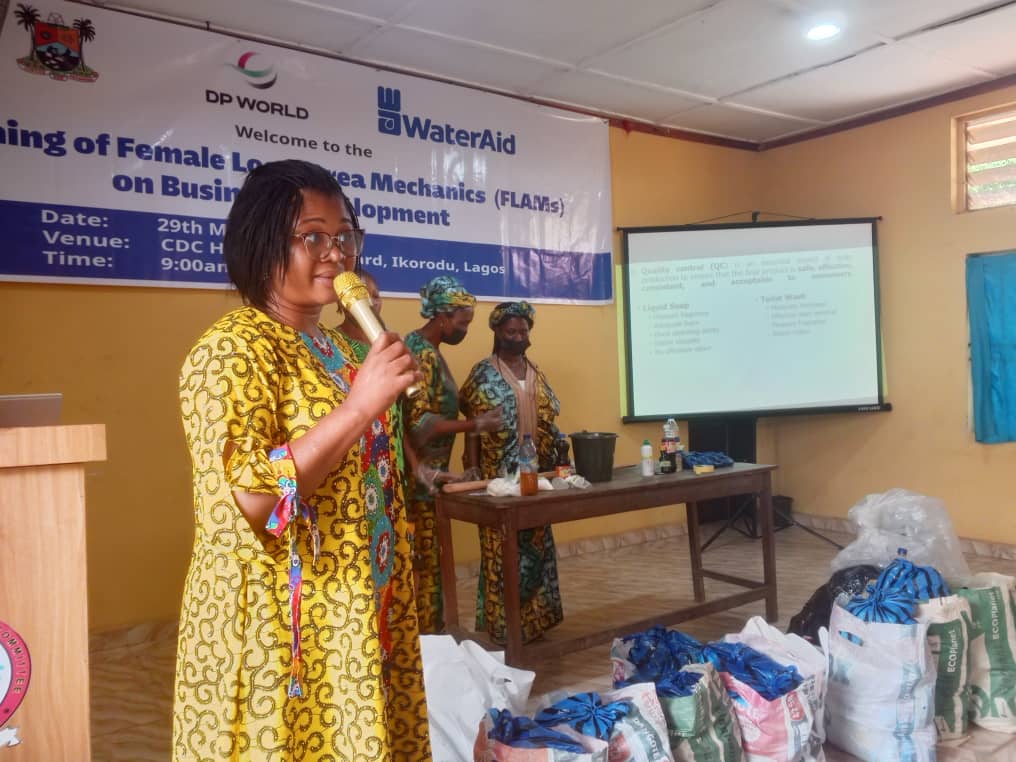
Speaking during the training, Mr. Dare Oduluyi, Sanitation and Hygiene Manager at WaterAid Nigeria, explained that the initiative was designed to equip women with entrepreneurial and business management skills that would enable them to become more financially independent and actively involved in decision-making within their families and communities.
According to him, the training forms part of a broader support package for female local area mechanics, also known as “Female LAMs,” who have previously been trained to operate and maintain water facilities across communities.
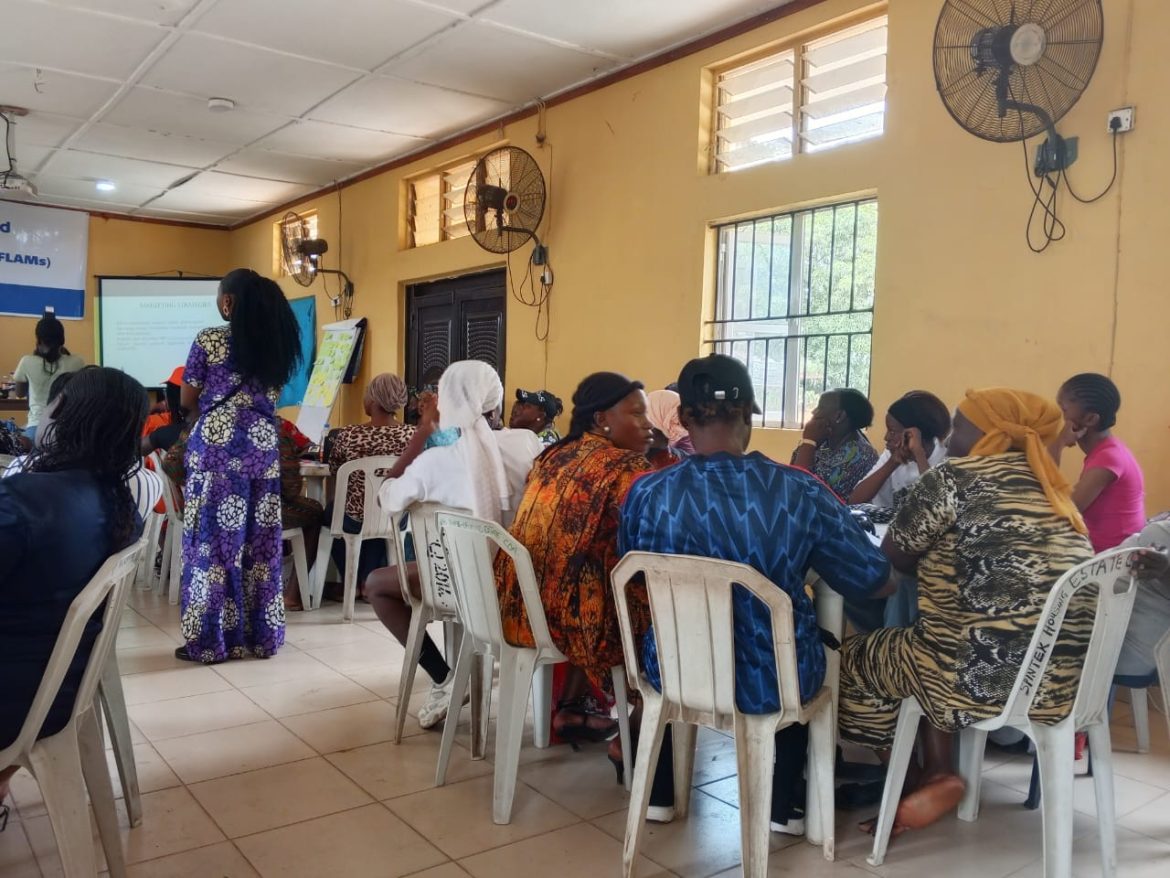
“The training is focused on entrepreneurial and business development skills to support women in addressing some of their needs and improving their livelihoods.
When women contribute economically to their homes, they become more involved in family decision-making processes,” Oduluyi said.
He noted that WaterAid Nigeria had earlier conducted an assessment in Ikorodu North and other parts of Lagos State to identify barriers affecting women’s participation in Water, Sanitation and Hygiene (WASH) related entrepreneurship.
Findings from the assessment revealed gaps in livelihood opportunities, technical know-how, and access to funding.
To address these challenges, WaterAid Nigeria introduced a series of capacity-building programmes, including training on operation and maintenance of WASH facilities, soap making, disinfectant production, and other WASH-related vocational skills.
“We are creating a one-stop-shop support system for these women.
Beyond technical training, we are also exposing them to business development initiatives, financial management, and record-keeping skills to help make their businesses sustainable and profitable,” he added.
Oduluyi further disclosed that WaterAid Nigeria plans to organise a stakeholder roundtable engagement involving government agencies, private sector organisations, and development partners to explore opportunities for financial support and access to soft loans for the beneficiaries.
“Now that they have acquired skills in maintaining facilities, repairing pumps, installing solar systems, and producing hygiene products like liquid soap and disinfectants, the next step is to connect them with financial opportunities that can help them establish and grow their businesses,” he explained.
Advising participants at the end of the training, Oduluyi urged them to remain determined and immediately put the knowledge gained into practice.
“We carefully selected participants who have shown commitment and willingness to grow. My advice to them is to start small and not delay implementation after the training.
Once they begin, no matter how little, they can gradually build sustainable businesses for themselves,” he said.
The training also included sessions on financial literacy, business marketing strategies, and effective record management aimed at ensuring long-term business success for the participants.
One of the facilitators, Mrs. Idowu Ariyo, described the programme as a vital empowerment initiative designed to help women achieve financial independence through practical vocational skills.
Mrs. Ariyo, who facilitated the hands-on sessions on toilet wash and liquid soap production, said the training would equip women in local communities with income-generating skills that require minimal startup capital.
According to her, the small-scale nature of the business makes it accessible for women, especially those seeking sustainable means of livelihood without relying heavily on external support.
“With a little amount of capital, they can comfortably start the business and sustain themselves without depending on anybody,” Ariyo added.
She encouraged participants to make effective use of the knowledge acquired during the training to improve their economic well-being and contribute positively to their households and communities.
The beneficiaries expressed appreciation to WaterAid Nigeria for equipping participants with practical and business-oriented skills that can improve their livelihoods.
According to the participants, the training provided hands-on knowledge on the production of liquid soap and toilet wash, as well as guidance on how to market and profit from the products.
“We learned how to make liquid soap and toilet wash. We were not only taught how to produce them from scratch, but also how to sell them successfully,” she said.
The beneficiary also highlighted the importance of previous sessions held before the practical training, particularly on financial planning and business management.
“Last week, we were trained on financial planning and how to manage businesses effectively.
We used products like liquid soap and toilet wash as examples to understand how to calculate profits and grow a business.
This practical session has further strengthened everything we learned previously,” she added.
Speaking on how the training would impact them, the participants noted that the skills acquired would not only promote environmental cleanliness but also create an opportunity for sustainable income generation.
Written by Yemisi Dada