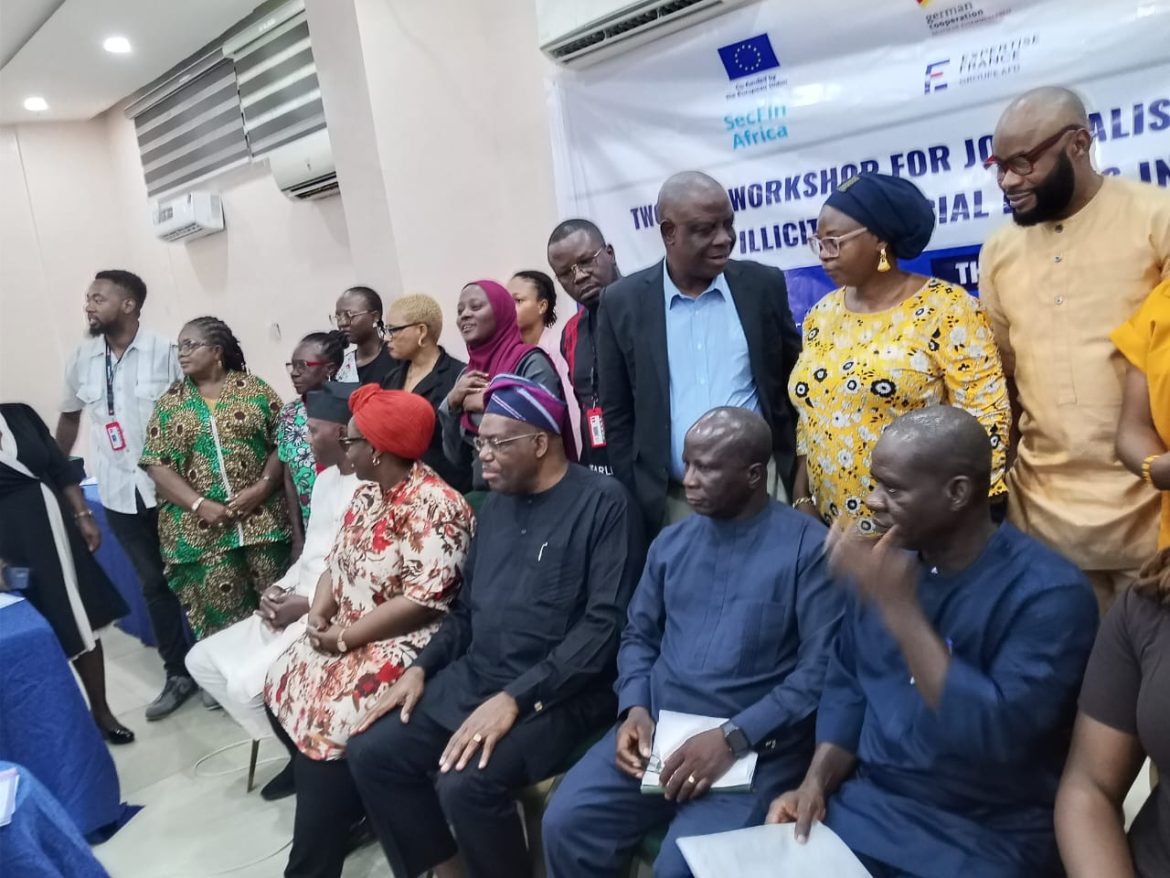
The role of the Media in tackling corruption, uncover financial crimes and hold those at the helms of affairs accountable, took the center stage at a two – day workshop to acquint Journalists on why Illicit Financial Flow, IFF, in Nigeria should be investigated.
The training themed “Strengthening the Capacity of Civil Society Organizations and Journalists to contribute to addressing IFF in Nigeria”, is put together by Africa Network for Environment and Economic Justice, ANEEJ, with support from the European Union through the SecFin Africa Project.
In his address of welcome, the Executive Director, ANEEJ, Mr David Ugolor, explained that the duty of a journalist is not just to report events but to help citizens understand issues that affect them by digging further to uncover Illicit transactions, amplify voices and contribute to strengthening democratic governance and accountability.
“Through credible reporting, rigorous investigation and responsible journalism, the media can help ensure public resources are used for the benefit of Nigerians”. He charged
In a goodwill message, Ms Aisha Bantam of the Nigeria Financial Intelligence Unit, NFIU, stated that the role of the agency is to investigate and escalate suspicious financial flow to the appropriate quarters without interaction with the media as enacted in the law that established the agency
Speaking on understanding illicit financial flow and financial crimes in Nigeria, representative of SecFin Africa Programme, Professor Abdullahi Sheun, noted that development as impacted by IFF has reduced government revenue leading to less funding for education, healthcare, and infrastructure.
“It has increased poverty and inequality, slower economic growth and dependent on borrowing among others’.
Professor Sheun stressed that the Media and Civil Society Organisations have critical roles to play through investigative reporting, noting that combating IFF is a collective responsibility to strengthen democracy, good governance and development.
On their parts, Veteran Journalists, Mr Mojeed Musikilu and Mr Taiwo Adebayo, of the Premium Times in their presentations gave insights into some investigative reports done in the past and encouraged Journalists to up their games by engaging themselves more with investigative stories to keep public office holders on their toes for accountability, transparency in the overall interest of the
Both identified challenges faced by journalists in handling such reports to include “Secrecy jurisdiction block access, Regulatory gaps, threats to journalists, whistle blower limited technical and data capacity”.
The two – day workshop which will end on Friday has in attendance twenty five Journalists from the Print, Broadcast and Online Media.
Reporting By Julie Ekong & Yemisi Dada