says “practice hampers trade, threatens economic growth”
The Area Comptroller of the Nigeria Customs Service (NCS), Seme Command, Comptroller Wale Adenuga, has raised concern over the proliferation of checkpoints along the Lagos–Badagry corridor, describing them as a major obstacle to trade facilitation and economic growth.
He made this known during a courtesy visit by the Nigeria Union of Journalists (NUJ), Lagos State Council, to the Command on Wednesday.
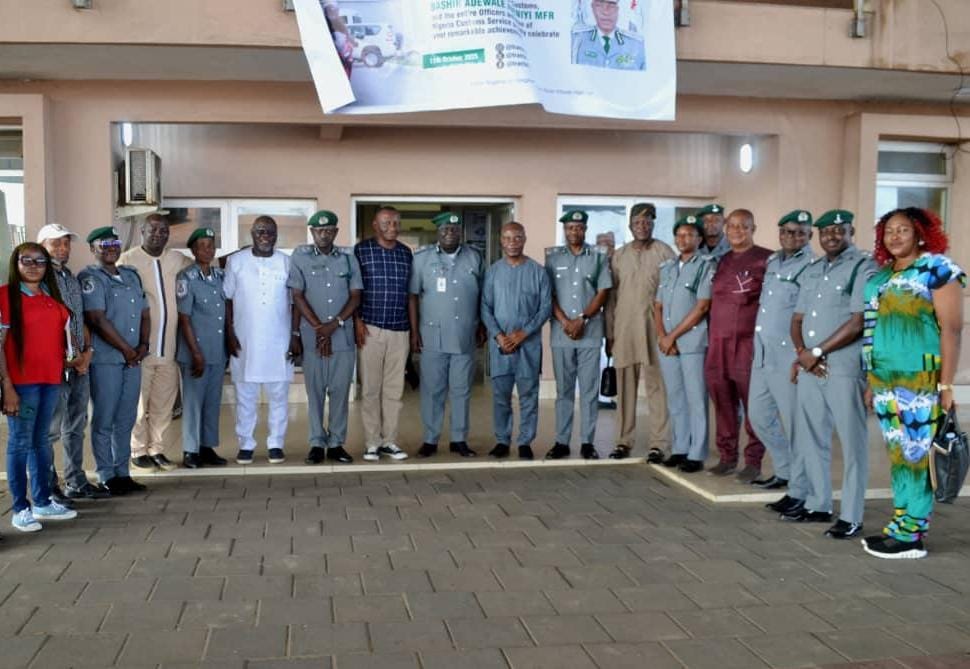
Adenuga lamented that the corridor has too many checkpoints operated by various security agencies, warning that the situation could discourage genuine business and raise the cost of goods.
He explained that only two official checkpoints — Gbaji and Agbara — are recognized by Customs management, while others are illegal and counterproductive.
Highlighting the Command’s performance, the Comptroller disclosed that Seme Command generated about ₦1.5 billion in revenue last month, representing a 182 percent increase, and is projected to hit ₦2 billion for October.
He reaffirmed the Command’s commitment to boosting revenue generation, curbing smuggling, and educating Nigerians on how multiple checkpoints negatively impact trade.
Adenuga described the NUJ visit as a morale booster, noting that such engagements promote transparency and help identify areas for improvement.
He added that beyond trade, the Badagry axis holds untapped potential in tourism and cross-border cooperation that could further enhance national revenue.
In his remarks, NUJ Chairman, Lagos State Council, Comrade Adeleye Ajayi, commended the Customs officers for their professionalism and resilience, despite challenges along the corridor.
He called for urgent intervention to address the issue of multiple checkpoints, saying the practice undermines trade facilitation and investor confidence.
Ajayi further lauded the Command’s role in revenue generation and border security, noting that their commitment to accurate valuation, proper documentation, and collaboration with other security agencies has significantly helped in curbing smuggling, illicit trade, and transnational crimes.-
Reporting by Pentho Francis