The Lagos State Command of the Nigeria Security and Civil Defence Corps (NSCDC) has warned residents, construction workers, and community stakeholders against the destruction of fibre optic cables and other critical national assets across the state.
The Commandant General of the NSCDC, Professor Ahmed Abubakar, directed the Lagos State Command to intensify engagement with community stakeholders to safeguard Critical National Assets and Infrastructure (CNAI) across the country.
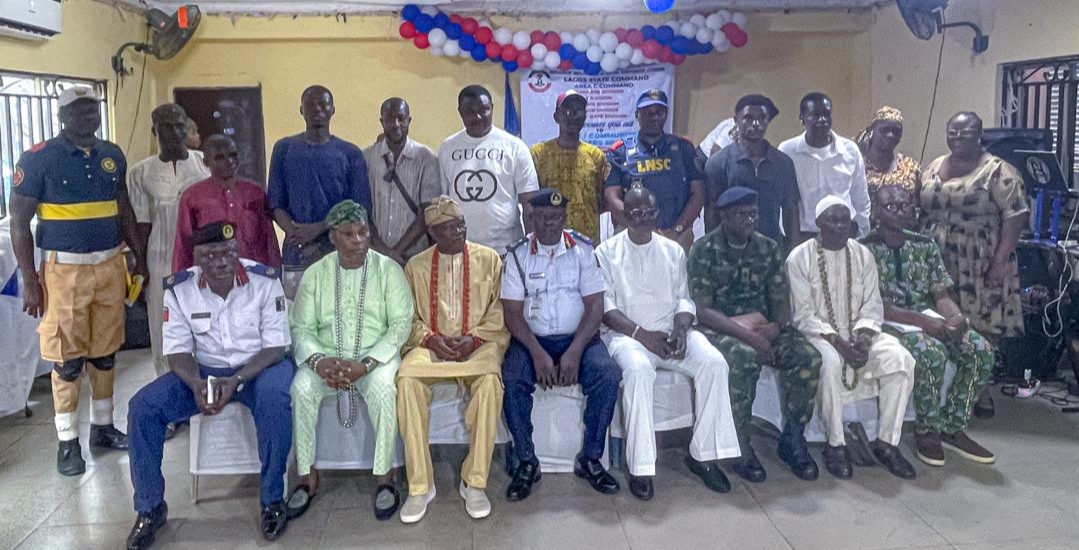
In response to the directive, the Lagos State Command carried out community sensitisation programmes in Surulere, Mushin, Iganmu, Itire-Ikate and Yaba divisional areas under the Area C Command.
The Lagos State Commandant, Mr Adedotun Keshinro, stressed that protecting critical infrastructure remains one of the core statutory responsibilities of the Corps.
According to him, CNAI includes assets within the oil and gas, transportation, power and energy, telecommunications, education and health sectors.
Keshinro commended the Area C Command and its divisions for successfully organising the stakeholder engagement sessions aimed at raising awareness among traditional rulers, religious leaders, market leaders, youths, unions, associations and other community groups.
Represented at the event by the Head of the Critical National Assets and Infrastructure Department, Deputy Commandant of Corps Kolawole Agbetiloye, the Commandant said the outreach programme was designed to bring anti-vandalism campaigns closer to grassroots communities.
He noted that the campaign also addresses other illegal activities such as illegal dredging, illegal mining and unlawful scrap dealings.
The NSCDC specifically warned against the destruction of fibre optic cables often buried underground by telecommunications engineers to improve network connectivity and enhance service delivery.
The Command urged construction companies and site engineers to collaborate with the Corps and the Nigerian Communications Commission while carrying out projects to prevent damage to fibre optic cables and other vital infrastructure.
Keshinro also called on residents to promptly report suspicious activities linked to vandalism and infrastructure sabotage to the nearest NSCDC office or through the Lagos State emergency numbers: 112 and 767.
Reports can also be made to the command’s public relations unit.
Speaking at the engagement, the Chairman of Surulere Local Government Area, Mr Sulaiman Yusuf, commended the NSCDC for its proactive approach to strengthening security at the grassroots.
Yusuf described the initiative as a valuable platform for addressing community security concerns and pledged continued support to protect public assets, particularly against the theft of road manholes.
He also encouraged officers across the five divisions under the Area C Command to sustain the advocacy campaigns and assured them of his administration’s support in providing operational tools and improved office facilities.
The Baale of Abule-Ijesha also pledged the support of traditional institutions in helping the NSCDC fulfil its mandate.
He, however, urged the command to maintain regular engagement with traditional authorities to strengthen operational feedback and response mechanisms.
Stakeholders at the meeting collectively resolved to take responsibility for protecting critical infrastructure within their communities, including manholes, fibre optic cables, rail sleepers, power installations and telecommunications equipment from vandals and criminal elements.
The National Orientation Agency (NOA) representative in Surulere, Mr Uzi Ihonde, reaffirmed the agency’s commitment to partnering with the NSCDC through joint sensitisation programmes to reduce vandalism across the state.
Members of the Scrap Dealers Association who attended the meeting also highlighted their contributions to community development, noting that their activities help create jobs and reduce crime within their areas.
They expressed willingness to collaborate with authorities to ensure their operations are not used to encourage vandalism of public infrastructure.
Written by Yemisi Dada