Concerns over the high cost of aviation training took centre stage in Lagos as aspiring aviators confronted industry leaders during the Firechat with African Aviators 2.0 and the launch of Mentortude, with the theme “Building Capacity Through Pragmatic Mentorship and Institutional Leadership.”
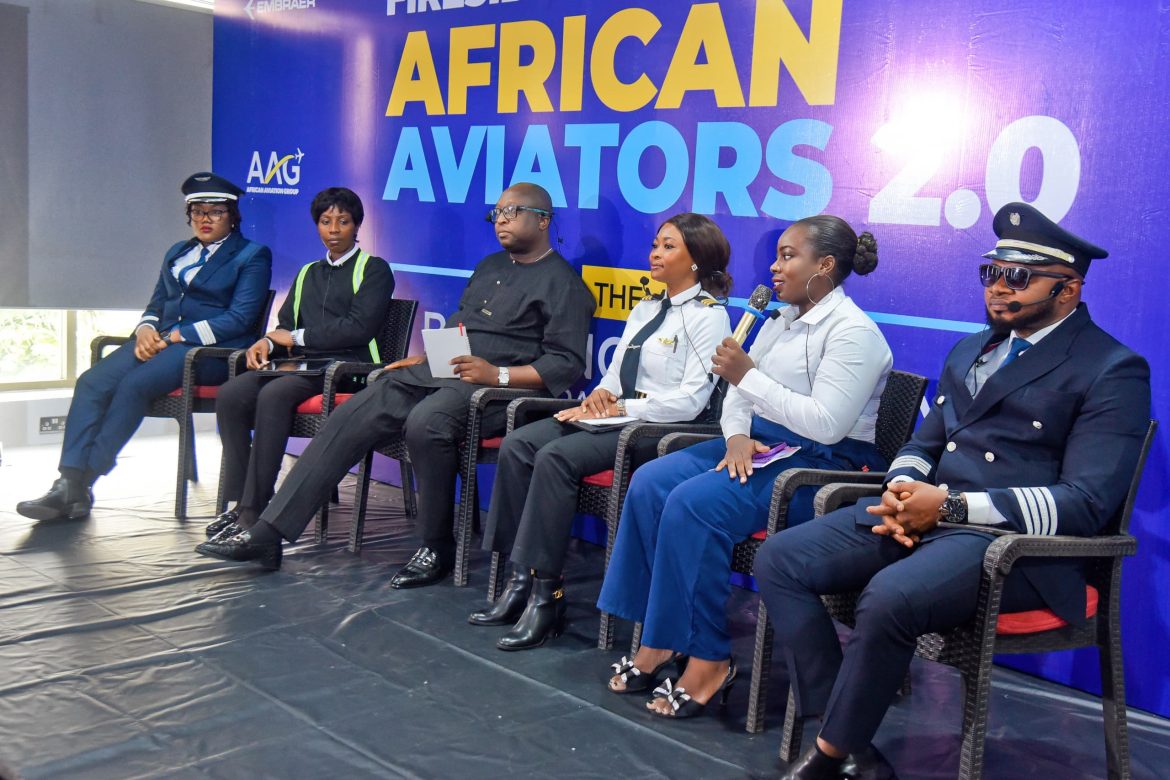
For many of the young participants, the dream of becoming pilots, engineers or cabin crew is increasingly threatened by prohibitive costs, but seasoned professionals insist that while the journey is expensive, it is not impossible.
Senior First Officer, SFO, Theodora Ndabai, urged aspiring aviators to look beyond conventional funding routes, pointing to state government bursaries, community support systems and airline-sponsored training schemes as viable pathways.
Drawing from her own journey, she stressed that persistence and strategic positioning are critical, noting that several pilots have emerged through sponsorships from governments, churches, and even industry connections.
The female pilot also highlighted the growing role of indigenous carriers like Ibom Air in training pilots, advising young people to approach the process step-by-step, tackling one financial hurdle at a time while maintaining the right mindset.
For Captain Ifeanyi Callistus, whose career was shaped by full sponsorship, the reality for many remains stark.
He acknowledged the financial burden of training but encouraged young pilots to maximize opportunities by networking and staying prepared.
According to him, timing and visibility can make the difference, as opportunities often favour those already within the system.
He warned against rushing into costly type-rating programmes without employment prospects, advising instead that candidates secure jobs first and invest strategically when the opportunity arises.
Captain Callistus credited his breakthrough to mentorship and support from industry figures, including Dr. Allen Onyema, Chairman, Air Peace, underscoring the importance of positioning and readiness.
Captain Ibironke Rotimi-Olajide, however, shifted the conversation beyond funding to the demanding nature of the profession itself, reminding participants that aviation requires discipline, resilience and excellence.
She described the field as rigorous and unforgiving, where technical knowledge and mental preparedness can be the difference between safety and disaster.
While acknowledging the financial barriers, she maintained that determination, continuous learning and a commitment to excellence remain essential for anyone hoping to succeed in the skies.
Together, the speakers painted a picture of an industry where funding remains a major obstacle, but not an insurmountable one, provided aspiring aviators combine persistence, strategic thinking and access to the right support systems.
The mentorship programme which is the second edition with African Aviators in Lagos, drew industry leaders, professionals and aspiring talents into frank conversations about the future of aviation on the continent.
The forum spotlighted the role of mentorship and knowledge-sharing in strengthening Africa’s aviation workforce.
In his remarks, the African Aviation Group, AAG, Convener Mr. Chidozie Uzoezie described aviation as a uniquely transformative industry where “dreams literally take flight,” adding that Africa is increasingly shaping, not just participating in, global aviation.
He noted that the conversations could ignite the next generation of African aviators.
“Today’s conversation may very well be the spark that launches someone in this room into the skies.”
The event featured a panel of seasoned professionals who shared career insights and industry realities, alongside the launch of Mentortude, a new mentorship platform, and a partnership with Aeroclass.
Backed by sponsor Embraer, the gathering was widely praised by participants as inspiring
Written By Nosa Aituamen