At first light along the winding creeks of Agbara, where mangroves cast long shadows over narrow waterways, a silent battle unfolds daily.
It is a fight waged not with spectacle, but with vigilance, discipline, and quiet determination. At its center is Customs Commander Olukayode Oladapo Afeni, whose recent operations are reshaping the fight against smuggling in southwestern Nigeria.
For Afeni, enforcement goes beyond seizures and statistics. It is about protecting livelihoods, preserving national integrity, and safeguarding an economy threatened by illicit trade.
That resolve was evident on March 11, 2026, when his officers, acting on intelligence, intercepted a truck along the Agbara corridor. Concealed within were 2,539 kegs of smuggled vegetable oil, each containing 25 litres. The goods had been transported in small consignments through creeks to evade detection—a tactic increasingly favoured by smuggling networks.
The interception was part of a broader pattern. On March 4, operatives stopped a silo truck carrying 4,325 cartons of foreign spaghetti. Months earlier, in December 2025, the Command seized 2,090 kegs of vegetable oil. To Afeni, these incidents point to coordinated efforts rather than isolated crimes.
“These are deliberate attempts to undermine local industries and circumvent lawful trade,” he said.
For domestic producers, particularly in the vegetable oil sector, such interventions are critical. Smuggled goods—often cheaper and unregulated—distort markets and weaken legitimate businesses already under pressure.
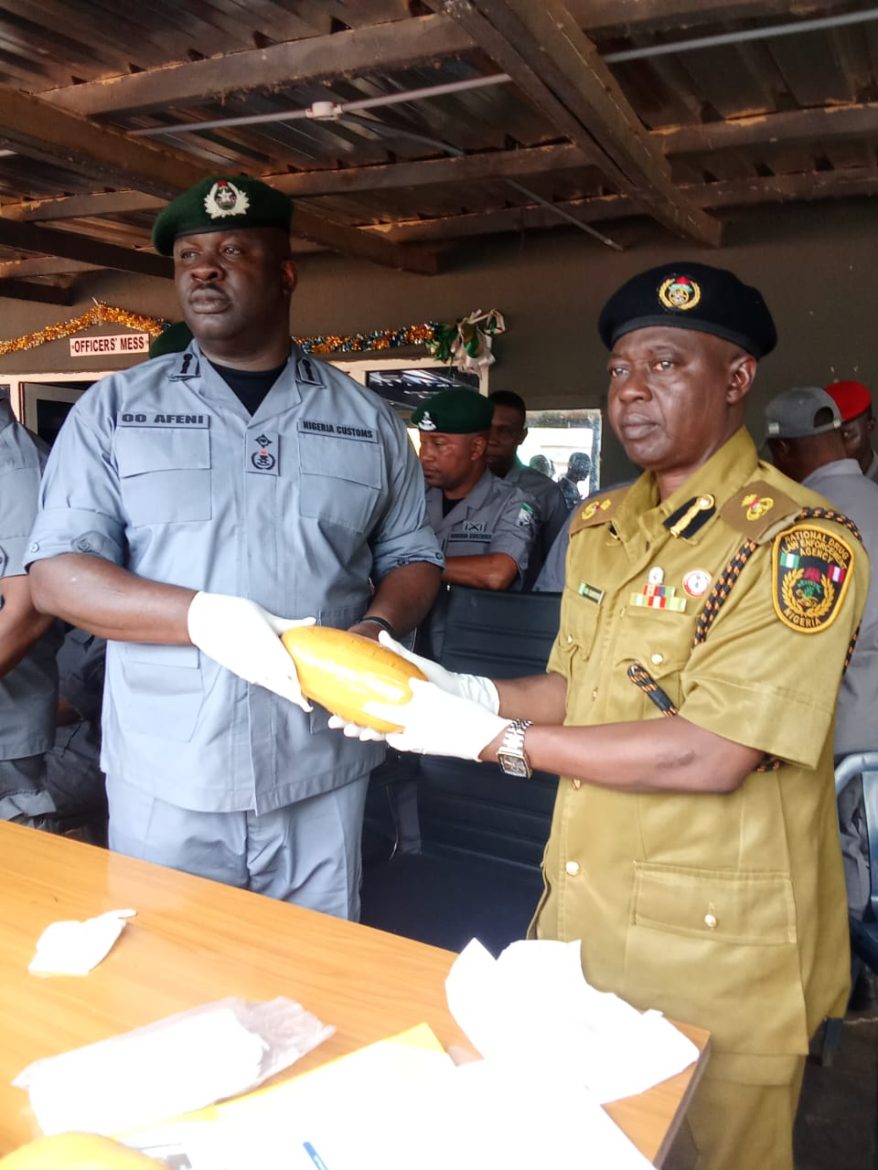
Beyond food items, the Command’s operations have uncovered a wide range of illicit goods. Recent seizures include 2,547 packs of cannabis handed over to the National Drug Law Enforcement Agency; 5,455 kegs of petrol, amounting to over 13,000 litres; and 1,204 bags of foreign rice.
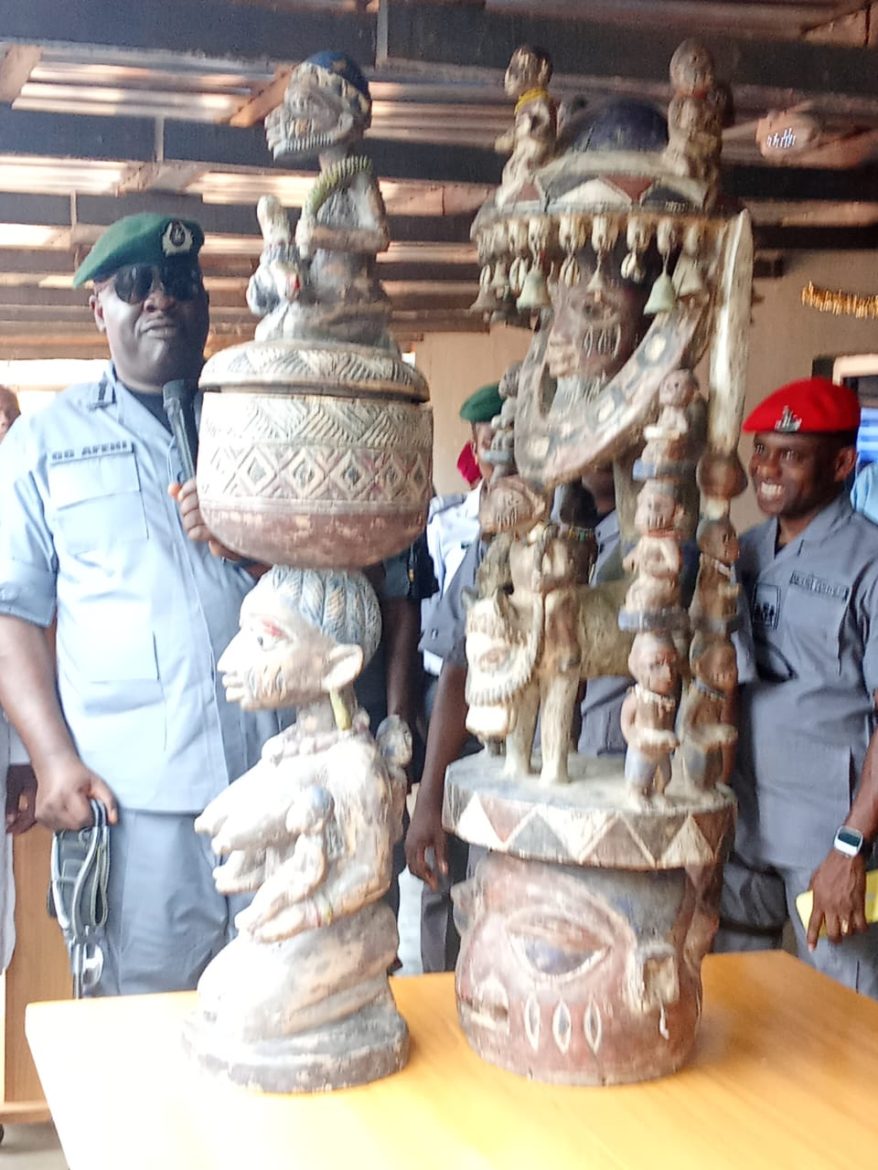
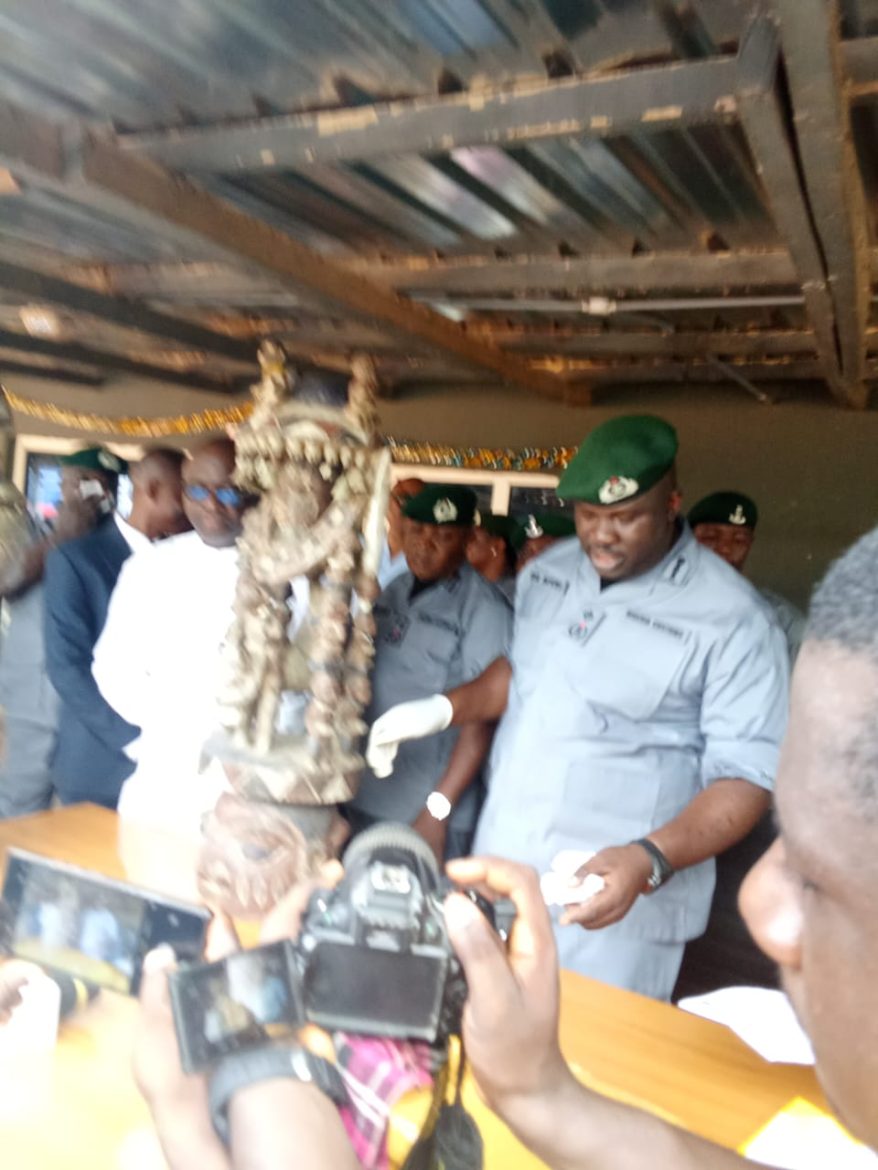
Other recoveries highlight deeper national concerns. Officers rescued four live pangolins, now under conservation protection, and intercepted two 19th-century antiquities that were nearly trafficked out of the country.
The antiquities, now secured in a museum in Abeokuta, underscore the broader implications of smuggling. “They attempted to take a part of our heritage,” Afeni noted. “We ensured it remains where it belongs.”
Afeni’s approach is anchored in intelligence-led enforcement and strong inter-agency collaboration.
Working under the leadership of the Comptroller-General of Customs, Bashir Adewale Adeniyi, the Command has strengthened ties with agencies responsible for drug enforcement, environmental protection, and border security.
This cooperation has become essential as smuggling networks grow more sophisticated, constantly adapting routes and methods. Afeni, however, remains confident.
“There is no concealment strategy we cannot detect,” he said.
Behind these successes is a team of officers operating under demanding conditions—navigating swamps, acting on intelligence, and confronting organised smuggling syndicates.
The results are significant.
The Command has recorded seizures with a Duty Paid Value of ₦1.35 billion, generated ₦285.6 million in revenue—surpassing the previous year—and facilitated exports of 95 metric tonnes valued at over ₦305 million.
These figures represent more than enforcement gains; they signal progress toward a more regulated and resilient trading environment.
Afeni’s efforts align with the broader economic agenda of President Bola Ahmed Tinubu, which prioritises local production, fair trade, and national security. His mission remains clear: to make smuggling routes increasingly untenable while fostering legitimate commerce.
Despite the gains, he acknowledges that the challenge persists. Smuggling networks continue to evolve, exploiting both geography and demand. Yet, so too does the response.
With growing support from host communities, traditional institutions, and the media, enforcement is becoming a shared responsibility. “Smuggling will continue to change,” Afeni said. “But we will continue to adapt.”
In a nation often preoccupied with more visible crises, the work of officers like Afeni rarely commands headlines. Yet its impact is far-reaching—protecting industries, securing communities, and preserving national identity.
This is more than a story of seizures. It is a story of steady leadership and an unrelenting commitment to defend the unseen frontlines of Nigeria’s economy.
Reporting By Fabian Anawo