The Director-General of the Nigeria Centre for Disease Control and Prevention (NCDC), Dr. Jide Idris, has assured Nigerians that while no country can claim to be completely prepared for an Ebola outbreak, Nigeria has the capacity to detect, respond to, and contain the virus should it enter the country.
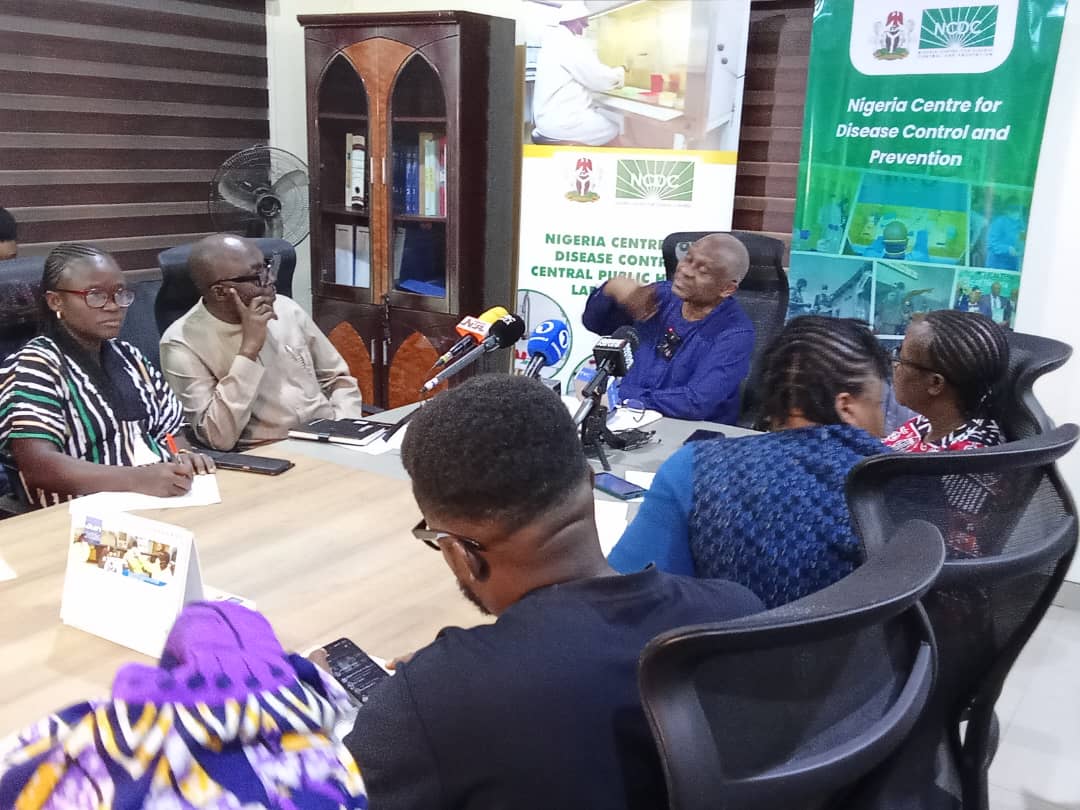
Speaking with journalists in Lagos amid growing concerns over a fresh Ebola outbreak in parts of East Africa, Dr. Idris said the country’s existing surveillance and response systems are robust enough to prevent widespread transmission.
According to him, no nation is ever 100 percent prepared for a disease outbreak of such magnitude.”No country can be one hundred percent prepared, not even America can claim that.
But if Ebola comes into Nigeria, we will stop it with the current knowledge and systems we have now,” he said.
The NCDC boss classified the risk of Ebola importation into Nigeria as high, citing increased international travel, population movement, and porous borders as key factors that could facilitate the entry of the virus.
He disclosed that the Federal Government has intensified surveillance and emergency preparedness measures nationwide, particularly at international airports and land borders.”Surveillance at points of entry is our main focus,” Idris stated, adding that Port Health Services officials, aviation agencies, immigration authorities, and state governments are collaborating to monitor travelers arriving from affected countries.
He explained that screening procedures have already been strengthened at Nigeria’s five international airports in Lagos, Abuja, Kano, Enugu, and Port Harcourt.
Travelers arriving from countries considered high-risk are required to undergo health screening and complete mandatory health declaration forms before entering Nigeria.
“The idea is not to allow the disease to enter the country,” he said, stressing that early detection at entry points remains Nigeria’s first line of defence against Ebola importation.
Despite these efforts, Dr. Idris acknowledged that Nigeria still faces significant challenges, particularly in the areas of healthcare workforce and laboratory capacity.
He noted that a shortage of health workers continues to affect the country’s overall disease response capability, including the operations of the NCDC.
Laboratory infrastructure also remains limited, with only a handful of facilities in the country capable of conducting Ebola testing due to the high cost of establishing and maintaining biosafety laboratories and training specialised personnel.
“The laboratories are expensive, maintaining them is expensive, and training the right personnel is also expensive. That is why the system has been tiered,” he explained.
The designated facilities currently equipped for Ebola testing include the National Reference Laboratory in Abuja, Lagos University Teaching Hospital (LUTH), the Nigerian Institute of Medical Research (NIMR), and selected private laboratories with genomic testing capabilities.
Dr. Idris assured that any suspected Ebola case detected anywhere in the country would be immediately isolated, while samples would be sent for laboratory confirmation before any public announcement is made.
He emphasised that infection prevention and control measures remain the most effective tools in preventing the spread of Ebola.”If all of us adopt proper hygiene practices, hospitals become safer for everyone,” he said.
Explaining how the virus spreads, Idris said Ebola is transmitted through direct contact with infected body fluids such as blood, sweat, saliva, and other bodily secretions, stressing that personal hygiene and responsible behaviour are critical in preventing transmission.
The NCDC Director-General also appealed to journalists and members of the public to avoid spreading misinformation or unverified reports that could trigger unnecessary panic.
“When we start creating doubts and fear among our people, we are putting ourselves in danger,” he warned.He further assured Nigerians that the agency would be transparent in its communication if any Ebola case is confirmed.
“We will not deny anything. We will not hide anything from Nigerians. If Ebola comes and it is Ebola, we will say it openly,” he stated.
Dr. Idris said Nigeria’s successful containment of the Ebola outbreak in 2014 continues to shape current preparedness efforts.
He disclosed that readiness assessments have been conducted in hundreds of healthcare facilities across the country, while emergency coordination systems have been activated to strengthen response capacity.
He added that discussions are ongoing regarding hazard allowances, insurance coverage, and welfare support for frontline healthcare workers who may be involved in surveillance, contact tracing, and case management activities.
While acknowledging existing gaps in the country’s preparedness framework, Idris stressed that disease preparedness is a continuous process requiring the participation of government institutions, healthcare professionals, the media, and the general public.
“There are gaps, and we are not denying them. But preparedness is a continuous process. The problem is not only with the NCDC. It concerns everybody, including the public,” he said.
The NCDC boss reiterated that there is currently no confirmed Ebola case in Nigeria but urged citizens to remain vigilant.
“We are hopeful Ebola will not come into Nigeria. But if it does, we are ready to respond and contain it,” he concluded.