The Nigerian Institute of Medical Research (NIMR) has defended the retirement of four of its directors, saying the decision was a direct implementation of a Federal Government directive, amid rising tensions with the Academic Staff Union of Research Institutions (ASURI) over a planned strike and picketing.
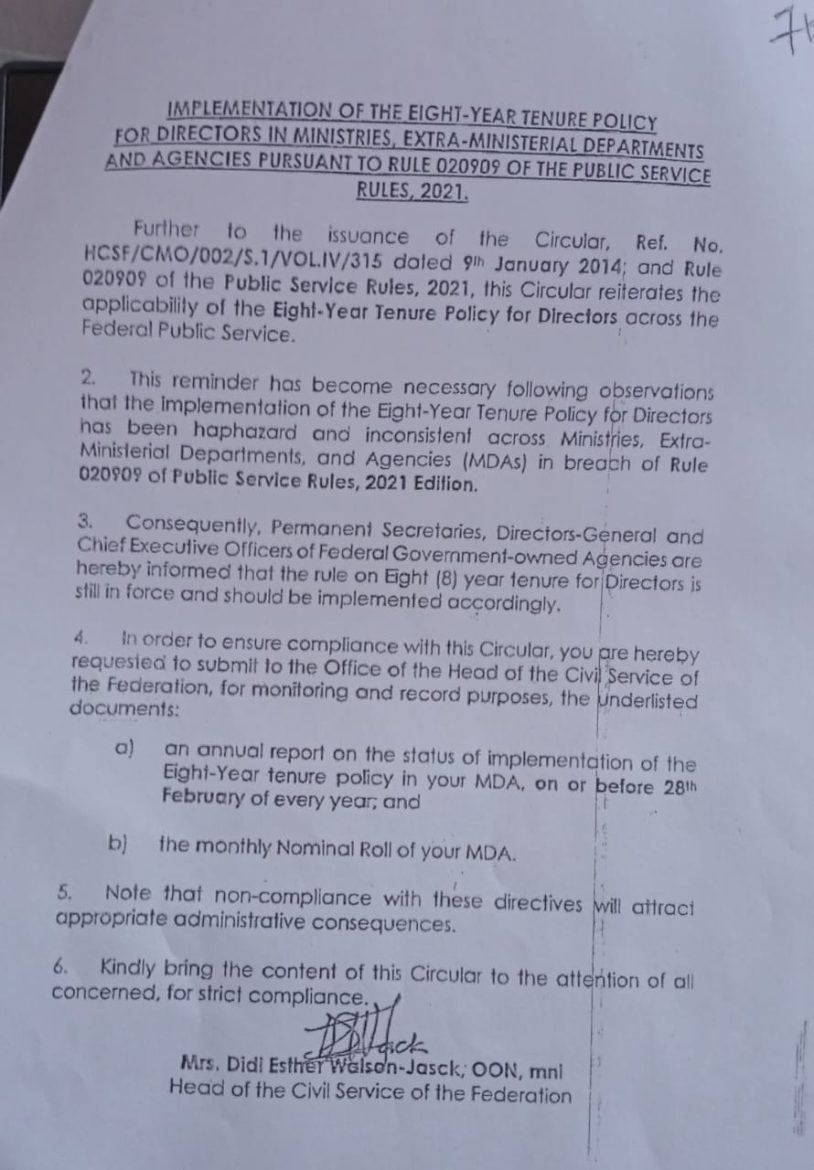
In a statement, the Institute’s Director of Administration, Mr Bitrus Nelson, described the exercise as a routine administrative action carried out in line with the government’s eight-year tenure policy for directors in Ministries, Departments and Agencies (MDAs).
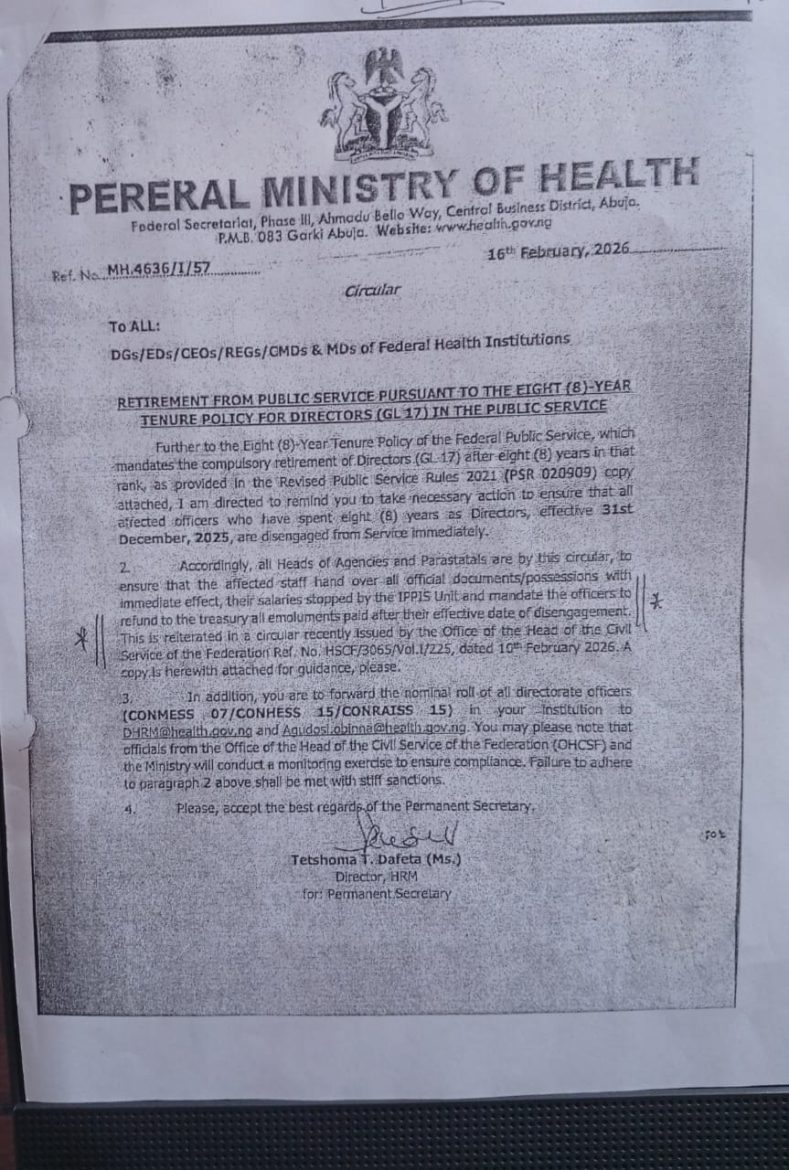
He said the directive was conveyed through official communications from the Office of the Head of the Civil Service of the Federation and the Federal Ministry of Health and Social Welfare, NIMR’s supervising ministry.
“Management is only implementing the government’s directive. Any opposition to the implementation of these circulars should be directed to the issuing authorities,” Nelson said, adding that the Institute is bound to comply with lawful instructions.
He maintained that any industrial action against NIMR over the matter was “misdirected,” stressing that the Institute had no discretion in enforcing the policy.
NIMR also disclosed that one of the affected directors had complied fully with the directive and had begun refunding emoluments received after the effective date of disengagement, in line with government regulations.
The Institute dismissed claims by ASURI that affected staff were being evicted from official quarters, describing the allegation as false and without basis.“There is no plan to evict any staff from official quarters. No such directive has been issued by management,” the statement said.
A circular issued by the Office of the Head of the Civil Service of the Federation on February 10, 2026, reaffirmed the enforcement of the eight-year tenure limit for directors, in accordance with Rule 020909 of the Public Service Rules (2021 edition), warning that violations could attract sanctions.
Under the rule, directors are required to retire after serving eight years on the post.NIMR further said it would refrain from engaging in prolonged media exchanges, accusing ASURI of making statements aimed at discrediting the Director-General and undermining the Institute’s leadership.
The management reiterated that the Director-General remains committed to enforcing discipline, accountability and adherence to established rules across the Institute.
On concerns raised by the union regarding research operations, NIMR clarified that no new administrative bottlenecks had been introduced.
It explained that grant applications are processed through the Institute’s Grants Unit to ensure transparency, accountability and proper institutional oversight, not to restrict researchers.
“Researchers are not prevented from engaging directly with funders on day-to-day grant activities. However, processes requiring institutional endorsement must follow established procedures to align with international best practices,” the statement said.
The Institute also addressed concerns about working hours, noting that while flexibility is recognised for researchers, such arrangements must remain within the framework of the Public Service Rules.
It added that no researcher has been penalised on that basis.NIMR further rejected claims that researchers had been excluded from governance, pointing out that a researcher currently serves as Deputy Director-General, while others head research centres and participate actively in key committees.
According to the Institute, several statutory and administrative committees—many chaired by ASURI members—remain central to decision-making, with the authority to convene meetings and make recommendations to management.
NIMR reaffirmed its commitment to due process and said it would continue to implement government policies while maintaining institutional transparency and accountability.