The Federal Government has unveiled plans to establish a Presidential Nutrition Intervention Fund that will reward states demonstrating strong political commitment and measurable progress in improving nutrition through a performance-based financing mechanism.
The proposed initiative is designed to encourage ring-fenced funding for nutrition, increase private sector participation and strengthen the coordination of multiple funding streams under a single accountability framework.
The Senior Special Assistant to the President on Public Health and Focal Person for Nutrition in the Office of the Vice President, Mrs. Uju Rochas-Anwukah, disclosed this during the 2026 Legislative Strategic Policy Dialogue on Advancing Key Nutrition Priorities in Nigeria.
Rochas-Anwukah revealed that Food and Nutrition Committees have already been established across the country’s 774 local government areas, while 417 local government areas have functional structures supporting implementation. She added that nine states have inaugurated State Councils on Nutrition in line with the directive of the Vice President.
She, however, expressed concern that many states are yet to comply, urging their representatives to work closely with governors to establish the councils, describing them as a critical requirement for accessing future nutrition financing opportunities.
According to her, Nigeria still has about 19 million stunted children, while malnutrition continues to undermine the country’s human capital development and long-term economic growth.
“Malnutrition costs Nigeria billions of dollars annually through reduced productivity, poor educational outcomes and increased healthcare costs,” she said.
Rochas-Anwukah urged lawmakers to play a more active role by passing nutrition-related legislation, increasing budgetary allocations, ensuring the timely release of approved funds and strengthening oversight of nutrition programmes.
She described legislative action as the foundation for sustainable nutrition financing and improved nutrition outcomes.
She also called on lawmakers to champion the proposed National Nutrition Bill, domesticate nutrition legislation at the state level and institutionalise six months of paid maternity leave to improve child nutrition and maternal health.
In addition, she advocated food fortification as one of the most cost-effective strategies for addressing micronutrient deficiencies among women and children.
She further urged legislators to become ambassadors of the Nutrition 774 Initiative in their constituencies by promoting nutrition awareness during constituency engagements, town hall meetings and budget defence sessions.
According to Rochas-Anwukah, the long-term success of the initiative depends on legislative commitment to institutionalising nutrition governance through strong laws, sustainable financing and effective oversight.
She appealed to lawmakers to legislate, appropriate, oversee and champion the Nutrition 774 Initiative, expressing confidence that their decisions would shape Nigeria’s human capital development for generations.
Nutrition is a Smart Investment – Nutrition International
Speaking at the dialogue, the Country Director of Nutrition International Nigeria, Dr. Osita Okonkwo, called for stronger legislative commitment, sustainable financing and greater accountability in addressing Nigeria’s persistent nutrition challenges.
He described nutrition as one of the smartest investments Nigeria can make for its future and commended stakeholders for the progress recorded so far.
According to him, the growing participation of legislators in nutrition discussions demonstrates that nutrition is receiving the political attention it deserves.
Okonkwo explained that the nutritional status of a country’s population directly influences the quality of its human capital, educational outcomes, labour productivity, resilience and economic growth.
He noted that investing in nutrition remains one of the most cost-effective development strategies because it delivers benefits across several sectors while reducing future healthcare costs and improving economic performance.
On behalf of Nutrition International, he reaffirmed the organisation’s commitment to supporting the National Assembly, state legislatures and other stakeholders working to improve nutrition outcomes across Nigeria.
He stressed that addressing the country’s nutrition challenges would require sustained political commitment, predictable financing and stronger accountability systems to ensure programmes deliver measurable results.
Okonkwo also advocated stronger legislative oversight to ensure nutrition investments translate into tangible improvements in the lives of Nigerians.
He urged policymakers to sustain the current momentum by translating commitments into concrete legislation, adequate funding and effective implementation.
“Nigeria’s future prosperity depends largely on the health and nutritional well-being of its people,” he said.
CS-SUN Calls for Increased Nutrition Financing
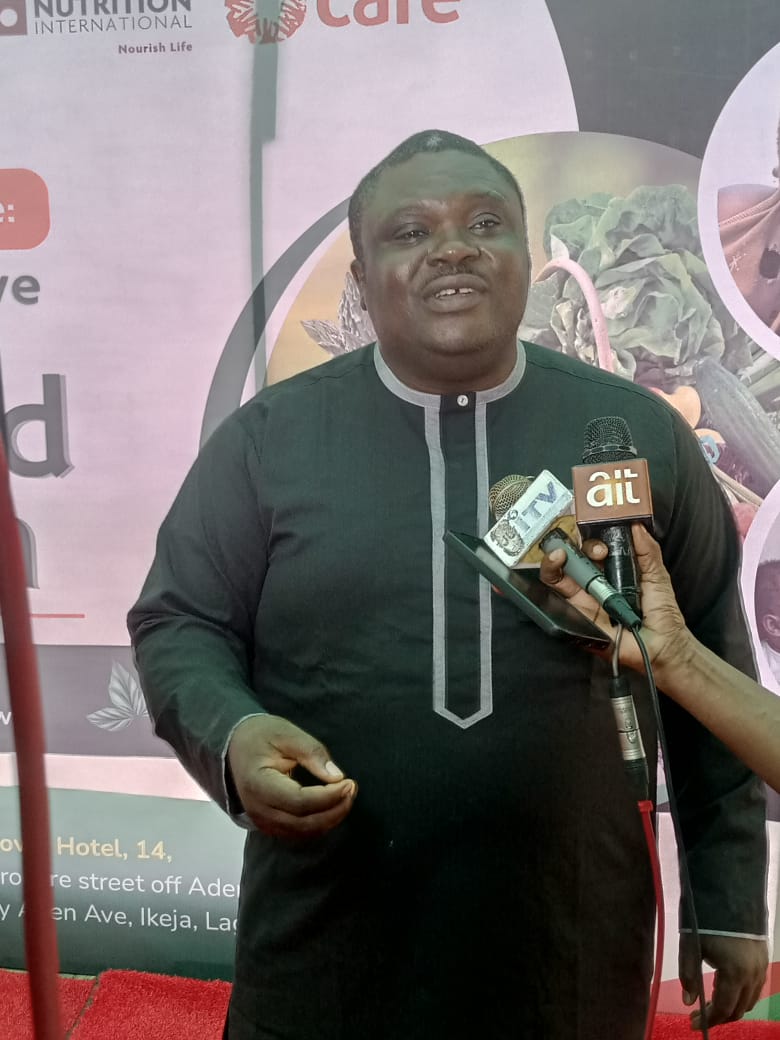
The Executive Secretary of the Civil Society–Scaling Up Nutrition in Nigeria (CS-SUN), Mr. Sunday Okoronkwo, said inadequate financing remains the biggest obstacle to improving the nutritional status of Nigerian women and children.
According to him, although Nigeria has developed several nutrition strategies and action plans, implementation continues to suffer because of insufficient funding.
Okoronkwo explained that the annual dialogue with policymakers and legislators is aimed at strengthening policies and financing mechanisms that will improve nutrition outcomes nationwide.
He said this year’s engagement focuses on strengthening legislative action by encouraging lawmakers to prioritise nutrition funding and pass bills that will improve the nutritional status of women and children.
Describing adequate funding as essential, he said financing the country’s multisectoral nutrition plans is critical to reversing the alarming nutrition statistics.
He noted that stunting among Nigerian children remains around 40 per cent, while wasting affects millions of children nationwide, with only about two out of every ten affected children receiving treatment.
Assessing the impact of previous engagements, Okoronkwo said significant progress has been recorded, particularly in improving the policy environment for nutrition.
He cited the adoption of six months of paid maternity leave in more than 20 states, either through legislation or executive approval, as a major milestone.
He also highlighted states such as Niger and Kaduna, which have committed resources at the local government level to tackle malnutrition.
According to him, these developments demonstrate that sustained advocacy is producing positive results.
Okoronkwo, however, stressed the need for governments at all levels to not only allocate adequate funds for nutrition programmes but also ensure their timely release so interventions can effectively reach women and children across the country.