A National Social Register, NSR, which is a data base of people who are poor based on specific indicators has been presented to stakeholders with a view to ensuring that poor households who are deprived are on the register so that they can be targeted properly.
This means that, implementation and programmes especially poverty reduction strategies will no longer be based on assumptions or on thoughts, rather, they will be based on information on the register on who is poor, where he lives, members of the household and the level of deprivation they face so that they can be targeted properly.
The United Nations Children’s Fund, UNICEF, Social Policy Manager, Mr Muhammad Okorie, who gave the explanations in an interview with Radio Nigeria Online during the public presentation of the document said, three faces were used to get people who are poor. “they are, the poor and vulnerable LGAs, we identify who is the poorest, go to them, meet with the communities, it is to identify poverty by their own standards and after the identification.
“The proxim index to identify those who are poor so those people that are poor have their data base of them and those are the and those are the ones we refer to as National Social Register“. He stated
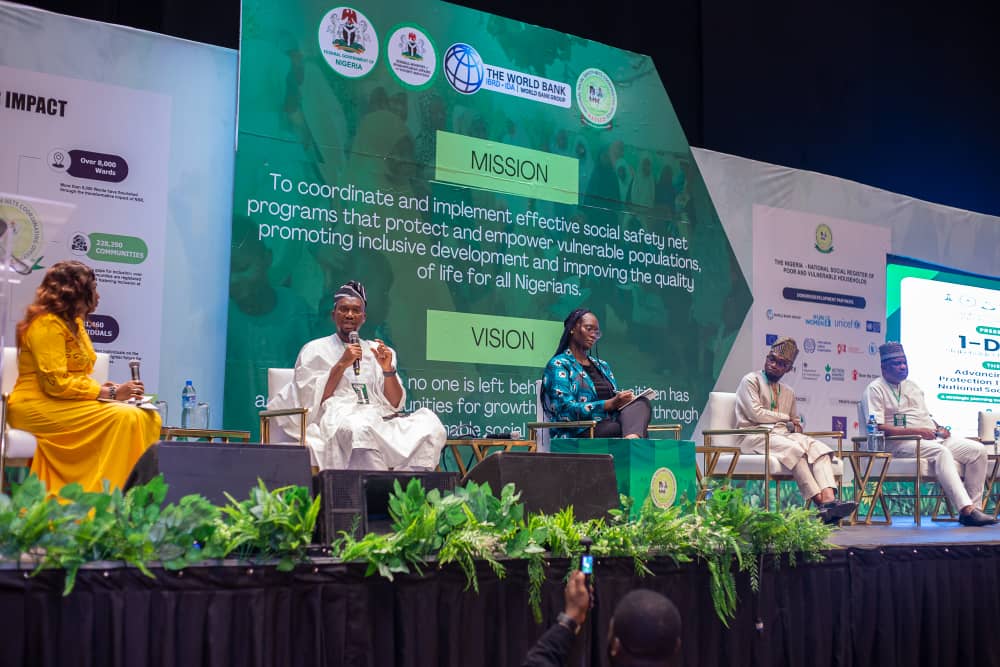
On how to sustain or institutionalize, Okorie advocated a policy framework that will instruct all poverty related interventions to focus on those who are within the social register, mandate states to have a functional system and agency within government which is not programme based but a state deliberate policy that constantly updates the register to capture those who are poor and vulnerable and for all agencies insist that “MDAs including development partners who are active in their space of poverty reduction, should target their beneficiaries from the social register”.
He suggested that, government should have a direct budget with which to ensure that the register is constantly updated so that as people and the dynamics change, more people fall into poverty, and others are out of poverty, registers are kept up to date so that people will be targeted based on information and not on assumptions.
The UNICEF expert says, the inclusion of children and youths that are deprived especially the out – of – school – children was important so government can budget for them.
He explained that, where the initial exercise was effectively implemented, it was easy to target as the Ministry of Women Affairs for instance could do their empowerment scheme by just making use of data and information from the register of those who are confirmed poor.
“Now, it’s no longer based on political alignment or political affiliation or based on who knows who but now it’s based on people who have been identified in the communities to be poor and those who meet those requirements and the vulnerable to being poor”. Okorie
“what we need to do is expand it and then also try to institutionalize it and make sure that that becomes a standing tool which can be used at all times. This is using globally recognized parameters because through this the vulnerability that children face are being addressed but the way it is, the information we get here adopts life circle approach from the young, the elderly, the youths and there are different vulnerabilities are captured and again, it’s work in progress”.
According to him, when it was institutionalized the first time, we were looking for more of monetary poverty, but right now, there is more efforts to integrate multidimensional poverty and derivations, but it is not because World Bank is supporting, UNICEF is supporting and other partners doesn’t mean it incline specifically to what World Bank wants or what ILO wants but it is for the general public.
“It is a tool for government because it helps government to prioritize because government knows where the poor people are and they can adequately prioritize and identify what interventions they want to do or include it in their plans and budget then be able to more effectively and more judicious utilize their resources”.
The Director, Social Protection, Lagos State, Oluwakemi Gabardine Adedeji said, by this, the State has moved from just giving barbing kits or pepper grinding machine to a system that relies on the strength and ability to work one on one with them using the registers in a way that it is a living document.
“The Executive Council approval for all functional MDAs delivering interventions to the people must utilize the register for all their social interventions programmes where in they are not just delivering, knowing their details”
“MDAs will now key into those departments and begin its regulatory roles over the agencies to achieve the desired results”. She stated.
