Residents of Amamba Uzuakoli in Bende Local Government Area of Abia State have appealed to the Federal Government and the Abia State Government for urgent intervention as severe gully erosion continues to devastate their community.
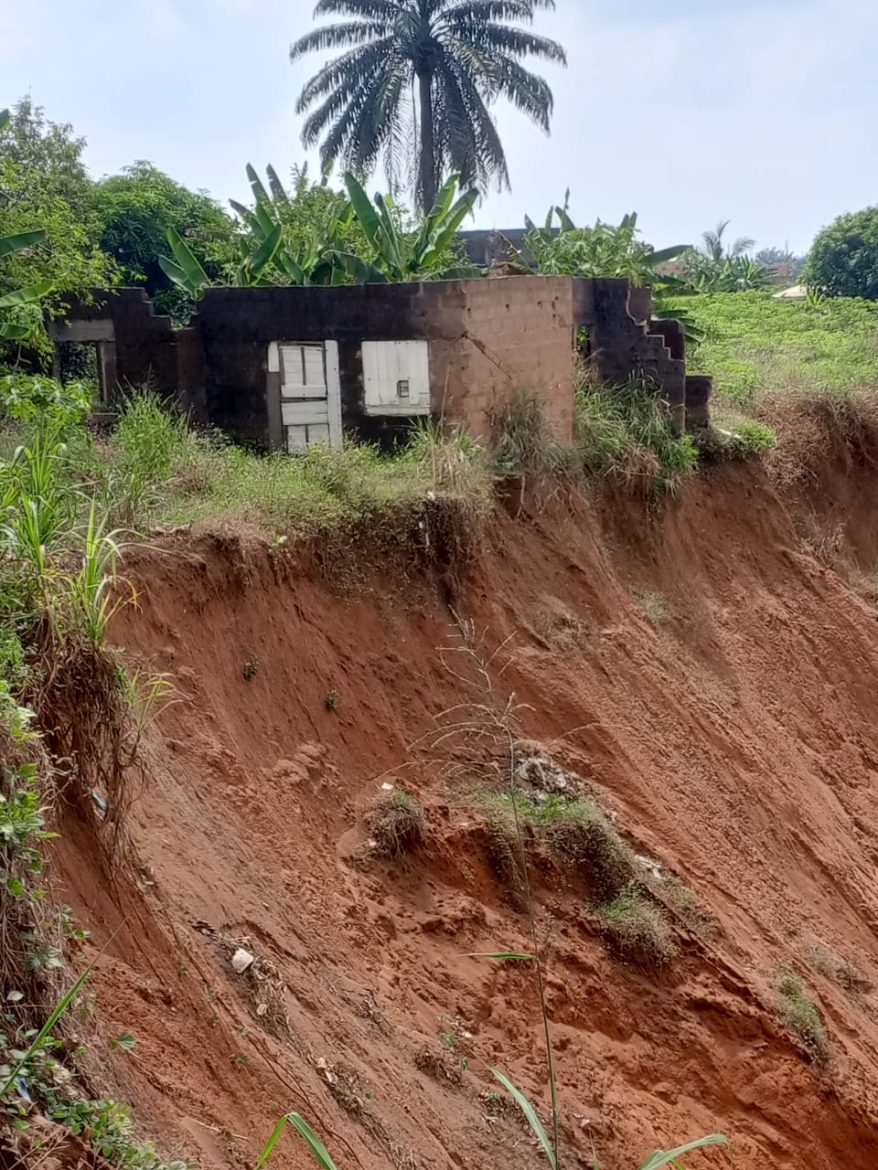
The erosion has washed away houses, destroyed access roads, and placed lives and livelihoods at grave risk.
The residents made the appeal during a visit by Radio Nigeria to several erosion sites in the area. Findings revealed that the advancing gullies have already swallowed several houses and cut off roads leading to farmlands.
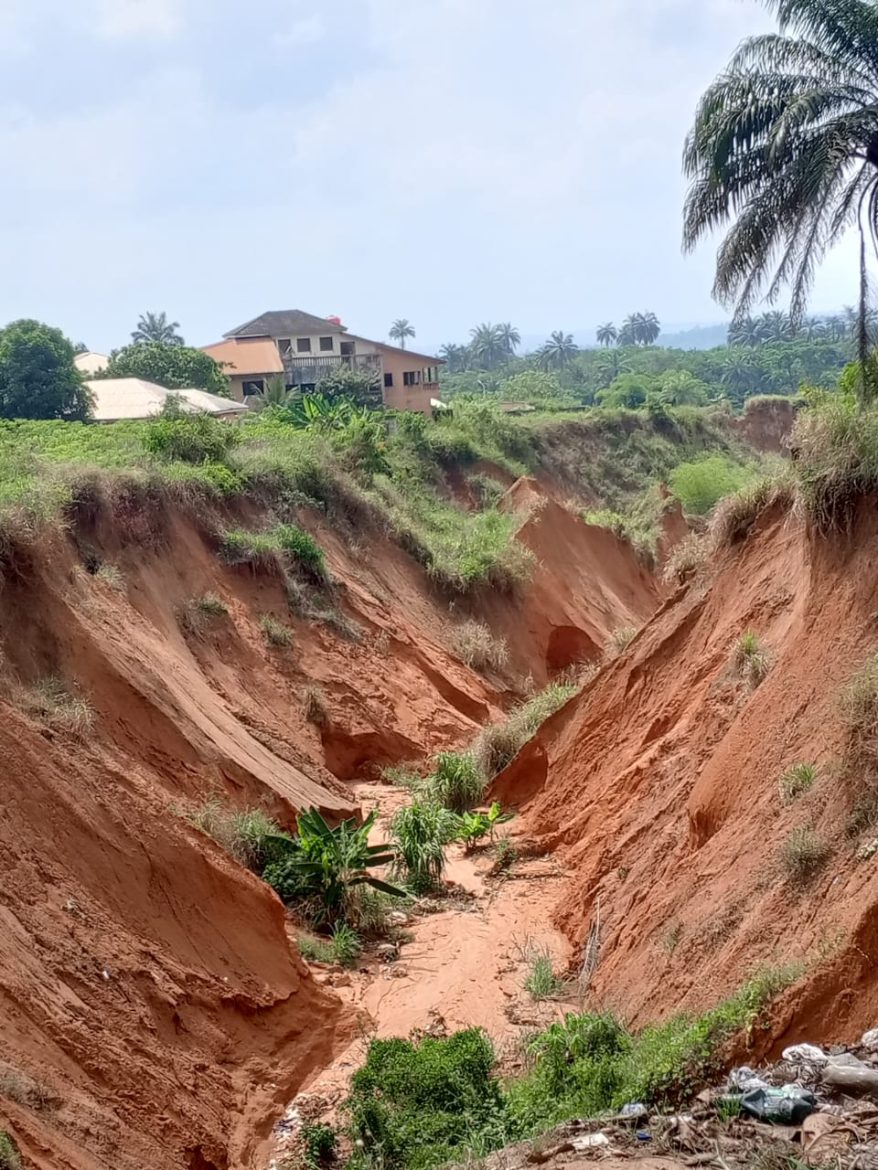
Community members explained that the erosion, which began gradually in 2017, has worsened significantly, destroying many homes and the only access routes linking the community to their farms.
“A lot of our farmlands have been completely washed away by erosion. We have been pleading for help, but nothing has been done,” one resident lamented.
Another added, “We need help from the Federal Government. This problem is beyond the State or local government. As a community, we have spent a lot of money trying to control it ourselves, but nothing has come out of our efforts.”
Residents said the situation has forced many farmers to abandon agricultural activities due to impassable roads and fear of landslides.
“Many farmers have lost their crops and their arable lands. Large portions of fertile soil have been washed away, reducing agricultural productivity and making farming increasingly difficult. Erosion has made access to farms unsafe, and many farmers have abandoned their farmlands. This situation has brought poverty to our community.”
“The road leading to the farmland is no longer there. Those who managed to farm have had all their crops taken away by erosion. People are now living in fear and hunger,” another resident said.
Recounting their ordeal, the community members stated that the situation worsened between 2020 and 2025, as large sections of land were washed away, carving deep gullies and turning parts of the area into dangerous zones.
They noted that an illustrious son of the community intervened by spending over eighty-five million naira to construct erosion control structures. However, they said the devastation has continued on a much larger scale, beyond what the community can manage.
Some residents whose homes are located near the erosion sites shared their fears and painful experiences.
“Once the rainy season comes I will start finding another place to live because of the erosion. I can sleep in the night and rain will fall and wash away our building.”
“I have been living here for one year now, we are scared and pray that God can send people that help to build us roads.”
“We are very scared, the erosion is too much, so the government should try to find a lasting solution.”
“The community has spent millions of Naira being contributed by their sons and daughters abroad. The little work that we have done, as soon as the rainy season comes, it will just wash away. This is not what the state government can handle, we are calling on the federal government to come and help us out of this very menace. We pray that this erosion will be checked so that we can have peace.”
The President General of Uzuakoli Ancient Kingdom, Barrister Chigozim Okechukwu, said the community has made several efforts to tackle the erosion but has recorded minimal success due to the magnitude of the problem.
According to him, “The community actually tackled, spent well over 85 million Naira from the community effort but it kept on expanding everyday to the extent that it has claimed so many buildings, an upstairs has been submerged and about three bungalows. There is no way to pass through our farmlands. It is staving us, we are losing our ancestral lands. We are calling on both the state and federal government to come to our aid.”
The sons and daughters of Amamba Uzuakoli expressed belief that the Federal Government is in a better position to provide a permanent solution to the erosion crisis threatening their ancestral land.
They therefore appealed for urgent intervention in 2026, stressing that they can no longer access their farmlands or transport farm produce, a development they say has plunged many families into hardship.
Reporting By Ebere Obike