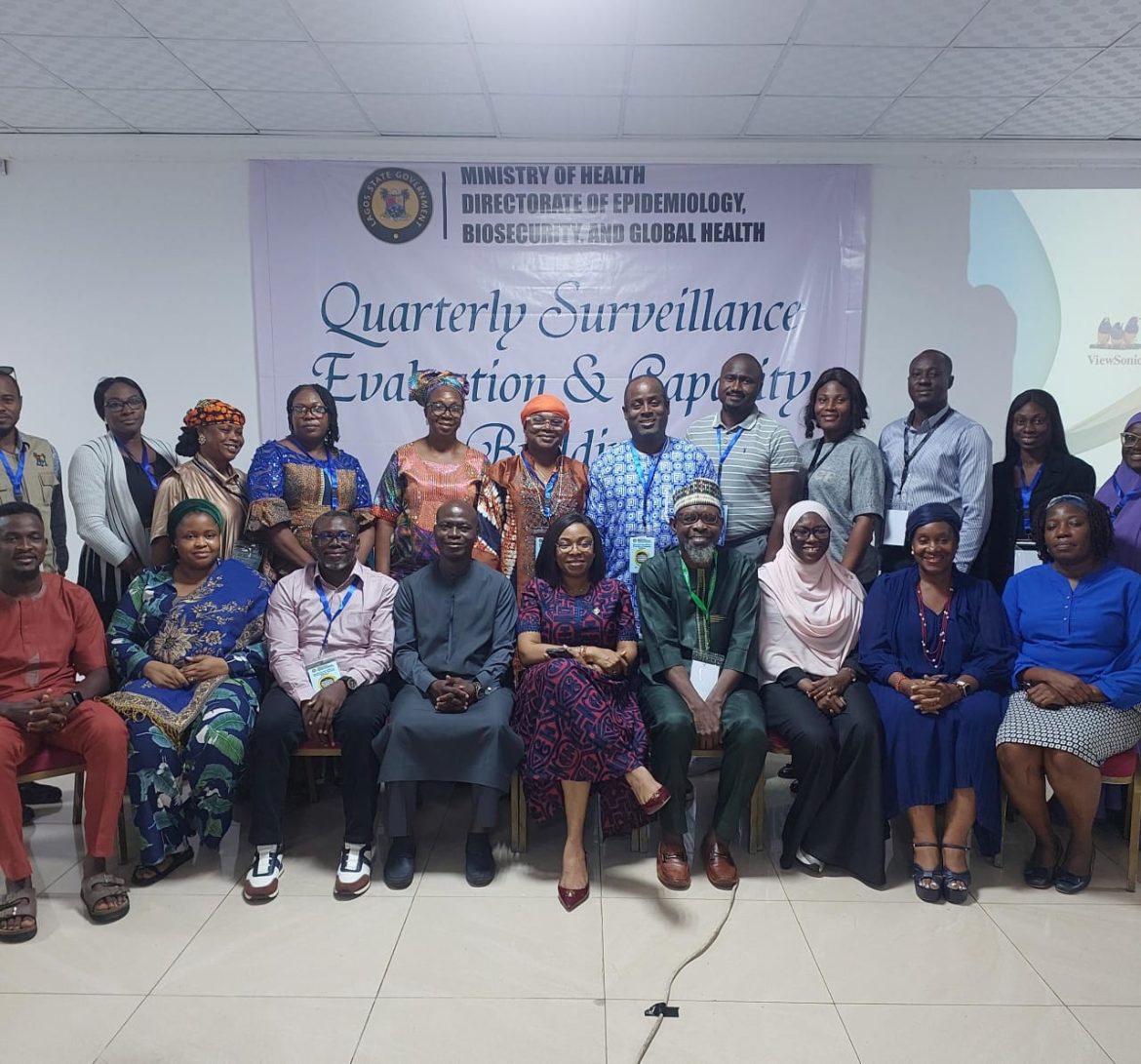
The Lagos State Government has intensified efforts to boost disease surveillance and outbreak response with a four-day capacity-building programme for Disease Surveillance and Notification Officers (DSNOs).
The training, organised by the Lagos State Ministry of Health, is holding at Orchid Hotel in Lekki and focuses on improving the ability of frontline health officers to translate data into timely and effective public health action.
Speaking during a visit to the programme, the Permanent Secretary, Ministry of Health, Dr. Dayo Lajide, stressed the importance of making the most of in-person training opportunities despite existing funding and logistical challenges.
She commended Governor Babajide Sanwo-Olu for supporting initiatives aimed at strengthening the state’s health system, noting that such programmes ultimately improve health outcomes for residents.
Dr. Lajide described the training theme, “From Data to Action: Hands-on Surveillance Evaluation Using Case-Based Approaches,” as timely, emphasizing that the shift from data collection to actionable intelligence is critical in tackling emerging public health threats.
She highlighted the pivotal role of DSNOs as the first point of alert in the state’s disease surveillance network, urging them to adhere strictly to reporting protocols to ensure swift response at both local and state levels.
The Permanent Secretary also underscored the importance of effective communication, warning that inaccurate information could cause unnecessary panic, especially during outbreaks of infectious diseases.
Earlier, the Director of Epidemiology, Biosecurity and Global Health, Dr. Ismail Abdus-Salam, described the programme as a flagship initiative unique to Lagos State, designed to reinforce knowledge through practical, case-based learning.
He noted that the training incorporates innovations such as the transition from paper-based reporting to electronic systems and improved data communication to policymakers.
Also speaking, the State Disease Surveillance and Notification Officer, Mr. Lakunle Openiyi, said the programme was structured to equip participants with practical skills using real-life scenarios to enhance evidence-based decision-making.
Participants at the training praised the initiative, describing it as practical and impactful. Some noted that the case-based approach provided deeper insight into outbreak detection, data analysis, and accurate reporting.
They called for the replication of similar training programmes at local government and health facility levels to strengthen surveillance at the grassroots.
In her closing remarks, a Surveillance and Disease Control Programme Officer with the Lagos State Primary Health Care Board, Dr. Modinat Akiolu, described disease surveillance as the “eyes and hands of the health system.”
She urged participants to apply the knowledge gained to improve early detection and response to disease outbreaks, stressing that surveillance goes beyond data collection to include leadership and effective service delivery.
The programme is expected to further enhance Lagos State’s capacity to detect, report, and respond promptly to public health threats.