
The Nigerian Communications Commission (NCC) and the Judiciary have stressed the need for stronger institutional collaboration in addressing emerging legal, regulatory and security challenges within Nigeria’s rapidly evolving digital ecosystem.
This formed the focus of the 2026 Workshop for Justices and Judges on Legal Issues in Telecommunications organised by the National Judicial Institute (NJI) in collaboration with the Nigerian Communications Commission in Lagos.
The two-day workshop, themed “Adjudicating the Digital Era: The Judiciary’s Imperative in Connectivity, Infrastructure Protection and Online Safety,” brought together judges, legal experts, telecommunications regulators, policy makers and industry stakeholders to examine emerging legal issues associated with digital communications and technological advancement.
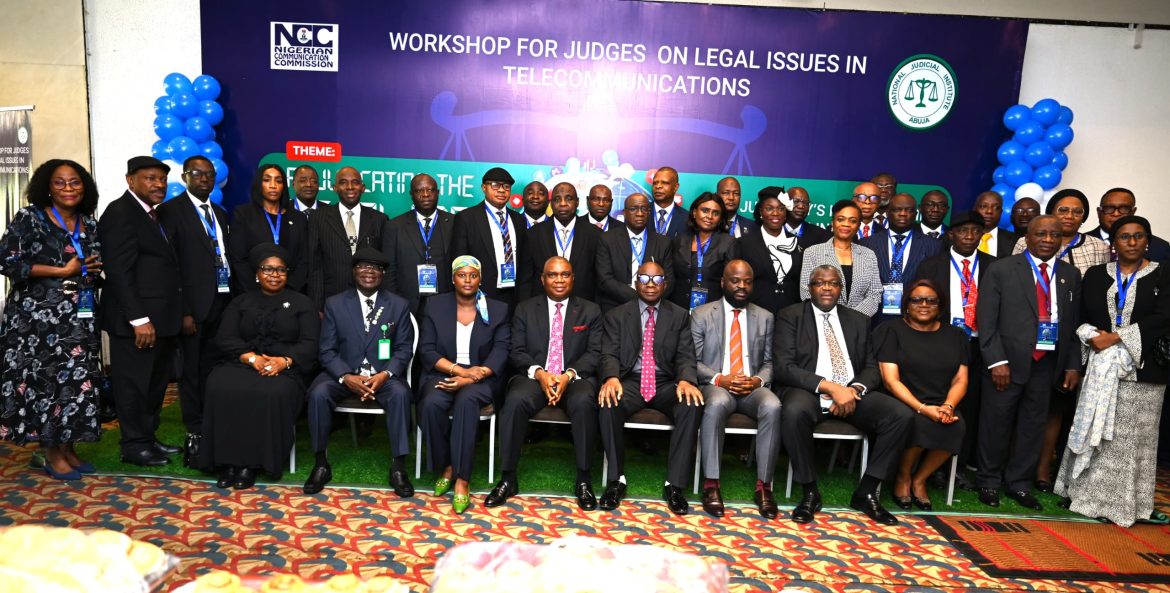
Speaking at the opening session, the Executive Vice Chairman and Chief Executive Officer of the NCC, Dr. Aminu Maida, said Nigeria’s digital transformation has accelerated significantly in recent years with increased broadband penetration, rising internet usage and massive investments in telecommunications infrastructure.
Represented by the Executive Commissioner, Stakeholder Management, Mrs. Rimini Makama, Dr. Maida disclosed that telecom operators invested over one billion dollars in network expansion in 2025 alone.
He further revealed that Nigerians consumed more than one point four two million terabytes of data in March 2026 compared to nine hundred and ninety-five thousand terabytes within the same period in 2025, reflecting the country’s growing dependence on digital connectivity.
According to him, telecommunications infrastructure has become central to governance, commerce, financial transactions, education, healthcare delivery and social interaction, making the protection of digital infrastructure a national priority.
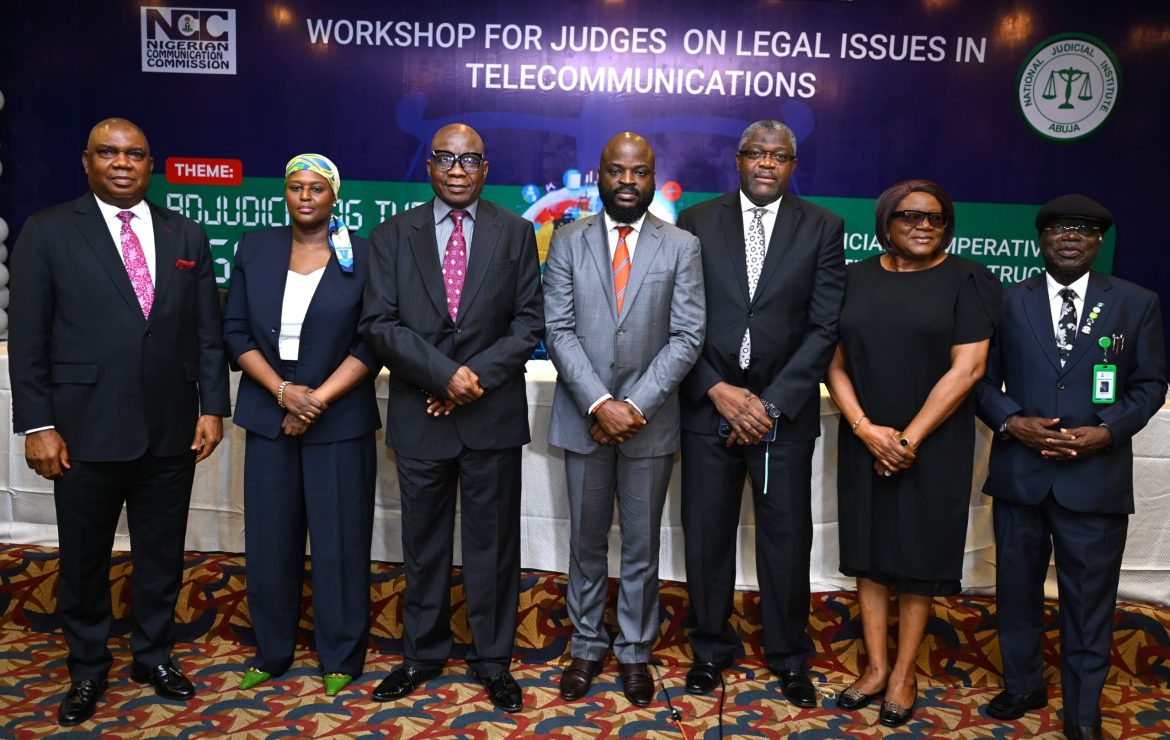
Dr. Maida, however, expressed concern over rising incidents of fibre cuts, vandalism, equipment theft and cyber-related crimes threatening telecommunications infrastructure and service delivery across the country.
He noted that disruptions to communications infrastructure now have far-reaching consequences for economic activities, public services, financial inclusion and institutional efficiency.
The NCC boss stressed that the judiciary plays a strategic role in interpreting laws and shaping legal precedents capable of strengthening infrastructure protection, online safety, regulatory certainty and investor confidence in Nigeria’s digital economy.
He urged judicial officers to deepen their understanding of digital technology, cybersecurity, online safety and telecommunications regulations to effectively address emerging disputes arising within the sector.
In a keynote remark, the Chief Justice of Nigeria, Justice Kudirat Motonmori Olatokunbo Kekere-Ekun, represented by Justice Ibrahim Mohammed Musa Saulawa of the Supreme Court, said the rapid expansion of digital technology and telecommunications has fundamentally transformed modern society and introduced new legal complexities requiring careful judicial attention.
According to the CJN, governance, commerce, education, financial systems and social interactions now depend substantially on digital connectivity and electronic communications infrastructure.
She observed that courts are increasingly confronted with cases involving cybercrime, digital fraud, online harassment, privacy violations, misinformation, infrastructure protection, data governance and regulatory oversight.
Justice Kekere-Ekun stressed that the judiciary cannot remain detached from evolving technological realities, noting that judges must continue to apply legal principles carefully while responding to emerging digital challenges.
She further stated that the issue of connectivity now extends beyond technological convenience as access to reliable communication systems directly affects economic participation, public services and financial inclusion.
The CJN also raised concerns over growing threats to critical digital infrastructure, including unlawful interference with telecommunications facilities, vandalism and cyber threats, stressing the need for judicial responses that are legally sound and responsive to operational realities within the sector.
On online safety, she noted that courts increasingly face the delicate responsibility of balancing rights relating to freedom of expression, privacy, public safety and regulatory enforcement in resolving digital-related disputes.
She called for mutual institutional respect between regulators and the judiciary, noting that regulatory actions aligned with judicial interpretations would promote legal certainty, minimise disputes and strengthen public confidence in both institutions.
Participants at the workshop described the programme as timely, especially with the increasing role of artificial intelligence, cybersecurity concerns, online harms and digital governance issues within Nigeria’s telecommunications ecosystem.
The workshop featured technical sessions on cybercrime prevention, artificial intelligence regulation, internet governance, telecommunications infrastructure resilience, online safety and emerging legal trends in the digital economy.
Stakeholders expressed optimism that the engagement would strengthen judicial capacity in handling technology-related disputes and contribute to the development of a more secure, resilient and investment-friendly digital environment in Nigeria.
Reporting By Chioma Ezike