The Nigerian Communications Commission (NCC) and telecom operators have renewed calls for urgent collaboration to close the skill gaps threatening the future of Nigeria’s telecom industry.
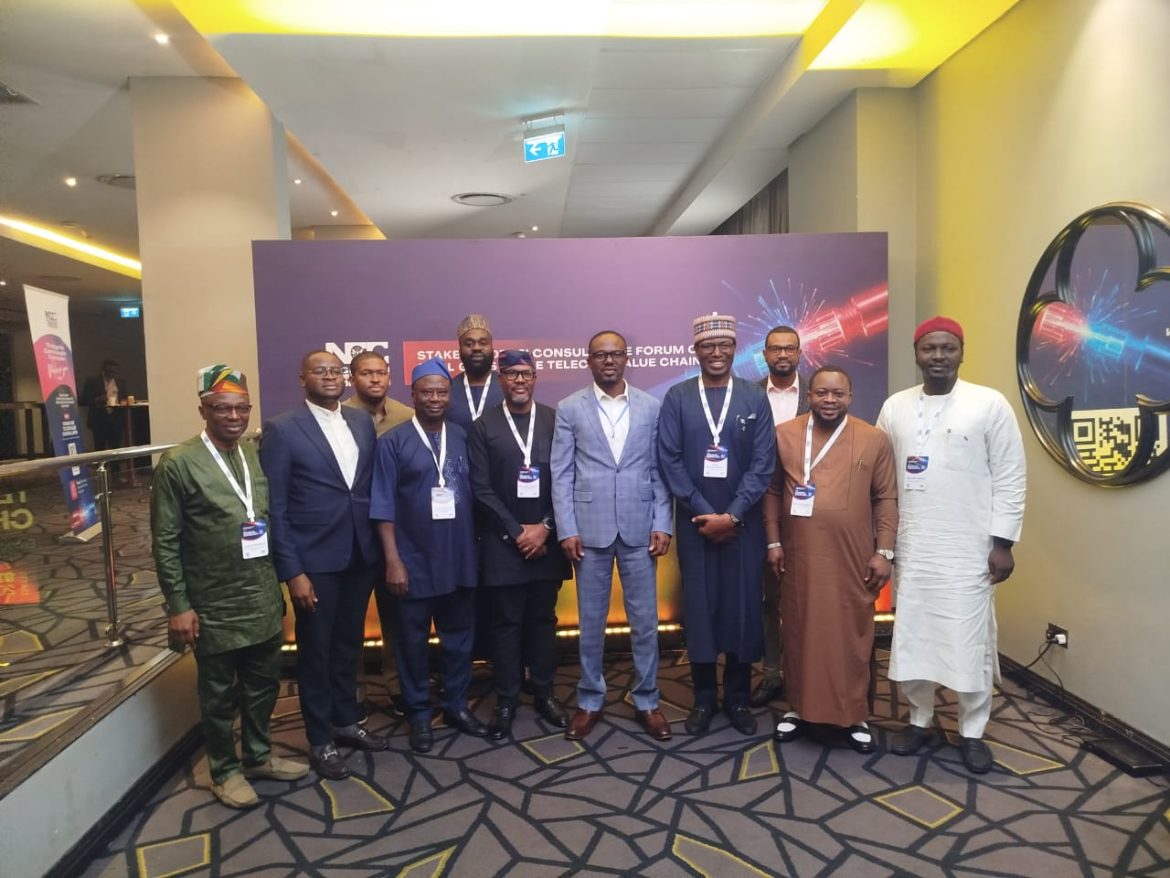
The call was made at the Stakeholders’ Consultative Forum on Skill Gaps in the Telecoms Value Chain held in Lagos .
The Executive Vice-Chairman of NCC, Dr. Aminu Maida, represented by Executive Commissioner Technical Services. ECTS, Mr Abraham Oshademi said the shortage of indigenous talent had become one of the most pressing challenges facing the sector. “Since the liberalisation of the industry in 2001, telecoms had created over 500,000 jobs, improved connectivity and powered economic growth, but the progress is now under threat,” he said.
Dr Maida noted that studies, including the 2024 ITU assessment, revealed that while employers require about 30% of advanced digital skills, only 11% of employed workers currently possess them.
“Critical roles such as desktop support technicians, data analysts, ICT engineers, software developers and data scientists already account for 25% of jobs, but 27% of these are hard to fill, with demand expected to rise by 29% in the next five years,” he added.
The NCC boss identified capital flight due to reliance on expatriates, poor remuneration discouraging retention, weak alignment of education with industry needs, and high global demand luring skilled Nigerians abroad as challenges fueling the gaps.
Dr Maida highlighted government interventions to close the gaps, including the 3 Million Technical Talent (3MTT) programme, the Digital States Programme, and the National Artificial Intelligence Strategy (NAIS). He also mentioned the National Digital Literacy Framework (NDLF), which aims to close the skill gaps.
He noted that NCC has rolled out initiatives such as the Digital Learning Initiative (DLI) for schools and the Campus Innovation Entrepreneurship Programme (CIEP) for undergraduates. Other initiatives include the Advanced Digital Empowerment Tertiary Programme (ADEPTI), ADAPTI, and the Digital Awareness Programme (DAP).
Private operators are also contributing to the efforts. Airtel Africa has committed to training 25,000 youths and supporting UNICEF digital learning platforms in 1,260 schools. MTN Foundation funds scholarships in STEM and inclusive education, while ATCON Academy and IHS Digital Hub have launched targeted training and incubation schemes.
Chairman of the Association of Licensed Telecoms Operators of Nigeria (ALTON), Mr. Gbenga Adebayo, emphasized the need for mid-level workers such as technicians, riggers, and engineers. “These so-called small skills are critical. In four years, I lost 12 skilled technicians in my company to Canada, Germany, the U.S., and the UK. It’s not just about training them, but also about retaining them with better incentives and social guarantees,” he said.
Adebayo called for the establishment of a Nigerian Telecom Academy to provide one-year and three-year certifications, modeled after the Petroleum Training Institute in Warri. He also urged the Digital Bridge Institute (DBI) to integrate more practical skills, with operators sponsoring campuses to provide scholarships, certification, and job pathways.
“Countries with the strongest industries not only train but also retain their workforce. We must create pathways for skilled Nigerians abroad to contribute back home, even as consultants. Growth is never comfortable, but if we address these gaps, our industry will be stronger,” Adebayo added.
Adebayo suggested the nee6for social guarantee to retain skilled workers”‘ In our industry today, the skills gap is widening. It’s not unique to Nigeria, but here it is more urgent because our sector is central to the national economy. In my own company, I’ve lost about 12 highly skilled technicians in just four years—five to Canada, two to Germany, two to the U.S., and one to the UK. When I asked why they left, they explained they needed better social guarantees for their young families. It’s not just about training—it’s also about retention….
Countries with the strongest industries not only train their workforce but also maintain and support them with social guarantees. Nigeria must do the same. We must also create pathways for skilled Nigerians abroad to return, even as consultants or contractors, so that their expertise benefits the nation”” … He said .
In a remark the President Association of Telecommunication Companies of Nigeria, ATCON , said the industry requires a range of skills, including RF optimizers, 5G core and cloud engineers, transport and IP engineers, security operation analysts, and customer experience analytics. However, there is a huge gap in these areas, with many companies relying on foreign experts to fill the skills gap.
He emphasized the need for a Nigerian Telecom Academy to address the skills gap, citing the success of similar institutions in other countries. He also called for industry partnerships and collaborations to provide training and development opportunities for local talent.
The forum highlighted several areas where the skills gap is particularly pronounced, including, including Cyber security experts, Fiber technicians*Experienced fiber technicians, Power technicians, Health and quality standards to ensure quality standards are applied and implemented in the industry.
Mr Emoekpere emphasized the need for a structured approach to training and development, citing the importance of on-the-job training and certification programs. He also called for policies to support the development of local talent and encourage industry partnerships and collaborations.
The forum concluded with a call to action for industry stakeholders to work together to address the skills gap and ensure that the telecom industry has the talent it needs to drive growth and innovation in Nigeria.
Reporting By Chioma Ezike.