Tensions across the Middle East have escalated sharply following coordinated airstrikes by the United States and Israel on Iran, with Israeli Prime Minister Benjamin Netanyahu claiming there are “growing signs” that Iran’s Supreme Leader, Ali Khamenei, is “gone”.
However, Iranian authorities insist that Khamenei is alive, even as unconfirmed reports in Israel and the United States suggest he may have been killed during the attacks.
Conflicting Reports Over Khamenei’s Fate
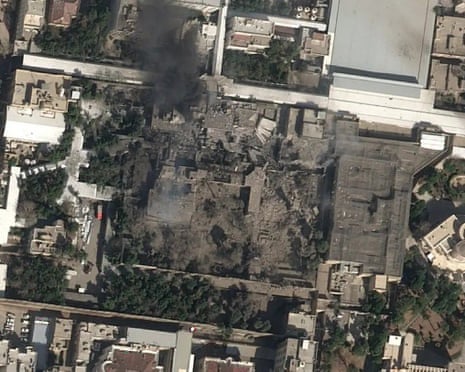
Satellite imagery obtained earlier showed significant damage to parts of the Supreme Leader’s compound in Tehran.
Following the strikes, Netanyahu said there were increasing indications that Khamenei had been eliminated, describing him as a “dictator”.
Despite the claim, the Israeli military stopped short of confirming his death.
The Israel Defense Forces announced it had “eliminated” key figures within Iran’s defence leadership but did not officially include Khamenei in that list.
Iran’s Foreign Ministry spokesperson and officials within the Supreme Leader’s office dismissed the reports as psychological warfare, stating that both Khamenei and President Masoud Pezeshkian were “safe and sound”.
Israeli Military Says Senior Iranian Figures Eliminated
In what it described as its “opening salvo,” the Israeli military said it eliminated several top Iranian officials, including senior defence and security figures.
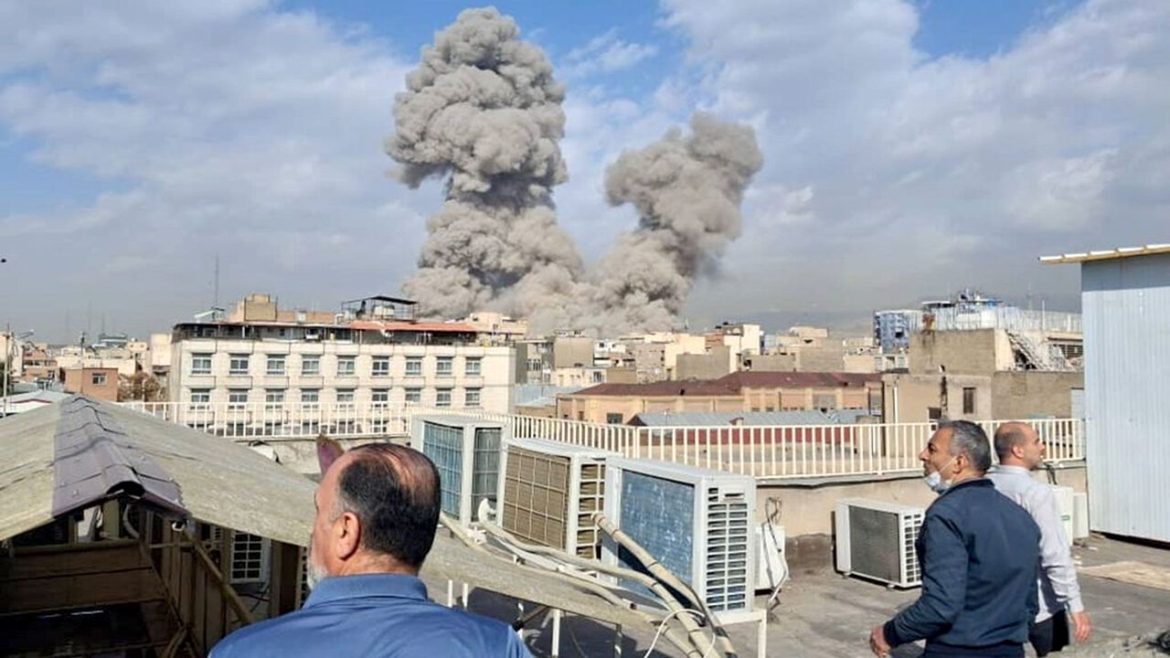
The Israel Defense Forces published images and profiles of those it claimed were killed in the operation, signalling what analysts describe as a direct decapitation strategy aimed at weakening Iran’s command structure.
The strikes are part of a broader joint military operation between Israel and the United States targeting Iranian missile, naval, and nuclear-related infrastructure.
Trump Confirms ‘Major Combat Operations’
US President Donald Trump confirmed that “major combat operations” were underway, stating that American forces had inflicted significant damage on Iranian military capabilities.
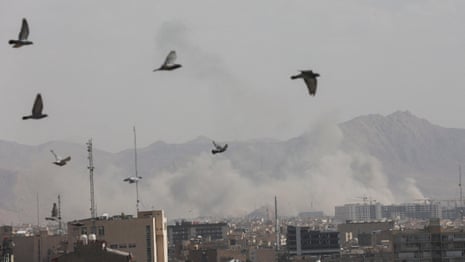
Speaking to US media, Trump said “a lot” of Iran’s leadership was gone and suggested that the United States had insight into possible successors.
He also urged Iranians to “take over your government,” calling the operation an opportunity for regime change.
White House officials later explained that the strikes were prompted by intelligence indicating Iran’s intention to expand its missile arsenal and potentially target US forces in the region.
They also accused Iran of attempting to rebuild nuclear facilities previously damaged in earlier operations.
Trump indicated that the operation could either escalate further or end within days, depending on Iran’s response.
Iran Launches Retaliatory Strikes Across Region
In retaliation, Iran launched missile and drone attacks across parts of the Middle East, targeting Israeli cities and countries hosting US military bases or allied to Washington.
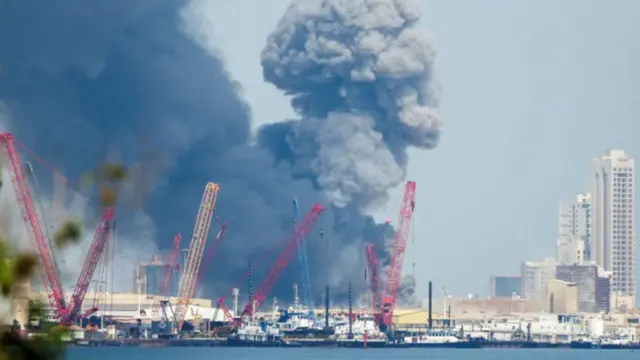
Apparent Iranian strikes were reported in Dubai, Doha, Bahrain, Kuwait, and Iraq.
Verified footage showed explosions and civilians fleeing in parts of the Gulf.
At least four people were injured in an incident at a luxury hotel in Dubai, while a civilian was reportedly killed by falling debris in Abu Dhabi.
Qatar strongly condemned what it described as a violation of its sovereignty after a missile reportedly fell in a residential area.
US Central Command stated that hundreds of Iranian missile and drone attacks were intercepted, with minimal damage to US installations and no reported American casualties.
Heavy Casualties Reported in Iran
The Iranian Red Crescent says more than 200 people have been killed across Iran since the strikes began.
In Minab, Iranian officials reported that at least 85 people died after missiles struck a girls’ school.
The BBC has verified the location of the damaged building but has not independently confirmed casualty figures.
Three members of Iran’s paramilitary Basij force were also reported killed in West Azerbaijan province.
Explosions were reported across multiple Iranian cities, including Tehran and Isfahan, where Israel issued evacuation warnings ahead of attacks on what it described as military infrastructure.
Scenes of Celebration and Fear in Tehran
While official confirmation remains absent, sources in Tehran reported scenes of celebration in some neighbourhoods amid rumours of Khamenei’s death, with residents honking car horns and cheering.
Elsewhere, chaotic scenes were recorded as air raid sirens sounded and plumes of smoke rose above affected areas.
There has been no public appearance or verified statement from Khamenei since the strikes.
International Reactions and Global Concerns
British Prime Minister Keir Starmer confirmed that British aircraft were operating in the region as part of coordinated defensive measures to protect British interests and allies.
World leaders have expressed deep concern over the widening conflict, with the United Nations Security Council scheduled to hold an emergency meeting.
In the United States, some lawmakers have questioned the legality of the strikes, arguing that congressional approval was not sought before launching the offensive.
A Conflict on a Different Scale
Observers say the current military action represents one of the most significant escalations in the region in recent years.
President Trump, who previously campaigned against foreign military interventions, now faces both domestic and international scrutiny over the scope of the operation, which appears aimed at fundamentally reshaping Iran’s political leadership.
As airstrikes and missile exchanges continue, the region remains on edge, with fears that the confrontation could spiral into a broader and prolonged war.