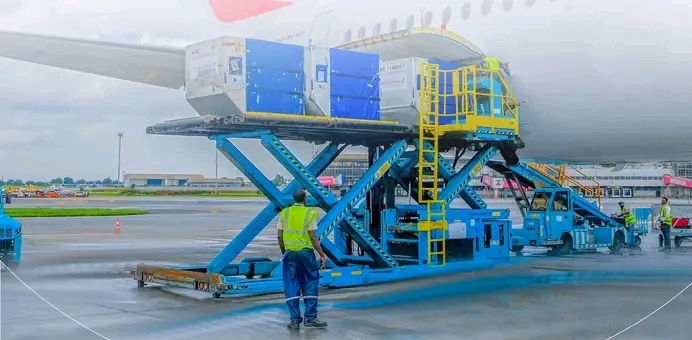
Nigeria’s aviation industry is battling fresh turbulence, as a growing debt crisis between airline operators and ground handling companies threatens to disrupt flight operations across the country.
The Aviation Ground Handlers Association of Nigeria, AGHAN, had recently threatened to withdraw services over more than nine billion naira owed by domestic airlines for critical ground operations including passenger check-in, baggage handling and ramp services.
The planned shutdown of service to airline operators by the ground handlers last week however, was suspended after the intervention of the Nigeria Civil Aviation Authority, NCAA, to prevent a total disruption of flights at a time operators are already struggling with the rising cost and scarcity of Jet A1 fuel.
Chairman of the Aviation Ground Handlers Association of Nigeria, AGHAN, Mr. Olaniyi Adigun, says the association stepped back from the strike in the interest of the country and out of respect for the NCAA’s intervention, but warned that the debt burden is pushing handling companies to the brink.
According to him, the situation is affecting operations, staff welfare and safety, stressing that aviation safety begins from the ground and that handlers cannot continue to provide services without payment.
He also raised concerns over what he described as unhealthy competition among handlers, where indebted airlines allegedly move from one company to another without clearing old debts.
Industry stakeholders say the crisis reflects deeper structural problems in Nigeria’s aviation sector.
Former Rector, Nigerian College of Aviation Technology, NCAT, Captain Samuel Caulcrick, says the industry needs a stronger financial framework, including a central clearing system or an Aviation Development Bank to manage transactions and prevent debts from spiraling out of control.
Aviation analyst and Director of Research at Zenith Travels, Mr. Olumide Ohunayo, believes all private investors in the aviation ecosystem, including handlers and concessionaires, deserve government support just like the airlines.
He says future credit arrangements between airlines and handlers should be strictly regulated to avoid a repeat of the current crisis.
For Managing Director of Flights and Logistics Solutions, Mr. Amos Akpan, the problem goes beyond debts.
He says Nigeria’s aviation sector suffers from weak long-term planning and policy inconsistencies, warning that the industry cannot continue to rely on emergency interventions and “fire brigade” solutions.
Meanwhile, aviation consultant and CEO of Belujane Konsult, Mr. Chris Aligbe, argues that the solution lies in a stricter payment system.
He says handlers should adopt a “pay-as-you-go” model to stop the cycle of unpaid debts, though he maintains that airlines deserve more government incentives because of their slimmer profit margins and heavier operating costs.
Despite differing opinions on government support, stakeholders agree on one point, airlines, handlers, fuel suppliers and regulators are all interconnected, and unless urgent financial and policy reforms are introduced, the crisis could deepen and further threaten the stability of Nigeria’s aviation industry.
Reporting By Nosa Aituamen