The cosmetics sector has become a vibrant and fast-growing segment of Nigeria’s economy, driven by rising production, distribution and consumer demand for beauty products.
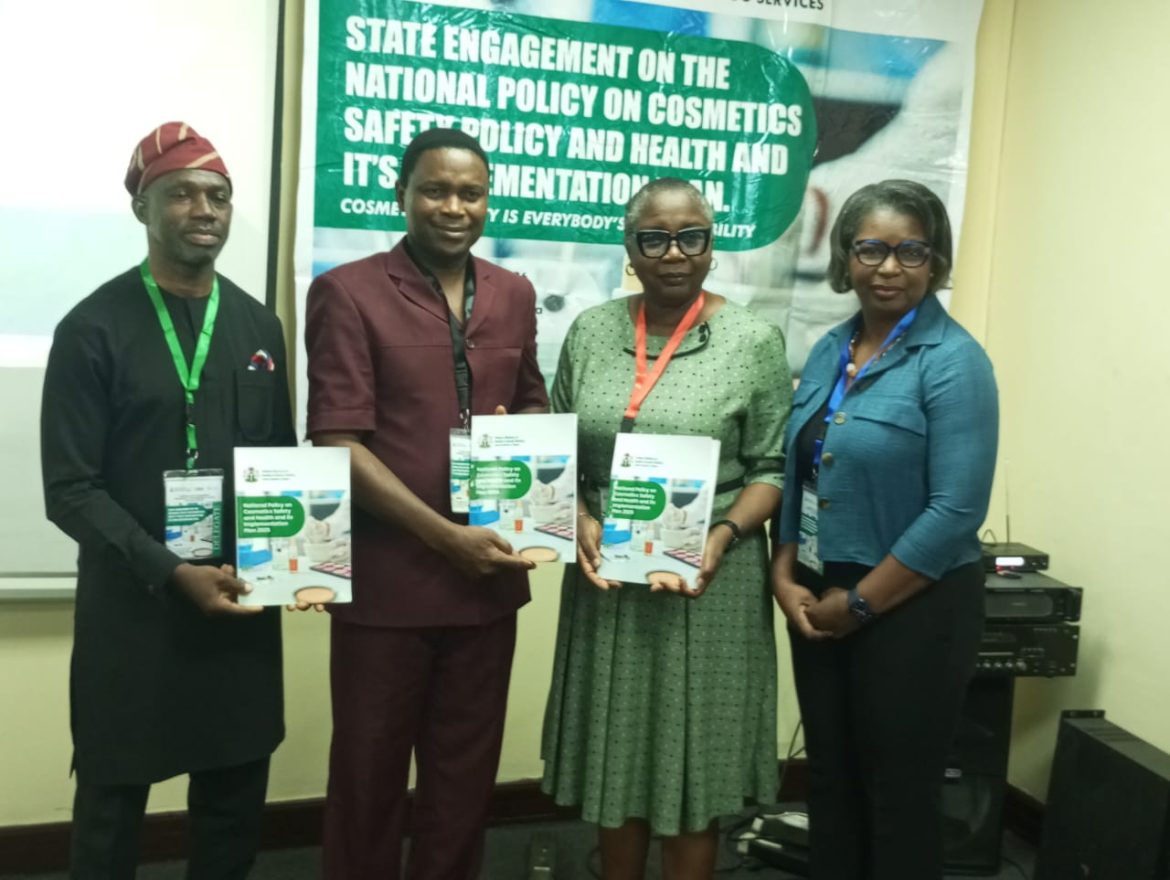
However, stakeholders say stronger regulatory frameworks are needed to ensure that products sold across the country are safe and meet international standards.
As part of efforts to strengthen implementation, the policy was recently presented to the Lagos State Ministry of Health and relevant regulatory agencies for review and possible adaptation to the state’s operating environment.
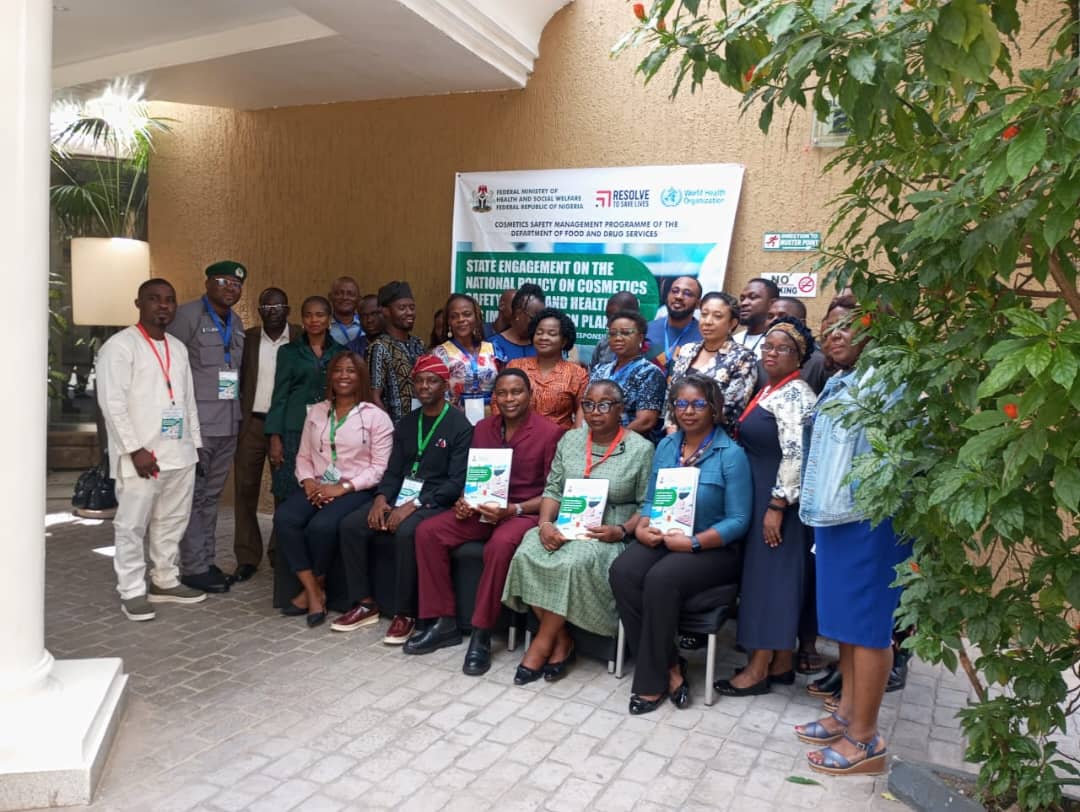
The initiative addresses increasing concerns about the health risks posed by unregulated or substandard cosmetic products circulating in the market.
Speaking during the presentation, the Coordinating Minister of Health and Social Welfare, Professor Mohammed Ali Pate, represented by the Director of Cosmetics Safety Management and Programmes at the Federal Ministry of Health, Dr. Paul Ahkakhu, described cosmetics safety as a shared responsibility given the millions of Nigerians who use such products daily.
According to him, the policy is designed to strengthen regulation, promote innovation within the industry and protect consumers from harmful substances often found in unapproved beauty products.
Dr. Ahkakhu said the widespread presence of unregistered cosmetic products remains a major concern for government.
“We have had serious issues with users of substandard cosmetics. Some producers operate without regulation, manufacturing products and placing them on the market without proper approval.
Government is worried about the increasing cases of adverse cosmetic events reported daily,” he said.
He added that numerous complaints and petitions received by the ministry prompted the development of the comprehensive policy to guide individuals and companies involved in cosmetics production and distribution.
The official warned that strict enforcement would accompany the policy’s implementation.
“Anyone operating outside regulatory guidelines will have the government to contend with.
Once regulations derived from the policy are fully implemented, sanctions will be applied to offenders,” he said.
Dr. Ahkakhu also disclosed that similar engagements had recently been held in Kano State, where authorities expressed readiness to adopt the policy and develop an action plan for safer cosmetic practices.
Also speaking, the Director-General of the National Agency for Food and Drug Administration and Control (NAFDAC), Professor Mojisola Adeyeye, represented by the Deputy Director of the Cosmetics and Household Goods Division, Dr. Ikenna Nsofor, acknowledged that cosmetics safety has historically received limited attention in Nigeria.
However, he expressed optimism that the new policy would help sanitize the industry through stronger collaboration between federal and state governments as well as regulatory agencies.
Dr. Nsofor revealed that NAFDAC has intensified enforcement activities in major markets across the country.
“We recently carried out enforcement operations at Onitsha Market, Idumota Market and the Trade Fair Complex. NAFDAC is determined to ensure that no unscrupulous individual endangers the lives of Nigerians through unsafe cosmetic products,” he said.
He noted that the policy would help close existing regulatory gaps and ensure that those entering the cosmetics industry operate within clearly defined standards.
Responding on behalf of the Lagos State Ministry of Health, the Director of Pharmaceutical Services, Pharmacist Olawale Kpoluyi, who represented the Permanent Secretary, Dr. Dayo Olajide, said the policy would introduce clearer guidelines and stronger enforcement to prevent harmful products from entering the market.
He explained that the policy covers the entire cosmetics value chain—from raw material sourcing to importation, production, distribution and sales.
“Raw materials must be properly checked and every stage of cosmetics production and importation regulated.
With effective monitoring and evaluation, incidents of malpractice will be greatly reduced,” he said.
Kpoluyi noted that while Lagos State participated in drafting the policy, the government would review the document carefully before adopting it.
“In Lagos, we do not adopt policies hook, line and sinker.
We will carefully study the document and adapt it appropriately before full implementation,” he said.
He also advised consumers to check for NAFDAC registration numbers and certification from the Standards Organisation of Nigeria (SON) when purchasing cosmetic products.
Representing the global health organisation Resolve to Save Lives, Mrs. Okeoma Obasi described the two-day engagement in Lagos as a critical step toward strengthening cosmetics regulation and protecting Nigerians from exposure to hazardous chemicals such as lead.
She noted that reducing lead exposure aligns with the organisation’s mission to prevent cardiovascular diseases, as environmental toxins like lead contribute significantly to hypertension, heart disease and stroke.
During a technical presentation titled “Lead and Other Metals in Cosmetics,” Mr. John Baptist Ezenduka explained how toxic metals enter the body through cosmetic products, noting that women and girls are particularly vulnerable due to frequent use of beauty products.
He emphasized that safeguarding public health would require stronger advocacy, public awareness, improved surveillance and enforcement, as well as continued research into cosmetics containing high-risk ingredients.
The National Policy on Cosmetics Safety and Health is structured around three key pillars:
*Regulatory Oversight and Governance
*Cosmetics Vigilance and Health Intelligence
*Unlocking the Cosmetics Value Chain
At the end of the two-day engagement in Lagos, stakeholders delivered a unified message: ensuring cosmetics safety requires the collective effort of government, regulators, manufacturers, distributors and consumers.
Written by John Obot