Nigeria continues to fall behind in research financing, raising deep concerns about the country’s ability to generate homegrown solutions to pressing public health challenges.
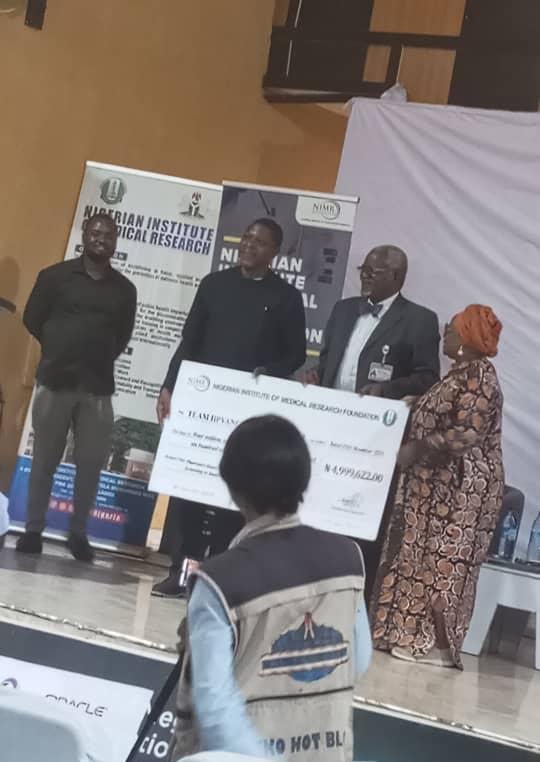
This dominated discussions at the November edition of the Nigerian Institute of Medical Research (NIMR) Monthly Media Chat in Lagos.
Speaking at the event, Chairman of the NIMR Foundation Board of Trustees, Mr. Babatunde Fashola, SAN, said research is far beyond an academic exercise but the backbone of life-changing medical breakthroughs.
Yet, he lamented, Nigeria has not given research the level of investment and attention seen in countries such as India, South Africa, the United States, and the United Kingdom.
Using everyday examples, Fashola asked: “How many of us are wearing glasses? What would life be without them? Would we have glasses without research?”
He stressed that without deliberate investment, Nigeria will continue to trail nations that prioritise scientific inquiry.
He recalled transformative discoveries such as penicillin that dramatically increased global life expectancy, saying such milestones are evidence of the power of well-funded research.
The NIMR Foundation, he explained, was established as a non-profit organisation to close these gaps by mobilising resources, strengthening capacity, and supporting high-impact research that aligns with national health priorities.
Fashola appealed to government, philanthropists, and the media to support the Foundation, noting that all trustees serve voluntarily and contribute their own resources to the mission.
“What would life be like if the cure for cancer was found here? Don’t you think it is possible?” he challenged, stressing the need for Nigeria to confront modern health threats with research-driven solutions.
Veteran broadcaster and Foundation Board member, Chief Moji Makanjuola, emphasised the importance of strategic communication in the research landscape.
She described the media as an essential bridge between science and society, responsible for simplifying complex research into actionable knowledge for policymakers, healthcare workers, and the public.
“Research locked in laboratories or academic journals has little impact. Accurate reporting can strengthen health literacy, fight misinformation, and shape preventive behaviour,” she said.
She urged journalists to communicate clearly and responsibly, particularly as the country battles disease outbreaks, poor health literacy, and rapid technological disruption.
Director General of NIMR, Professor John Obafunwa, outlined the institute’s major challenges, including inadequate human capital, limited research funding, and gaps in long-term capacity development.
While infrastructure may be easier to fund, he said, developing scientific talent requires robust fellowships, postdoctoral programmes, and strategic partnerships with both domestic and global institutions.
Obafunwa noted that the NIMR Foundation was created to fill these gaps by mobilising resources beyond government allocations and supporting research that targets Nigeria’s most urgent health needs.
A four-year impact report (2021–2025) presented by the Foundation revealed that ₦502 million has been mobilised through donations and seed funding from NIMR.
Of this, ₦295.9 million has been disbursed to research programmes and operations, while ₦148.9 million was generated as net income through prudent investments managed under a SEC-regulated trust fund by UTL Trust Management Services Ltd.
The Foundation’s efforts are centred on funding mobilisation, capacity building, and advocacy.
Its flagship Grantsmanship and Mentorship Training Programme (GMTP) has trained 120 early-career researchers, equipping them to secure grants, publish scientific papers, and qualify for international fellowships.
GMTP Fellows have collectively secured ₦590.9 million in new research grants and ₦197.3 million in travel awards and fellowships, producing 242 scientific papers, including seven published in high-impact indexed journals.
The report also highlighted a significant return on social investment, every ₦1 invested in mentorship produced ₦2 in external research grants, representing a 200% impact return.
NIMR said its monthly media briefings have also improved journalists’ access to research materials, laboratories, and field visits, resulting in more accurate and timely public health reporting.