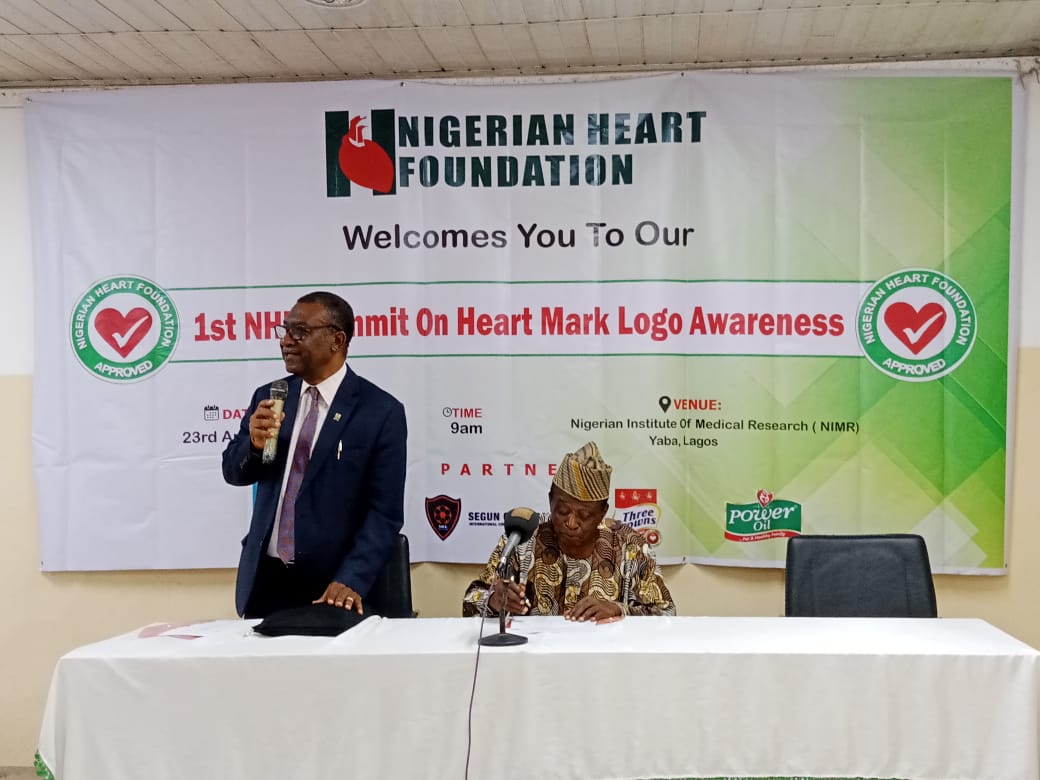
…….as 10 percent ages 18 to 64, have elevated blood pressure – Prof. Akin Osibogu
Members of the public have been told to be mindful of what they eat linking lifestyle, nutritional deficiency and little or no exercises to the rising cases of non-communicable diseases (NCDs) which had significantly reduced the productivity of Nigeria’s workforce.
A member of the Executive Council, Nigerian Heart Foundation (NHF), Prof. Akin Osibogun made the call at the first NHF Summit on Heart Mark Logo Awareness held at the Nigerian Institute of Medical Research (NIMR), Lagos.
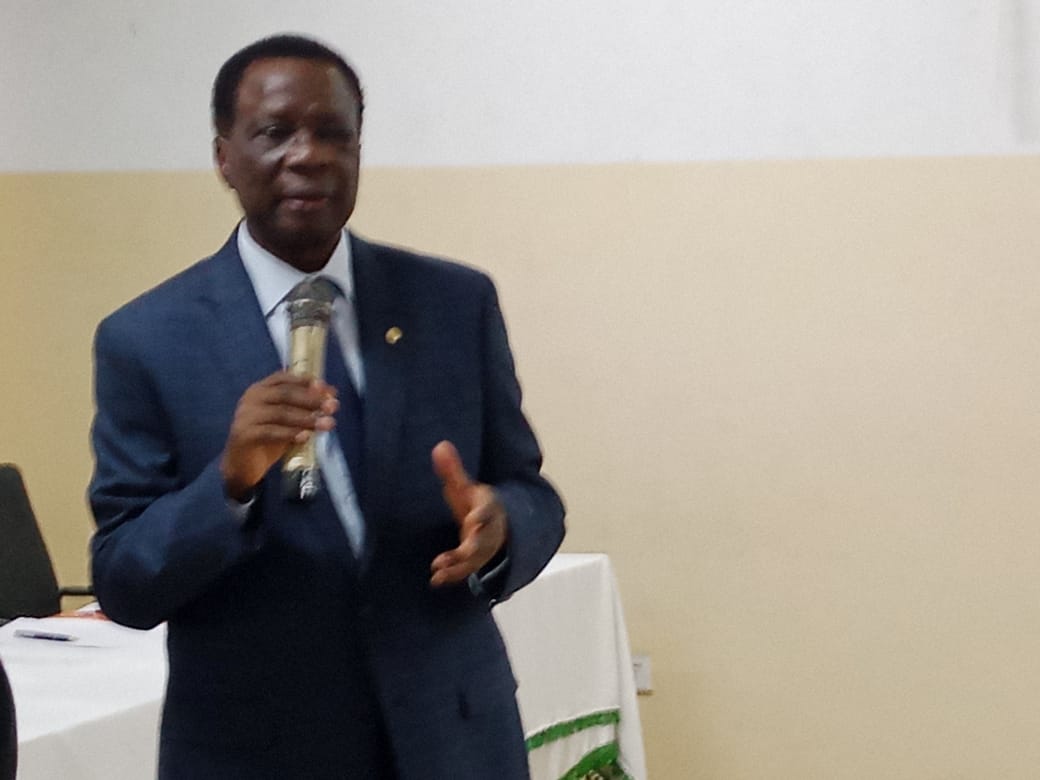
Presenting a paper on the theme, “Understanding Heart Diseases in Nigeria and Its Impact on National Development” Professor Osibogun, a former Chief Medical Director, Lagos University Teaching Hospital (LUTH), identified cardiovascular diseases, diabetes, chronic respiratory illnesses, cancers, and mental health disorders as responsible for a significant proportion of illness and death among Nigerians.
Osibogun explained that in developed countries, death from NCDs occurred after the age of 70, while 70 per cent of such deaths in developing countries happened before 70 years, resulting in loss of productive years.
“Nigeria has witnessed a sharp rise in hypertension.
“In 1992 we conducted a national survey which showed that about 10 per cent of Nigerians, aged between 18 and 64, had elevated blood pressure.
” A follow-up mini survey conducted in 2003 by NHF in collaboration with the World Health Organisation revealed that the prevalence had jumped to 35 per cent while current estimates suggests that the figure has climbed further to about 40 per cent.
“This means that one out of every three Nigerian adults may be hypertensive,” he said.
According to Osibogun, when people die in their 40s or 50s, the country loses decades of productivity and those living with these conditions often miss work or cannot perform optimally.
The expert added that there had been a shift in disease pattern as NCDs and injuries had emerged as leading causes of morbidity and mortality, which hitherto were once dominated by communicable diseases.
“Treating hypertension in Nigeria could cost between ₦40,000 and ₦50,000 monthly an amount that represents a substantial portion of the national minimum wage.
“As a result, many patients are unable to adhere to prescribed treatments, often skipping medications or taking reduced doses, thereby increasing the risk of complications such as stroke and heart failure.
“If we do not act now, the economic and social consequences will be severe,” he warned.
He also pointed the hidden costs of illness, including transportation to health facilities, loss of income due to clinic visits, and stigmatisation associated with chronic conditions, discouraging many Nigerians from disclosing their health status.
To address the growing crisis, the expert emphasised the importance of prevention, describing it as more cost-effective than treatment.
He urged Nigerians to purchase products with the NHF red heart-mark logo,while calling for sustained public education and stronger policy interventions to curb the rising tide to safeguard the nation’s future
The Executive Director, Dr Kingsley Akinroye explained that the initiative was designed to guide consumers toward healthier food options, noting that products bearing the Heart Mark logo meet defined nutritional standards.
“A product with the red mark heart logo allows for quick, on-the-spot identification of healthier food options without needing to read detailed information on the packaging.”
He said: “The essence of this summit is important because we have recognised that the number one killer disease in Nigeria is heart disease, and it’s preventable.
When we started there was no single laboratory in Nigeria that we could use. If you want to meet global standards. So, for 15 years, NHF shipping products to South Africa to analyse products,” Akinroye said.
He urged food manufacturers to enrol their products in the certification scheme and called for increased public awareness of the Heart Mark logo.
Also, Dr Alayo Sopokan, Deputy National Coordinator of the Non-Communicable Diseases (NCDs) Department, Federal Ministry of Health, said NCDs had become the leading cause of death globally and were rising steadily in Nigeria.
He said the ministry had developed national policies on the prevention and control of NCDs to strengthen response efforts and commended NHF for its advocacy.
In his remarks, Prof. Salisu Abubakar, President of the Nutrition Society of Nigeria, emphasised the role of proper nutrition in preventing chronic diseases.
He said sustained public awareness would help Nigerians make informed dietary choices and reduce the risk of heart-related conditions.
Also, Prof. Wasiu Afolabi, former President of Nutrition Society of Nigeria highlighted the growing prevalence of NCDs, noting that cardiovascular diseases account for about 27 per cent of related deaths.
Afolabi, while making a presentation on ‘Development of Nutrition Criteria for Eligibility of Food Products”, attributed the trend to rapid urbanisation and increased consumption of processed foods high in salt, trans fats and saturated fats.
He called for urgent consumer education and food reformulation.
The summit also featured different presentations from experts on ways to tackle the increasing burden of NCDs among the nation’s teeming population.