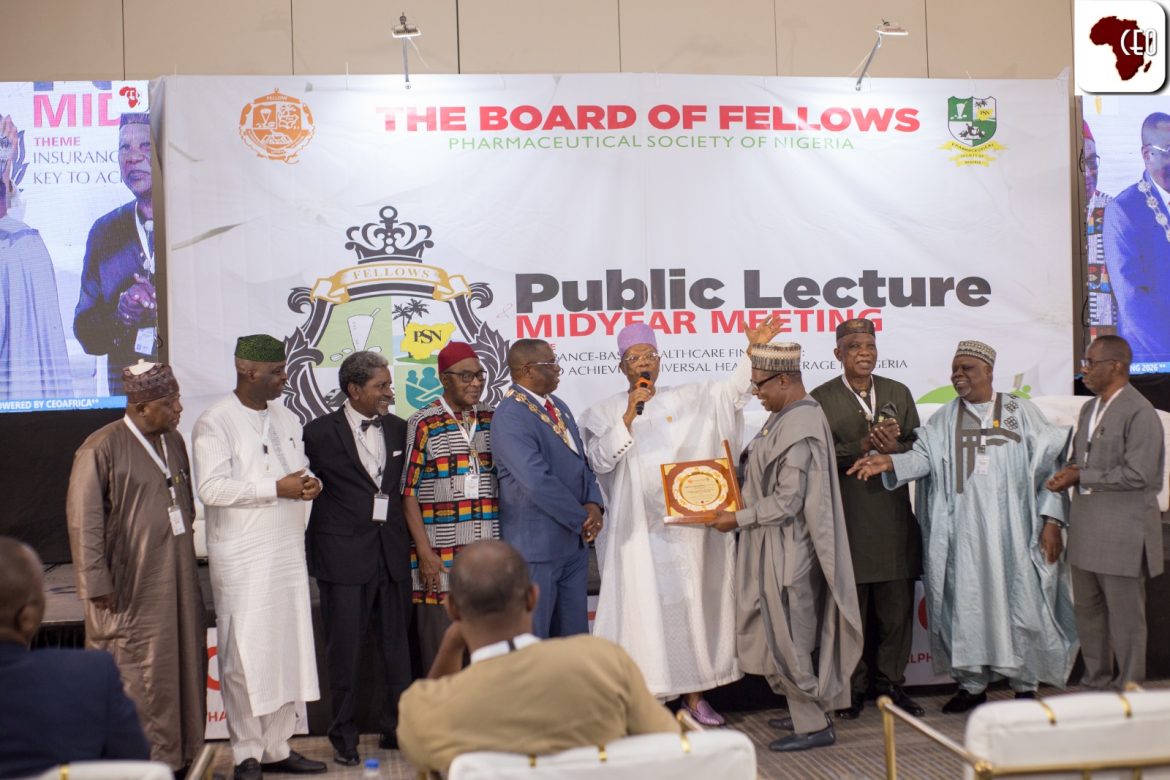
Healthcare professionals, policymakers and pharmaceutical stakeholders have called for urgent measures to expand health insurance coverage in Nigeria, warning that millions of citizens remain vulnerable to financial hardship because they pay for medical care directly from their pockets.
The call was made at the 2026 Public Lecture and Mid-Year Meeting of the Board of Fellows of the Pharmaceutical Society of Nigeria (BOF-PSN) held in Lagos, where participants stressed the need to accelerate health insurance enrolment, particularly among Nigerians in the informal sector.
Speaking at the event, Chairman of the Board of Fellows, Pharm. Uchenna Uzoma Apakama, said only between five and eight per cent of Nigerians currently have health insurance coverage, leaving millions of traders, artisans, transport workers and other citizens exposed to catastrophic healthcare costs.
He noted that the country’s low insurance penetration continues to push many families into poverty whenever they face medical emergencies, insisting that affordable health insurance should be treated as a fundamental component of national development.
The lecture, themed “Insurance-Based Healthcare Financing: Key to Achieving Universal Health Coverage in Nigeria,” brought together healthcare professionals, regulators, health maintenance organisations, financial institutions and government agencies to discuss strategies for improving healthcare financing.
Participants expressed concern that more than two decades after Nigeria introduced health insurance, over 70 per cent of healthcare spending is still financed through out-of-pocket payments, while the country’s Universal Health Coverage index remains below global expectations.
Apakama urged members of the National Assembly to dedicate part of their constituency intervention funds to sponsoring health insurance premiums for vulnerable Nigerians.
He also called on labour unions, professional associations, market organisations, transport unions and community groups to embrace group health insurance schemes as a practical means of expanding access to healthcare.
Former Minister of Health, Prince Julius Adelusi-Adeluyi, urged Nigerians to place greater value on protecting their health, noting that many people insure their vehicles and other valuable assets but neglect health insurance until illness leaves them financially distressed.
He attributed Nigeria’s slow progress in achieving universal health coverage largely to poor implementation of existing health policies and urged pharmacists to intensify advocacy for health insurance across the country.
Representing the Director-General of the National Health Insurance Authority (NHIA), Dr. Kelechi Ohiri, Pharm. Femi Adeoye said healthcare financing remains central to ongoing reforms in the health sector.
He explained that the Federal Government is strengthening health insurance through improved provider accreditation, digital innovation and measures aimed at removing financial barriers to healthcare.
Managing Director and Chief Executive Officer of an HMO, Mr. John Iwuajoku, said over 130 million Nigerians currently lack health insurance, identifying poor awareness, inadequate funding and weak healthcare infrastructure as major obstacles to universal health coverage.
He advocated integrating the National Identification Number (NIN) and Bank Verification Number (BVN) into health insurance enrolment processes to improve planning and expand coverage nationwide.
President of the Nigeria Academy of Pharmacy, Prof. Lere Baale, called for the integration of community pharmacists into Nigeria’s health insurance framework, describing community pharmacies as the country’s most accessible healthcare facilities.
A major highlight of the event was the unveiling of the U-Health GIFSHIP (Group, Individual and Family Social Health Insurance Programme) by an HMO, an initiative designed to extend affordable health insurance to workers in the informal sector.
Managing Director of another HMO, Dr. Lekan Ewenla, said the scheme targets traders, artisans, transport operators and small business owners who remain outside the formal health insurance system despite the provisions of the National Health Insurance Authority Act.
Stakeholders at the meeting agreed that expanding health insurance coverage would require stronger collaboration among government, healthcare professionals, private organisations and communities to reduce dependence on out-of-pocket payments and improve access to quality healthcare for all Nigerians.
Reporting By Niran Odufayo