Stakeholders in Nigeria’s maritime, environmental and research sectors have called for the urgent introduction of ocean literacy across all levels of society to promote sustainable ocean management and unlock the full potential of the Blue Economy.
The call was made during the 2026 World Ocean Day celebration jointly organised by the Nigerian Institute for Oceanography and Marine Research (NIOMR) and the International Ocean Institute (IOI) Nigeria Centre in Lagos.
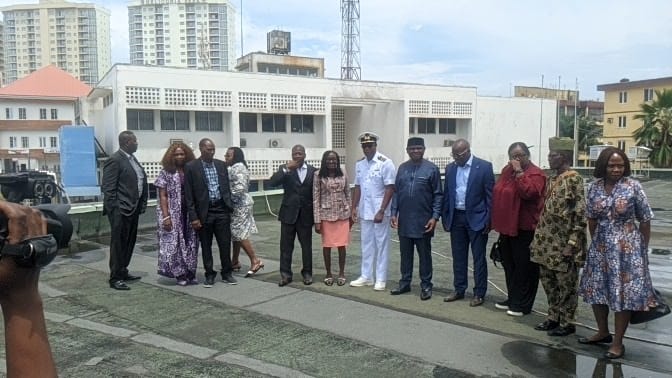
Participants at the event commended the Federal Government for advancing the Blue Economy through the National Policy on Marine and Blue Economy, improved maritime security and investments in ocean-related infrastructure.
However, they warned that such efforts may achieve limited success if Nigerians remain largely unaware of the importance and vulnerabilities of the ocean.
The stakeholders stressed that improving public understanding of the ocean’s role in livelihoods, food security, transportation, climate regulation and economic growth would encourage responsible stewardship and sustainable use of marine resources.
Delivering a keynote lecture titled, “Reimagining the Blue Economy: Achieving Sustainable Prosperity with the Ocean,” Maritime Communications Expert, Dr. Ubong Essien, said public awareness about the ocean remains low despite its critical contribution to human existence and economic development.
According to him, meaningful progress in ocean governance and Blue Economy development can only be achieved through collaboration among governments, businesses, civil society organisations, research institutions and citizens.
Dr. Essien noted that although Nigeria has made progress in maritime security with several years free of major piracy incidents, challenges such as environmental degradation, illegal maritime activities, unsafe operational practices and low public awareness still persist.
He warned against the unsustainable exploitation of marine resources and urged Nigerians to embrace sustainability to protect the future of the ocean.
“For too long, our relationship with the ocean has been largely one-sided. We have focused on taking from it without giving sufficient attention to its protection and sustainability,” he said.
Dr. Essien called for a nationwide ocean literacy campaign capable of reaching every state, community and demographic group, adding that sustainable ocean development cannot succeed without an informed population.
He also urged Nigerians to demand clear commitments from political leaders on climate change, ocean sustainability and environmental protection.
In a goodwill message delivered by the Director of the IOI Nigeria Centre, Mr. Akanbi Williams, the Managing Director of the International Ocean Institute Headquarters in Malta, Ms. Antonella Vassallo, called for stronger partnerships among governments, scientists, industries, educators and local communities to ensure the responsible use of ocean resources.
She described the Blue Economy as a pathway to sustainable development capable of generating employment, innovation, food security and economic growth when marine resources are properly managed.
Earlier, Mr. Akanbi Williams described the ocean as the foundation of life on Earth, warning against growing threats such as pollution, habitat destruction, climate change and unsustainable development practices.
He stated that Nigeria’s vast marine resources offer enormous opportunities in fisheries, maritime transport, tourism, renewable energy and job creation.
Also speaking, the Director of Research at NIOMR, Dr. Olajumoke Edun, reaffirmed the partnership between NIOMR and the IOI Nigeria Centre in promoting ocean governance, scientific research and sustainable ocean management.
She said the collaboration would continue to support ecosystem conservation, sustainable fisheries development, public awareness and the implementation of global ocean initiatives.
The event also featured presentations by young innovators under the Arctic Blue Action Open Challenge 3.1, highlighting the growing role of youths in ocean stewardship and sustainable development.
Representatives of several organisations attended the programme, including the Nigerian Ports Authority, the Fisheries Society of Nigeria, the University of Lagos, Sterling One Foundation, researchers, environmental groups and students of oceanography.
Stakeholders unanimously agreed that strengthening ocean literacy remains one of the most effective strategies for promoting sustainable ocean governance and maximizing opportunities within Nigeria’s Blue Economy sector.
Written by Innocent Onoh