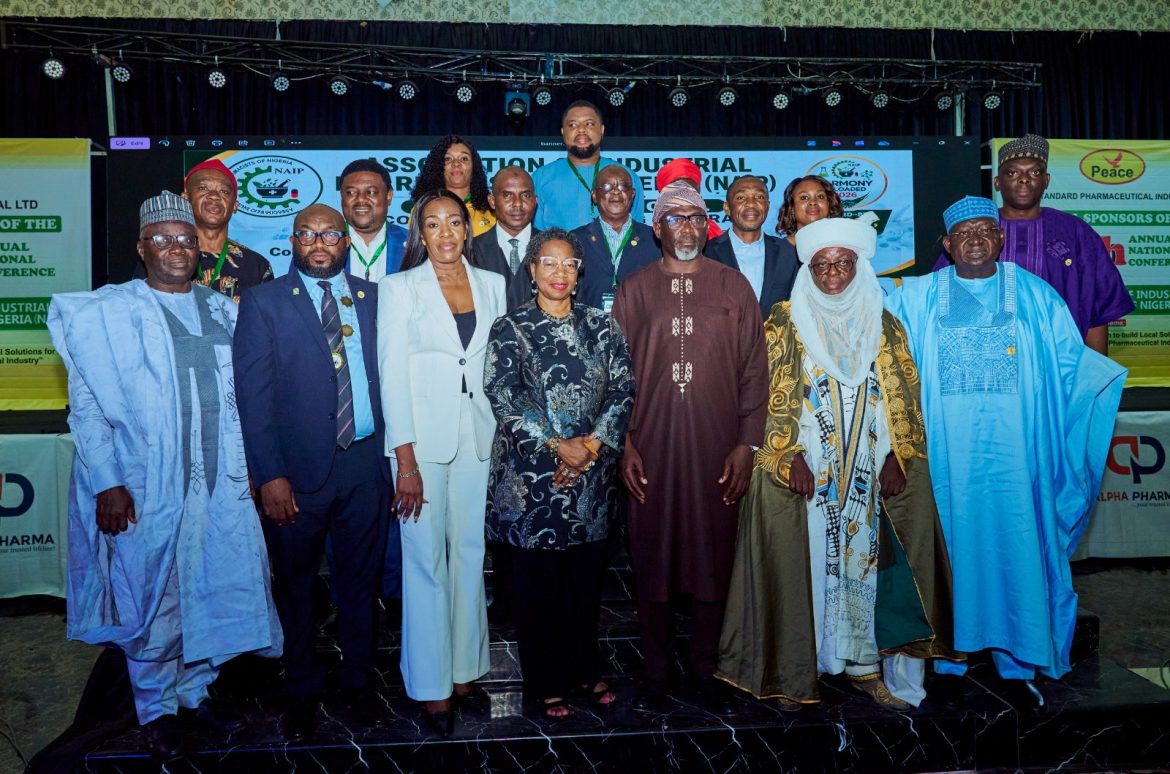
The National Chairman of the Association of Industrial Pharmacists of Nigeria (NAIP), Bankole Ezebuilo, has urged the Federal Government to strengthen support for local pharmaceutical manufacturing to reduce Nigeria’s dependence on imported medicines and position the country as Africa’s pharmaceutical hub.
Ezebuilo made the call during the 29th Annual National Conference and Training of NAIP held in Ilorin, themed “Collaboration and Innovation to Build Local Solutions for the Future of Nigeria’s Pharmaceutical Industry.”
Addressing industry stakeholders, policymakers, manufacturers, regulators, and healthcare professionals at the conference, he stressed that Nigeria must prioritise healthcare security through aggressive local production of medicines.
According to him, Nigeria currently imports over 70 per cent of its medicines, a situation he described as a major threat to healthcare stability and economic sustainability.
“No nation can outsource its health security,” Ezebuilo declared, warning that countries unable to produce their own medicines remain vulnerable during global emergencies and healthcare crises.
He called on the administration of Bola Tinubu to declare a national emergency on pharmaceutical manufacturing and introduce policies capable of transforming Nigeria into a leading pharmaceutical production centre in Africa.
The NAIP chairman assured the Federal Government that the association and its members are prepared to partner with relevant authorities in driving Nigeria’s pharmaceutical industrialisation agenda.
He noted that although some finished pharmaceutical products are manufactured locally, the majority of Active Pharmaceutical Ingredients (APIs) are still imported, making the country heavily dependent on foreign supply chains.
Ezebuilo explained that pharmaceutical self-sufficiency would not only stabilise medicine supply but also improve quality control, conserve foreign exchange, create jobs, and strengthen Nigeria’s position in the regional healthcare market.
He also stressed the need for stronger collaboration among government agencies, academia, development partners, regulators, and private investors to build a sustainable pharmaceutical ecosystem.
“To build local solutions, we must stop importing not just medicines, but also ideas,” he stated, while urging stakeholders to focus on innovation and practical industrial development.
As part of activities marking the conference, NAIP commissioned and renovated healthcare centres at the Palace of the Emir of Ilorin as part of its humanitarian outreach programme.
The outreach also featured free medical consultations, healthcare interventions, and distribution of drugs to more than 1,000 residents from Ilorin and neighbouring communities.
The event attracted leading figures in Nigeria’s pharmaceutical and healthcare sectors, including past and present leaders of the Pharmaceutical Society of Nigeria, regulators, academics, and industry experts.
Ezebuilo concluded by emphasising that Nigeria’s healthcare future must be built on local manufacturing capacity, innovation, skilled manpower, and sustained collaboration among stakeholders.
Reporting By Niran Odufayo