In commemoration of the 2026 World Recycling Day, about one hundred and forty-five waste recovery officers across 54 communities and nine wards in Ajeromi-Ifelodun Local Government Area of Lagos State, have been empowered with recycling equipments.
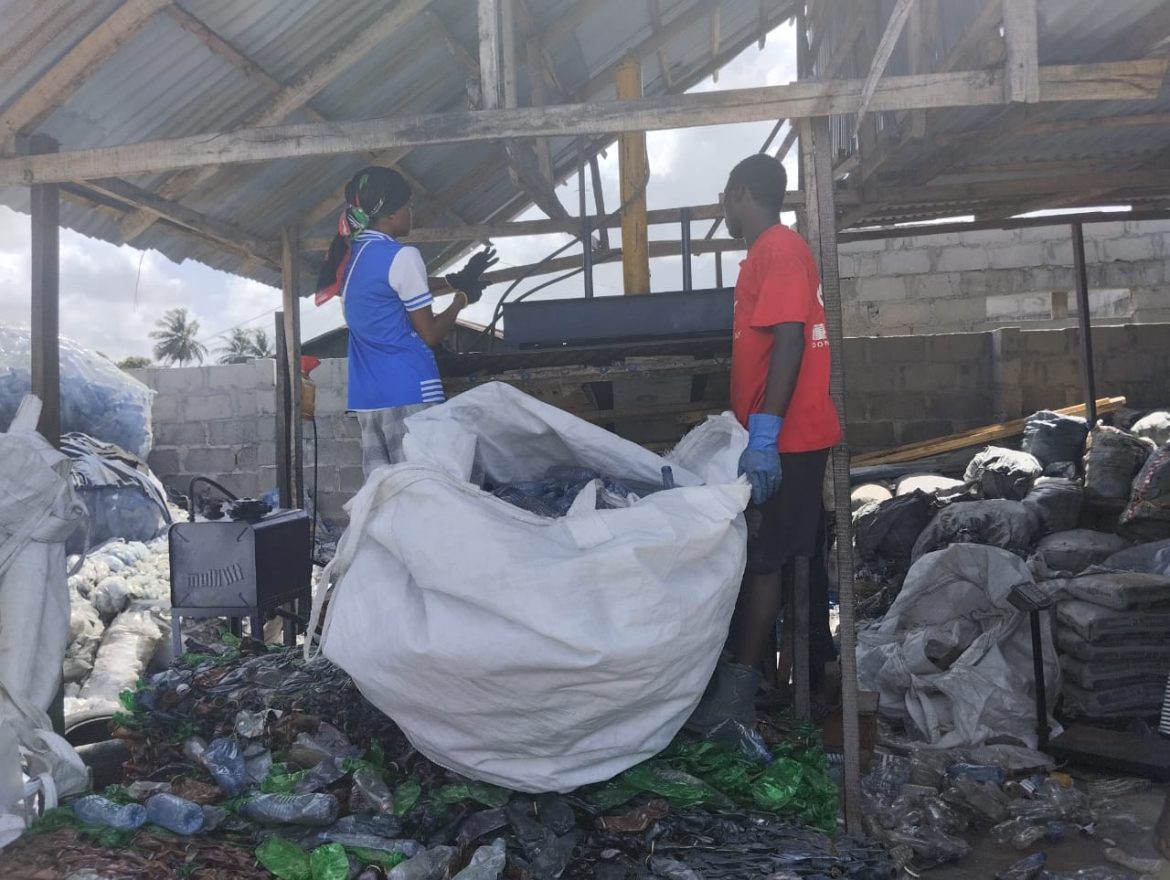
This is courtesy of a non-government environmental and sustainability organisation, Circularity Africa Limited, a climate.
Speaking during the handover of the equipment to the beneficiaries, the founder and Managing Director of the organisation, Mr. Seunfunmi Ogungbure, said the initiative is designed to tackle plastic pollution at source in targeted communities and municipal areas across Lagos State.
Ogungbure noted that the empowerment programme is aimed at equipping residents with the tools and capacity to combat plastic waste pollution within their communities, while preventing marine litter by stopping plastic waste from entering water bodies from land.
“Today, we are distributing recycling equipment to 145 material recovery officers drawn from over 54 communities we serve in Ajeromi-Ifelodun.
Notably, 75 per cent of the beneficiaries are women, underscoring our commitment to gender inclusion and equity,” he said.
He added that, as part of efforts to reach underserved and last-mile communities, the organisation is establishing about 54 new community recycling collection clusters within the local government area.
“The goal is to create a system that addresses plastic waste pollution at source, while also tackling underlying socio-economic challenges that influence how households manage waste after consumption,” he said.
According to him, economic realities often affect waste disposal priorities among low-income households.
“Many people question why they should pay for waste collection services when they struggle to meet basic needs. Waste management becomes a secondary concern or is ignored entirely.
“Our initiative, SO’DOTI D’OWO (Turn Your Waste to Wealth), implemented in partnership with PROTEGO – Prevention of Marine Litters in The Gulf of Guinea, provides an opportunity for communities to meet economic needs while addressing long-standing waste management challenges,” he added.
Ogungbure explained that PROTEGO is a project focused on preventing marine litter in the Gulf of Guinea, supported by the German Federal Ministry for the Environment, Nature Conservation and Nuclear Safety.
He said the project is being implemented in Lagos and Calabar, with Ajeromi-Ifelodun selected in Lagos due to its proximity to key waterways that connect directly to the Atlantic Ocean.
“Waste that enters the canals here flows directly into the Atlantic Ocean. Our intervention is strategic, as it aims to intercept waste before it reaches these waterways,” he said.
At full capacity, the project is expected to divert over eight tonnes of plastic waste weekly from various waste streams.
It will also establish community recycling clusters, comprising structured collection kiosks managed by the trained waste recovery officers.
Ogungbure called on corporate organisations and government institutions with aligned interests and statutory responsibility for socio-economic development and environmental sustainability to partner with Circularity Africa, particularly in advancing their Environmental, Social, and Governance (ESG) targets through scalable, community-driven interventions.
World Recycling Day, observed annually on March 18, highlights the importance of recycling in conserving natural resources, reducing waste, and addressing climate change.
It also promotes a shift in global perception to recognise waste as a valuable resource, encouraging the principles of reduce, reuse, and recycle within a circular economy.
The NGO specialises in raw material sourcing for recycling and manufacturing companies.
The organisation also implements ESG projects and sustainability programmes, including sustainability reporting for businesses.
Through its work, the organisation develops systems in underserved and hard-to-reach communities, driving behavioural change and promoting responsible waste management practices.
Written by Olusegun Haastrup