The Federal Ministry of Foreign Affairs has reaffirmed Nigeria’s commitment to bold economic reforms, national stability, and religious freedom, assuring the diplomatic community of transparency and inclusive growth.
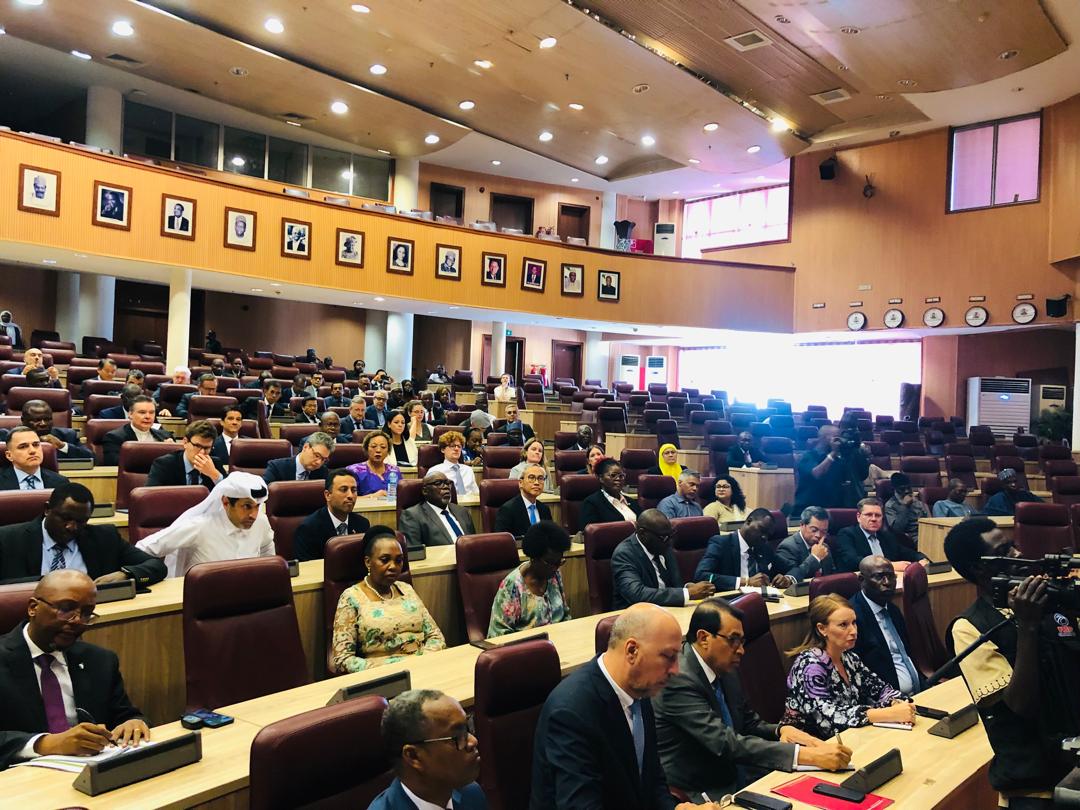
Speaking on behalf of the Minister of Foreign Affairs, the Permanent Secretary, Ambassador Dunoma Ahmed, welcomed members of the diplomatic corps and expressed appreciation for their continued partnership and support.
“On behalf of the government and people of the Federal Republic of Nigeria, we express our appreciation for your unrelenting efforts at sustaining cordial relations with our country,” he said.
“Nigeria remains open to constructive engagement and cooperation that advance mutual prosperity.”
Economic Reforms Yielding Results
Ambassador Ahmed highlighted ongoing reforms aimed at restoring macroeconomic stability and rebuilding investor confidence.He listed the unification of the foreign exchange market, removal of fuel subsidies, and implementation of the Petroleum Industry Act (PIA) as major milestones.
“These initiatives have restored transparency, improved investor confidence, and redirected fiscal savings towards social investment, infrastructure, and education,” he stated.
According to him, crude oil production has risen to over 1.6 million barrels per day, while investments in agriculture, mining, and the digital economy continue to drive diversification and job creation.
Social Investment and Human Capital Development
The Permanent Secretary noted that reforms in education and small business development are central to the government’s agenda.
He highlighted the Student Loan Act and increased investments in technical and vocational training as measures designed to expand access to learning and reduce youth unemployment.
“Micro, small, and medium-scale enterprises are the backbone of Nigeria’s economy. Through credit expansion and business reforms, the government is strengthening this vital sector,” Ambassador Ahmed said.
Security and Religious Freedom
Addressing concerns about security and interfaith relations, the ministry reaffirmed that Nigeria’s democracy remains resilient and inclusive, dismissing external claims of systemic religious persecution as “unfounded.”
“Nigeria is a secular state where members of all faiths hold leadership positions across all levels of government. The constitution guarantees freedom of religion and prohibits the adoption of any state religion,” he noted.
He added that government efforts to combat terrorism, banditry, and other threats include military operations, peacebuilding, and community-based intelligence sharing.
Institutions such as the Nigeria Interreligious Council (NIREC), Christian Association of Nigeria (CAN), and Supreme Council for Islamic Affairs (NSCIA) were cited as examples of Nigeria’s ongoing interfaith cooperation.
A Call for Constructive Partnership
Ambassador Ahmed reaffirmed Nigeria’s readiness to engage constructively with international partners on issues of peace, development, and security.
“Nigeria is a vibrant democracy confronting complex challenges, not a state of religious persecution,” he said.
“We will continue to work with all partners to build a future anchored on mutual respect, peace, and shared prosperity.”