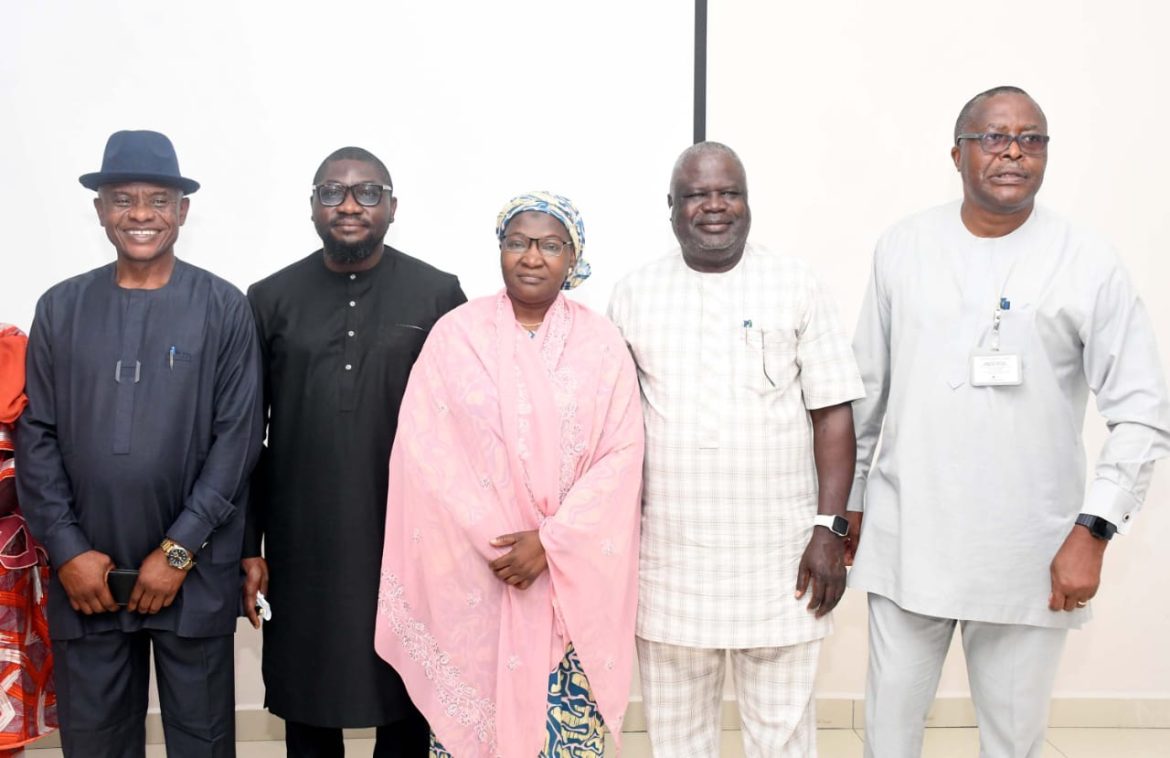
Stakeholders in the health sector have stressed the need for more commitment to strengthen national ownership and coordinate the Safety and Antimicrobial Resistance of Mass Administration of Azithromycin Among Children 1–59 Months (SARMAAN) project, as part of efforts to accelerate child survival interventions in Nigeria.
The experts made the call in Abuja on Friday, March 13 2026, at a meeting following recommendations from the National Child Health Technical Working Group (NCH TWG) and the Director, Family Health Department, Federal Ministry of Health.
The engagement was meant to strengthen institutional alignment, clarify governance structures, and advance Nigeria’s pathway toward integrating the SARMAAN II intervention into national child survival policies.
The Chair of the SARMAAN II Steering Committee and Director, Head of the Family Health Department, Dr. John Ovuoraye, emphasized that safeguarding the lives of children must remain a national priority.
“Survival is the most fundamental right of Nigerian children,” he said.
“For the progressive inclusion of SARMAAN II into Nigeria’s Child Survival Action Plan, we must co-create and implement solutions together.”
Dr. Ovuoraye stressed that discussions around the project must be outcome-oriented and align with existing government coordination structures.
He also highlighted the need for adjustments within the SARMAAN’s governance framework to ensure inclusive engagements and reinforce collective institutional ownership among national stakeholders.
“Research alone cannot translate into policy. All partners and technical teams must work together, and everyone in this room must ensure we succeed as a country,” he added.
The stakeholders reached a consensus that Nigeria must increasingly lead the narrative and drive informed government decision-making on child survival interventions.
The SARMAAN II project is Nigeria’s contribution to the regional Resiliency through Azithromycin for Children (REACH) Network and is designed to generate robust national evidence on the effectiveness of Azithromycin Mass Drug Administration (MDA) in reducing under-five mortality while monitoring antimicrobial resistance (AMR) and ensure safety.
The Principal Investigator of the SARMAAN project, Prof Oliver Ezechi of the Nigerian Institute of Medical Research, Yaba, Lagos, the SARMAAN project represents Nigeria’s involvement in the REACH Network, an African led initiative with Ministries of Health and international partners focused on reducing child mortality through evidence-based Azithromycin (AZM) Mass Drug Administration (MDA) in high mortality settings.
Giving an overview progess report on SARMAAN II, Senior Project Manager, Solina, Ijeoma Mmirikwe shared that over 13 million unique children have been reached, noting that, from 2024 – 2026, Nineteen rounds of Mass Drug Administration (MDA) was successfully implemented in Ten states which are, Adamawa, Gombe, Yobe, Bauchi, Kaduna, Kano, Jigawa, Katsina, Kebbi, and Sokoto.
“Over 5.7 million bottles of Azithromycin have been distributed across the ten states and so far no record of any serious adverse effects had been reported during implementation”. Mmirikwe
Also at the meeting, Ikechukwu Ofuani, Project Lead, SARMAAN Advocacy Project Team, introduced the advocacy consortium supporting national ownership, policy integration, communications and knowledge management for the initiative.
According to Ofuani, the advocacy effort is to ensure that government takes ownership of the intervention, by integrating SARMAAN into Nigeria’s Child Survival Action Plan and secure sustainable domestic financing, amplify public awareness and policy engagements.
The consortium is led by Policy Vault Africa, with communications support from Saldrey Communications Limited and Big Cabal Media.
The SARMAAN programme is built on strong international evidence from Niger, Tanzania and Malawi where similar Azithromycin interventions demonstrated up to a 13.8 percent reduction in child mortality.
The Nigerian implementation adapts the approach to the local context while generating country-specific evidence and strengthening state and community ownership.